United States, Iran Economic Attack 'D-1'... Warns Countries Helping Iran They Will Be 'Isolated Together'
- Input
- 2026-08-24 13:04:13
- Updated
- 2026-08-24 13:04:13
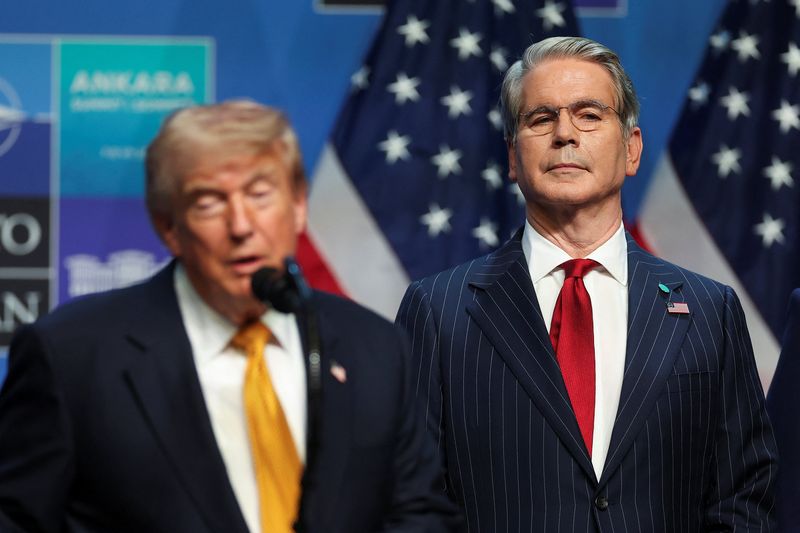
[Financial News] The United States, which has signaled sweeping economic sanctions on Iran, has again warned other countries not to help Iran. Iran said it has ways to respond to the sanctions and argued that Washington has admitted defeat through them.
U.S. Treasury Secretary urges countries around the world to join Iran's isolation
U.S. Treasury Secretary Scott Bessent published an op-ed in the Financial Times on the 23rd, local time, under the title, 'An Economic D-Day Is Coming for Iran.' Earlier, President Donald Trump posted on Truth Social on the 19th, referring to D-Day, the June 6, 1944 Normandy landings, and previewed sweeping economic sanctions on Iran. He also said the move would be "an economic D-Day."In an interview on the 20th, Bessent said he would hold a press conference on the 24th to announce the sanctions. In his FT op-ed posted the day before, he wrote that "economic D-Day, the single largest financial assault ever mobilized against an adversary, will begin at dawn."
He said several countries were tolerating Iran's aggressive behavior in the name of preserving peace, and that the Iranian government was relying on them. Bessent claimed Iran's enablers were "colluding" with Iran by buying and transporting Iranian petroleum products, conducting financial and commercial transactions with Iran, allowing Iranian aircraft to land and register, tolerating maritime transshipment of Iranian fuel, and overlooking illicit financial transactions tied to Iran. "In short, these countries calculate that appeasing the regime is the safer path," he wrote. "But they would do well to consider the price they will pay if they continue."
"Any country that serves as the financial artery of a declining regime should be prepared to be isolated along with that regime," Bessent said. "Providing a haven for terrorism means becoming an internationally isolated country in the eyes of the United States." He argued that countries cutting economic ties with Iran would gain better access to international capital and stronger market confidence, while those that keep trading with Iran would find "the path to lasting prosperity blocked."
Bessent stressed that "our goal is to leave the Iranian government standing alone by cutting off every economic lifeline that sustains this oppressive regime." He said the effort to destroy Iran's nuclear capabilities and military power was in its "final stage," adding that "full financial isolation of Iran could eliminate the need for the United States to use force."
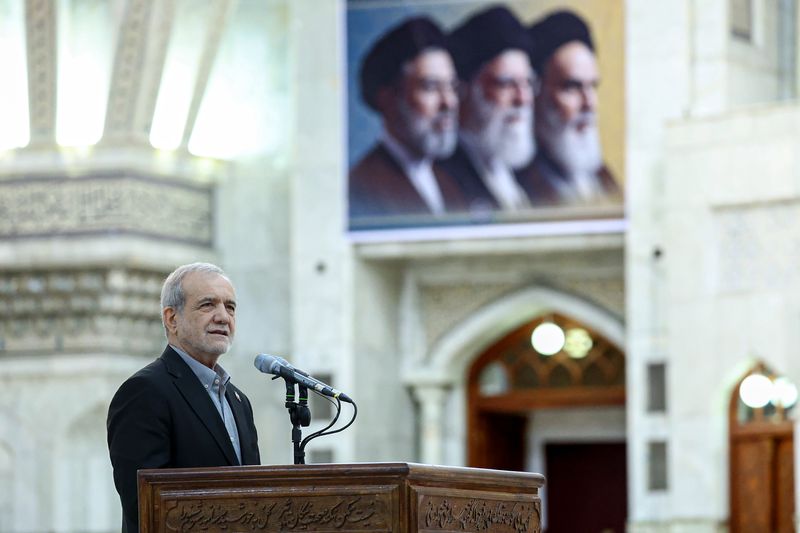
Iran says it has scenarios to counter U.S. sanctions
Hossein Mohebbi, a brigadier general who serves as spokesman for the Islamic Revolutionary Guard Corps (IRGC), said on the 23rd through state-run Press TV that "we have scenarios to respond to the hostile effects of the enemy's war, and we can easily establish economic relations with other countries." He argued that although the U.S. president had declared economic war and a massive economic operation against Iran, it was an implicit admission that the enemy had been humiliated in the military sphere.Earlier, Mohsen Rezaei, the new secretary-general of Iran's Supreme National Security Council (SNSC), said in an interview on the 22nd that if oil-producing countries around Iran joined the U.S. campaign to encircle and blockade Iran, Tehran would tighten its blockade of the Strait of Hormuz even further. He claimed that "not a single drop of crude oil from those countries will be allowed to pass through the strait."
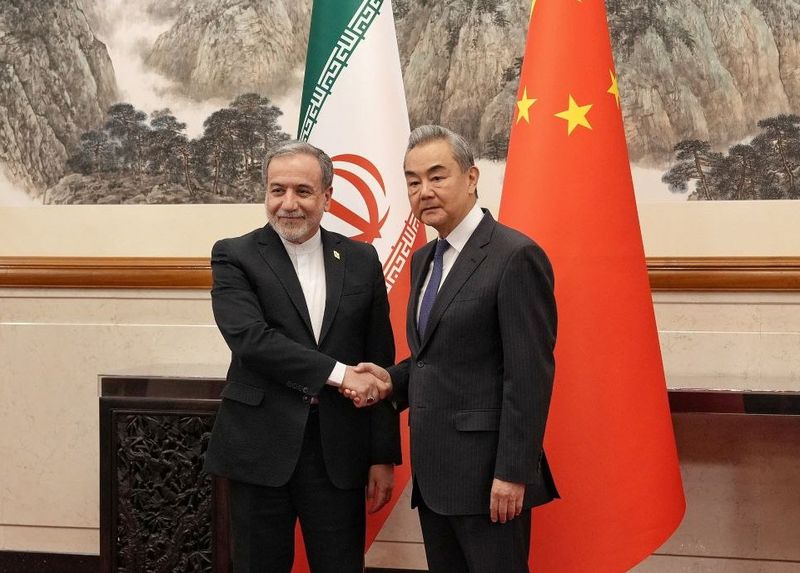
Helima Croft, head of global commodity strategy at RBC Capital Markets, told CNBC on the 23rd that the economic sanctions already imposed on Iran are enormous, making it unclear what additional measures the United States could add. Some experts therefore expect that China, which imports about 80% of Iran's seaborne crude exports, could also become a target. The Ministry of Foreign Affairs of the People's Republic of China said on its website on the 23rd that Vice Foreign Minister Miao Deyu met with Iranian Deputy Foreign Minister Kazem Gharibabadi in Beijing on the 17th.
Croft said that "Iran still retains significant disruptive capabilities" and that "the question is how additional economic sanctions would change that situation."
Meanwhile, Iranian President Masoud Pezeshkian, who is considered relatively moderate in Iran, tried to persuade both the United States and Iran's hard-liners on the 23rd through state-run IRNA. He argued that the "memorandum of understanding reached in June contains not a single clause that amounts to surrender." He added that restoring the ceasefire memorandum was the best way to end the deadlocked war.
[email protected] Park Jong-won Reporter