Israel Prepares for Peace Talks with Syria... Did U.S. Pressure from Trump Work?
- Input
- 2026-08-24 09:56:22
- Updated
- 2026-08-24 09:56:22
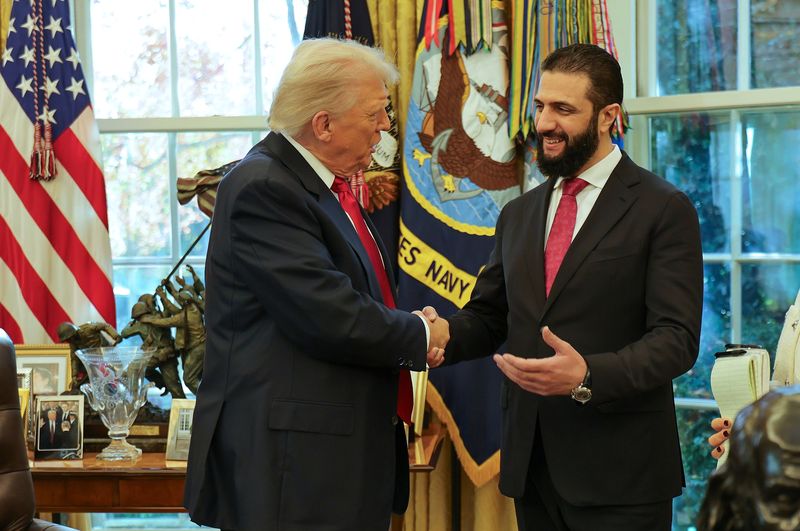
[Financial News] Since the regime change in 2024, Syria has moved rapidly closer to the United States and the West, and it is now preparing for peace talks with Israel under U.S. mediation. Syria says Israel must stop its airstrikes and incursions into its territory.
According to Syria's state-run SANA news agency, Syria and Israel held high-level talks in Jordan on the 23rd, with the United States mediating. A Syrian official said the two delegations met as part of efforts to ease tensions after Israel's recent bombing of Syrian territory.
The official added that both sides also worked to "narrow differences between Türkiye and Israel and ensure that tensions between the two countries do not spill over into Syrian territory."
The talks reportedly focused on restarting negotiations over a security agreement that would establish practical mechanisms to halt Israeli airstrikes and targeted operations, while laying the groundwork for a broader future accord. Agence France-Presse (AFP) reported that Syrian Foreign Minister Asaad al-Shaibani met that day with Roman Gofman, the head of Israel's foreign intelligence agency Mossad. It said the two sides discussed measures such as setting up a 'special operations room' in Jordan under U.S. supervision to prevent any possible clashes in Syria, including those involving Turkish intervention.
For about 53 years, Syria's al-Assad regime posed a major threat to Israel until it was toppled by rebels in 2024. Close to Iran, the al-Assad regime served as a conduit for Iranian weapons to Hezbollah in Lebanon. After Syrian rebels ousted former Syrian President Bashar al-Assad in November 2024, Israel immediately crossed into and occupied the Syrian-administered area of the Golan Heights. At the same time, it warned the rebels not to move south.
Israel did not hide its discomfort even as the Syrian rebels transitioned into an interim government. Israel bombed Syria in July last year and again in March this year, saying Syria's interim government had attacked Druze civilians, most of whom live in Israel. Then on the 18th, it struck a Syrian military airfield, saying Türkiye, which had supported the Syrian rebels, was helping rebuild the Syrian air force and expand its influence there.
U.S. President Donald Trump, who is seeking to improve ties with Syria's new government, was displeased with Israel's aggressive moves. In November last year, Ahmed al-Sharaa, president of Syria's interim government, visited The White House and met Trump for the first time by a Syrian leader since the country's founding. Tom Barrack, the U.S. ambassador to Türkiye who also serves as Trump's envoy for Syria, posted on social media on the 18th shortly after Israel's airstrikes on Syria, calling them "an unnecessary escalation that does not help regional stability."
On the 23rd, Syria said its top priorities in talks with Israel were the withdrawal of Israeli forces and an end to the bombing. In an interview on the 22nd, Syria's Shaibani said he believed talks with Israel would "resume soon" and that "the United States is continuing to pressure Israel to return to the negotiating table."
[email protected] Park Jong-won Reporter