Old redevelopment projects without land for roads or parks may open the door to greater cash payments
- Input
- 2026-08-24 17:19:55
- Updated
- 2026-08-24 17:19:55
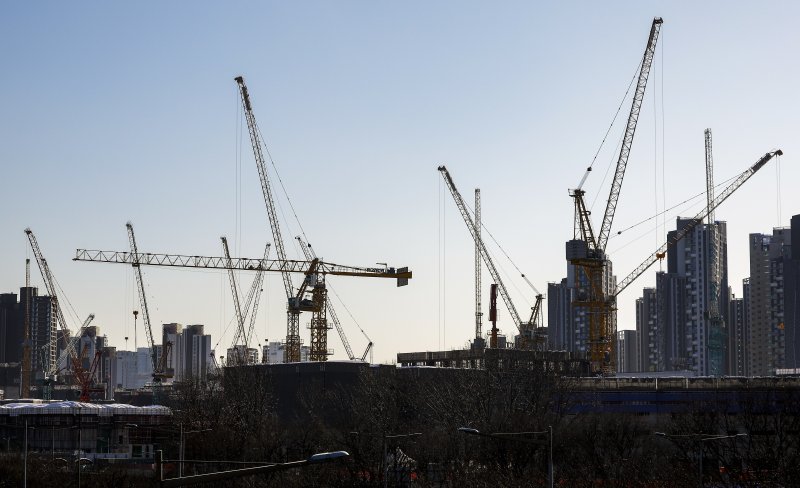
According to the National Assembly on the 24th, Choi Soo-jin and 12 other lawmakers introduced an amendment to the Act on the Improvement of Urban Areas and Residential Environments on the 21st.
Under the current law, project operators in redevelopment schemes are required to provide public facilities such as roads and parks on part of the project site and transfer them free of charge to local governments in return for benefits such as eased floor-area ratio and building coverage ratio rules. However, such facilities can only be built within the redevelopment zone, and the share that can be replaced with cash is also limited. As a result, critics say some redevelopment zones end up with more facilities than needed, while areas outside the zones remain short of infrastructure.
The revision would allow facilities to be built in infrastructure-poor areas within the same administrative district if infrastructure inside the redevelopment zone is deemed sufficient. It also includes a plan to expand the share of contributions in kind that can be replaced with cash payments.
Urban redevelopment projects in commercial districts and other areas have been carried out separately by district since redevelopment zones were designated in the 1970s. Some areas still have unfinished districts, leaving them unable to achieve the original goals of the redevelopment plans. In zones where projects were launched early, buildings have now aged to the point where redevelopment is being considered again. But because there is little land left inside the zones for additional infrastructure, it is difficult to improve project feasibility through contributions in kind.
Uncertainty over the standards for contributions in kind has also emerged as an issue in housing supply projects. At an industry briefing on the 21st, the Ministry of Land, Infrastructure and Transport said it would clarify the standards for contributions based on the increase in land value resulting from changes in land use. If the standards remain vague, frontline officials are reluctant to act aggressively because of concerns over favoritism or audits.
However, how far the cash substitution ratio should be allowed, how broadly facilities outside redevelopment zones should be permitted, and how to maintain public interest while recovering development gains are expected to become key issues in the legislative process.
[email protected] Jang In-seo Reporter