Japan's Takaichi approval ratings hit new lows one after another, failing to rebound despite tax-cut gamble
- Input
- 2026-08-24 08:46:58
- Updated
- 2026-08-24 08:46:58
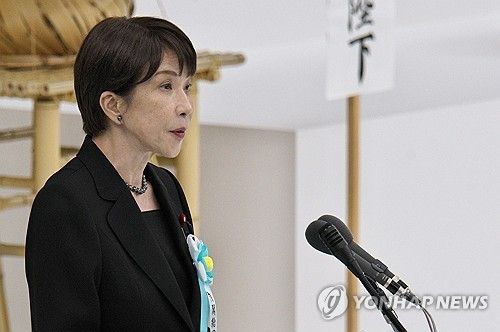
[Financial News, Tokyo = Seo Hye-jin, correspondent] Approval ratings for the Takaichi cabinet have repeatedly fallen to new lows since its launch in major opinion polls. Although more than half of respondents supported a cut in the consumption tax on food, concerns over funding and social security prevented the administration's approval rating from rebounding.
According to Japanese media on the 23rd, a nationwide poll conducted by the Yomiuri Shimbun from Nov. 21 to 23 showed the Takaichi cabinet's approval rating at 56%, down 1 percentage point from the previous month and the lowest since it took office. Support among people aged 60 and older fell from 52% to 47%, slipping below 50% for the first time. The disapproval rating fell from 34% to 32%.
In a Kyodo News poll conducted on Nov. 22 and 23, approval also fell 3.5 percentage points from the previous month to 50.2%, marking a post-launch low. It has declined for six straight months since March. The disapproval rating rose 0.2 percentage point to 33.9%.
In a Mainichi Shimbun survey conducted over the same period, approval remained unchanged from the previous month at 41%. Disapproval was also unchanged at 44%, meaning negative ratings have exceeded approval for two consecutive months. After holding above 65% for three straight months following its launch in October last year, the approval rating plunged by 10 percentage points last month and has not recovered.
More than half of respondents supported the government's plan to cut the food consumption tax rate from the current 8% to 1% for two years starting in April next year. Support stood at 54% in the Yomiuri Shimbun poll and 52.7% in the Kyodo News poll. Opposition came to 40% and 43.1%, respectively.
However, concerns were also high that the tax cut could worsen public finances. In the Kyodo News poll, 71.7% of respondents said they were worried about fiscal instability because the government had not secured alternative funding. In the Yomiuri Shimbun survey, 61% said they were concerned that cutting the consumption tax could make it harder to sustain the social security system.
Only 41% of Yomiuri Shimbun respondents believed the tax rate could be restored to 8% after two years. Half, or 50%, said it would be difficult to reverse. In other words, while many support the tax cut itself, they remain skeptical about funding and the feasibility of a temporary reduction.
There were also large differences by age. In the Yomiuri Shimbun poll, support for the tax cut was 71% among those aged 18 to 39, 54% among those aged 40 to 59, and 44% among those 60 and older. Younger respondents appeared to expect relief from inflation, while older respondents were more concerned about possible cuts to social security funding.
On Takaichi's decision to forgo a visit to Yasukuni Shrine on Aug. 15, the anniversary of Japan's surrender in World War II, positive assessments were dominant. In the Yomiuri Shimbun poll, 58% said the decision was appropriate, far exceeding the 29% who said it was not. Even among cabinet supporters and critics, 61% and 58%, respectively, viewed the move positively, suggesting little difference by political leaning.
The government's response to the recent Kumamoto earthquake also received favorable reviews. Positive assessments reached 57% in the Yomiuri Shimbun poll and 64.3% in the Kyodo News poll, far outpacing negative views. However, despite the positive response to disaster management and foreign policy issues, concerns over funding for the tax cut and measures to address inflation were not eased, preventing any rebound in approval ratings.
[email protected] Seo Hye-jin Reporter