NVIDIA Bets 10 Trillion Won on Open AI Push, Taking on Chinese Models
- Input
- 2026-08-24 07:54:33
- Updated
- 2026-08-24 07:54:33
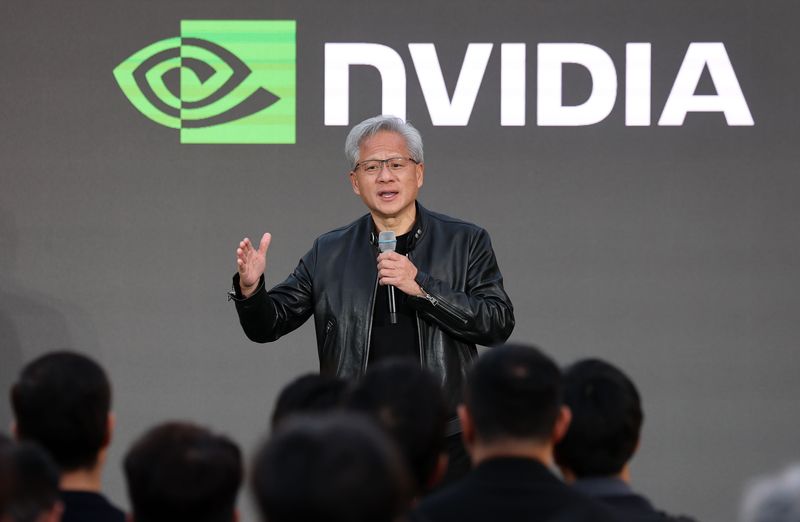
[Financial News] NVIDIA Corporation, the dominant player in AI semiconductors, is moving in earnest to develop a world-class open-weight model to counter China's advanced AI models. The company will pursue a technology partnership and equity investment worth about $7 billion, or roughly 9.7 trillion won, with AI startup Poolside, while also securing a large number of development engineers.
According to The Wall Street Journal (WSJ) on the 22nd local time, NVIDIA Corporation will pay $6 billion in exchange for licensing Poolside's technology and hiring more than 100 engineers. It will also invest an additional $1 billion in Poolside to secure an equity stake.
The hired developers will join NVIDIA Corporation's open-weight AI project, NVIDIA Nemotron. Open-weight models make the weights learned by AI publicly available, allowing users to modify the model directly or optimize it for specific uses. Their advantages are lower operating costs and easier customization than closed models.
The investment is seen as NVIDIA Corporation's direct response to China's rapidly expanding influence in open AI models. Jensen Huang, CEO of NVIDIA Corporation, emphasized last month that "U.S. AI leadership will be determined by whether an open ecosystem spreads." In March, the company also launched the NVIDIA Nemotron Coalition, an open-model consortium with Mistral AI and Perplexity AI.
If NVIDIA Corporation secures a world-leading open-weight model, it could also pose a threat to leading U.S. AI companies such as OpenAI and Anthropic, which rely on closed models. NVIDIA Corporation, which grew into a supplier of AI chips, would be expanding its influence into its own model ecosystem as well.
Poolside was founded in 2023 by software developer Eiso Kant and former GitHub Chief Technology Officer Jason Warner. The company drew attention for its coding automation AI used in government and defense sectors, but the enormous development costs were a burden. In a letter to shareholders, the founders said they failed to raise the $2 billion needed to secure a large graphics processing unit cluster by the end of last year within six weeks, and as a result, they lost the cluster.
Kant, Warner, and other executives will remain at the company and continue separate research. Poolside's developers are expected to work on improving the largest and highest-performing model among NVIDIA Nemotron's lineup.
Regulatory scrutiny is also expected. That is because NVIDIA Corporation is licensing technology and absorbing key personnel rather than acquiring the company outright. The deal is similar to a previous transaction in which it secured most of the staff after paying $2 billion for a nonexclusive license to the design technology of semiconductor startup Grok. Bloomberg News reported that criticism from the U.S. Congress could resurface, with lawmakers saying the deal appears designed to bypass merger review.
[email protected] Kim Kyung-min Reporter