Fed hawk says market is normal despite U.S. Treasury yield shock, urges focus on fighting inflation
- Input
- 2026-08-24 07:06:20
- Updated
- 2026-08-24 07:06:20
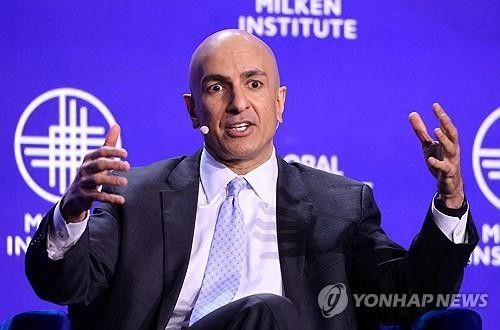
[Financial News] U.S. Treasury yields surged to their highest levels since 2007, but Neel Kashkari, a leading hawk at the Federal Reserve System (Fed) and president of the Minneapolis Fed, said the bond market is functioning normally. He argued that the Fed should focus on using interest rates to bring down inflation rather than stepping in to stabilize markets because of the jump in Treasury yields.
According to CBS on the 23rd local time, Kashkari said, "All signs point to the U.S. Treasury market functioning normally," adding, "Trades are happening and there is liquidity in the market." He went on to say, "That allows us to focus on using the federal funds rate as the main policy tool to bring inflation back down."
In the United States, heavy selling has recently hit long-term Treasuries amid concerns over the massive national debt and inflation. The 10-year Treasury yield climbed to 4.73% on the 21st, while the 30-year yield jumped to 5.28%, nearing its highest level since 2007. Yields briefly fell after the U.S. Department of the Treasury expanded its buyback program for long-term Treasuries, but they later rebounded.
Kashkari said current yields are high by recent standards, but not historically unusual. He noted that in the early 2000s, 10-year and 30-year yields were at similar levels, and that they were much higher in the 1990s.
He said several factors are driving Treasury yields higher, including inflation, U.S. government debt issuance, increased investment in Artificial Intelligence (AI), and broader growth and productivity trends. He also suggested that expectations of stronger economic growth, driven by productivity gains from AI investment, may be pushing bond yields higher.
Still, he remained cautious about inflation. Kashkari was one of three officials who opposed the decision to keep rates unchanged at the July Federal Open Market Committee (FOMC) meeting and instead called for a 0.25 percentage point increase. At the time, the Fed kept its benchmark rate at 3.50% to 3.75%.
He declined to say whether he would again push for a rate hike at the September FOMC meeting. "We need to see more data," he said. "I don't want to prejudge the next meeting." He added, "At this point, I am not convinced inflation will return to target in the near term."
He singled out rising energy prices as a major inflation risk if the Iran war drags on. Kashkari said the longer turmoil in the Middle East continues, the greater its impact on the U.S. economy and prices will be. "In the end, we will have to do more," he said, suggesting that further rate hikes remain possible.
[email protected] Kim Kyung-min Reporter