[Editorial] Micron's 14 Trillion Won R&D Gamble Means Korea Must Push Further Ahead with a Wider Lead
- Input
- 2026-08-23 19:09:24
- Updated
- 2026-08-23 19:09:24
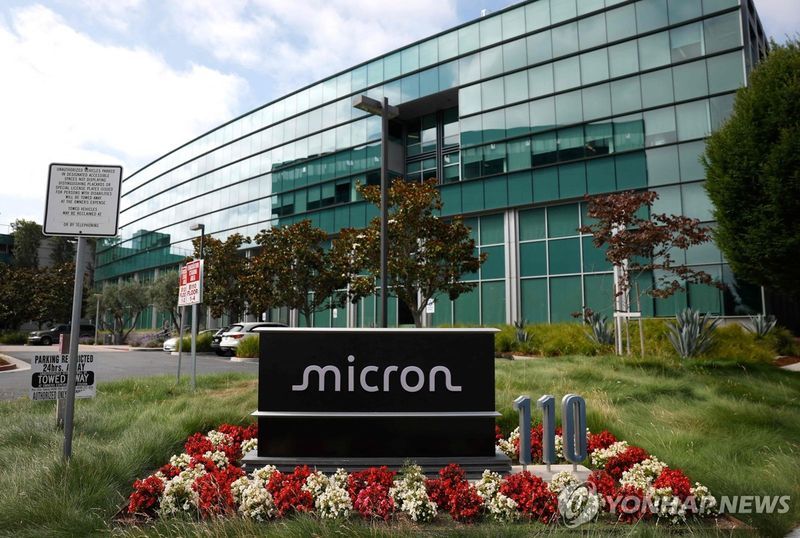
On the 20th, local time, Micron announced that it will establish the large-scale research center, Micron Research Labs, in Boise, Idaho, where its headquarters is based. Separate from the large-scale manufacturing investments it has already disclosed, this will be the first memory-focused research hub in the United States. The company plans to concentrate on advanced areas such as next-generation memory technologies, high-performance computing architectures, advanced semiconductor packaging, and future chip manufacturing processes.
Local media interpreted the move as a strategy to regain the initiative by catching up with Korean chipmakers that lead the market for artificial intelligence chips, including high-bandwidth memory (HBM). The plan is to accelerate that effort by bringing together the Donald Trump administration's push to build a domestic semiconductor supply chain with the R&D capabilities of U.S. big tech companies such as NVIDIA Corporation and Apple Inc., as well as academia.
Samsung Electronics and SK hynix continue to make large-scale investments in facilities and research and development, but as competition intensifies, there is no guarantee that their current technological edge will last forever. In particular, if the United States strengthens standardization of semiconductor specifications and tightens its advanced packaging ecosystem, it could pose a real threat to the market leadership of Korean companies.
The challenge from China and Japan is also formidable. In China, ChangXin Memory Technologies (CXMT), a DRAM maker, has already completed a large initial public offering, while Yangtze Memory Technologies Corp (YMTC), a NAND flash maker, is also moving toward a listing as it speeds up efforts to achieve memory self-sufficiency. China is also working to localize equipment production, including deep ultraviolet (DUV) lithography tools. Japan, meanwhile, is seeking to reclaim the No. 1 spot in NAND flash through KIOXIA Corporation, while also attracting global companies such as TSMC and Micron Technology in an effort to reemerge as a semiconductor manufacturing hub. That is why the two countries' government-backed push cannot be taken lightly.
To avoid falling behind in this competition, companies must not become complacent with a short-term market boom. Samsung Electronics and SK hynix have recently unveiled shareholder return plans totaling between 130 trillion won and 150 trillion won, riding the semiconductor supercycle. Shareholder returns are important, but during a boom, they must be even bolder in R&D and facility investment to secure the next generation of breakthrough technologies.
The government should also step up institutional support at the national level to back long-term corporate investment, including tax incentives, talent development, and long-debated exemptions from the 52-hour maximum workweek regulation for R&D personnel. Once a semiconductor lead is lost, it is hard to recover. Investment that turns today's boom into tomorrow's competitiveness is urgently needed.