[Editorial] Transfer Redevelopment and Reconstruction Authority to District Heads; the Key Is Deregulation
- Input
- 2026-08-23 19:09:21
- Updated
- 2026-08-23 19:09:21
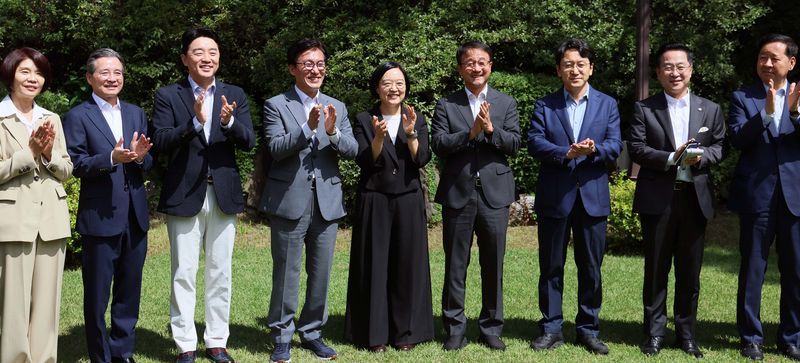
After the Aug. 3 measures, which centered on raising property taxes, complaints poured in from homeowners in Seoul's Gangnam District. In particular, long-term owners who have lived in Gangnam for decades and own a single home have voiced strong dissatisfaction. Their concern is that taxes will keep rising even though they have no income other than a pension. The requirements for nonresident single-home owners, who would face higher taxes, also came under scrutiny. In addition, while the government and the Seoul Metropolitan Government remain at odds over the development of Yongsan Park, debate continues over how to expand housing supply.
In response, the Democratic Party of Korea held the council that day and proposed several supplementary measures to the government. It asked for the removal of the distinction between resident and nonresident single-home owners, which has been controversial in the Comprehensive Real Estate Holding Tax. Rather than merely discussing eased requirements, it called for scrapping the system that imposes differentiated Comprehensive Real Estate Holding Tax on nonresidents altogether.
Of particular note is the proposal to transfer redevelopment and reconstruction authority to local district heads as a way to expand supply. At the meeting, Chief of Staff Kang said, "If you present a plan to secure housing sites that can be supplied in the short term, Cheong Wa Dae and the government will actively review it." In response, the party and the government agreed to improve the system so that district heads in Seoul would be given authority over redevelopment and reconstruction projects involving up to 500 households.
In Seoul, the local district head is the district mayor. At present, the mayor holds authority over redevelopment and reconstruction. If the party-government proposal is turned into law, district mayors will be able to lead local redevelopment and reconstruction with legal authority, which could help expand housing supply and shorten project timelines.
The top policy priority for stabilizing home prices is to expand supply. Tax and financial measures are only secondary tools. In Seoul, where home prices have risen sharply, the dilemma is that there is little land left in the city center on which to build more homes. Large parks such as Yongsan Park should be excluded from development and permanently preserved as places for citizens to rest. If so, the only answer is to increase supply through redevelopment and reconstruction.
For that reason, if transferring redevelopment and reconstruction authority to district mayors truly helps expand housing supply, there is no reason to oppose the party-government announcement. The government had also considered a plan to hold this authority itself. The real question is whether giving district mayors the lead will actually increase supply and speed things up. Stripping the mayor of authority and handing it to district heads, while the central government retains approval power, would achieve nothing.
Redevelopment and reconstruction are slow not because the Seoul Metropolitan Government holds the authority, but because of various regulations. One of them is the Reconstruction Excess Profit Recovery System, which imposes a levy of up to 50 percent if the excess profit per member exceeds the threshold in a reconstruction project. In Gangnam District, where development gains are substantial, the reconstruction excess profit recapture system is clearly holding back reconstruction.
The party and the government should not simply assume that transferring authority will revitalize redevelopment and reconstruction. They also need to discuss which regulations should be eased and how. At the same time, they should consider raising the legal floor area ratio. If district mayors are given full authority, there is a risk of disorderly development. Even then, it is only natural that they coordinate with the Seoul Metropolitan Government on overall urban planning.