President Lee met with Lee Jae-yong 12 times this year, followed by Chang In-hwa 9 times, Chey Tae-won 8 times and Chung Eui-sun 7 times
- Input
- 2026-08-23 18:30:10
- Updated
- 2026-08-23 18:30:10
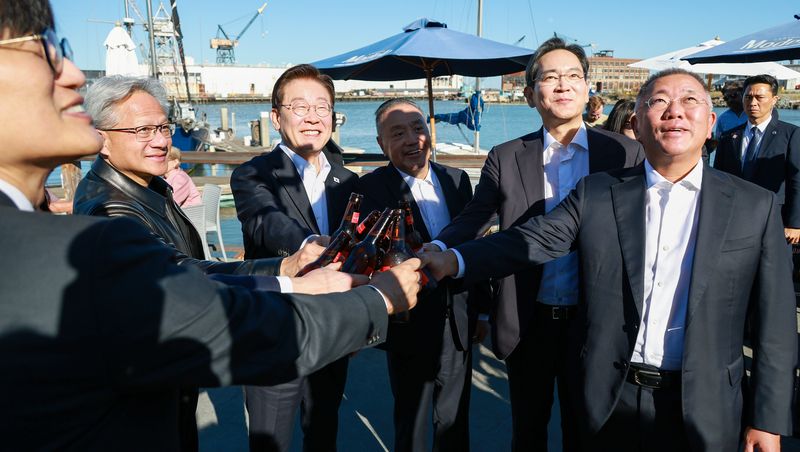
A full review of presidential schedules released on the Cheong Wa Dae website on the 23rd showed that Lee met with the president a total of 12 times this year. He first appeared at the China-South Korea Business Forum on Jan. 5, then attended a corporate meeting on expanding youth jobs and regional investment on Feb. 4, and a state dinner for the Brazilian president on Feb. 23. In April, he accompanied the president on trips to India and Vietnam, joining him at events in India, a state dinner in Vietnam and the Korea-Vietnam Business Forum.
In June, he attended a state dinner and a business roundtable during the Italy trip, and he is also said to have held a separate closed-door meeting with the president on the 25th. He later attended the announcement of the three major mega projects on the 29th and a briefing on advanced industries in the Chungcheong region on July 2. Last month, he also took part in the San Francisco AI Summit. Analysts said the overlap between Samsung's domestic investment, global supply chains and economic diplomacy expanded his contact points with the president at home and abroad.
Chang In-hwa, chairman of POSCO Holdings Inc., followed with nine meetings. He accompanied the president not only on trips to China, India and Vietnam, but also on the Mongolia trip in July and at economic events in Brazil and Chile. The increase in joint appearances appears to reflect the government's supply chain diversification policy, which aligns with POSCO's businesses in steel, battery materials and lithium, key minerals.
Chey Tae-won, chairman of SK Group, met with the president eight times this year. After visits to China, the state dinner in Brazil and the Vietnam trip, he held a closed-door meeting with the president on June 19. He also attended the three major mega projects event on June 29 and the San Francisco AI event in July, and is reported to have had a private dinner on the 20th. SK Group's ties to the government's core industrial policies in semiconductors, AI data centers and energy also appear to have played a role.
Chung Eui-sun, chairman of Hyundai Motor Group, and Kisun Chung, chairman of HD Hyundai, each met with the president seven times. Chung met Lee during trips to China and India, the state dinner in Brazil, an investment site visit in Saemangeum, the San Francisco AI event and the Korea-Brazil Business Roundtable. The meetings reflect the overlap between major business issues in automobiles, future mobility and overseas investment and the president's industrial and trade schedule.
Kisun Chung attended the February corporate meeting and the state dinner in Brazil, then joined economic events in the Philippines, India and Vietnam. On May 13, he also took part in the president's on-site schedule for K-Shipbuilding in Ulsan Metropolitan City. As Lee has personally pushed for stronger shipbuilding competitiveness and the development of K-Shipbuilding, contact with HD Hyundai has also increased.
Koo Kwang-mo, chairman of LG Group, and Koo Ja-eun, chairman of LS Group, each met with the president six times.
The number of meetings by business leader also reflects the focus of Lee's industrial policy. Most of the leaders at the top are heading industries the government is strategically nurturing, including semiconductors, AI, batteries, automobiles, shipbuilding and key minerals. Another change from the past is that the president's meetings with business leaders have become more segmented, moving beyond meetings with business groups or economic delegations on overseas trips to focus on individual industrial projects such as the three major mega projects, regional advanced-industry investment, and AI and semiconductor supply chains.
[email protected] Choi Jong-geun Reporter