"You Can't Get a Job If You Don't Say 'Xie Xie'"... The Chinese Language Craze Sweeping Vietnam [Southeast Asia Spotlight]
- Input
- 2026-08-26 06:00:00
- Updated
- 2026-08-26 06:00:00
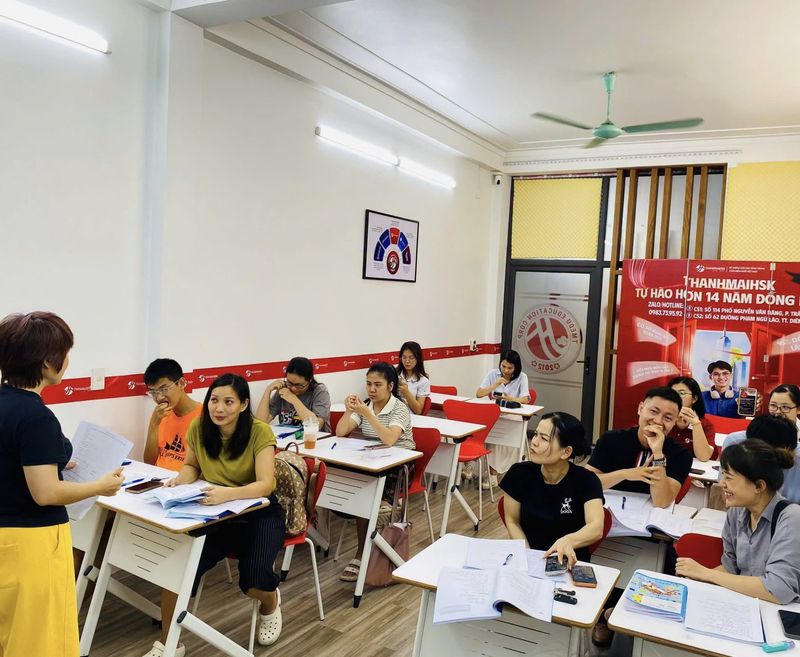
D. in Chinese Literature from Peking University and has been teaching Chinese for 15 years.
"It seems like this year has the highest number of students since I started teaching," said Mr. Pham.
"Classes ranging from basic and conversation to advanced levels like HSK (Chinese Proficiency Test) Levels 5 and 6 are completely full. " He noted a change in trends, noting that while students majoring in Chinese used to take classes to supplement their school coursework in the past, there has recently been a significant increase in students learning Chinese to secure employment at Chinese companies operating in Vietnam.
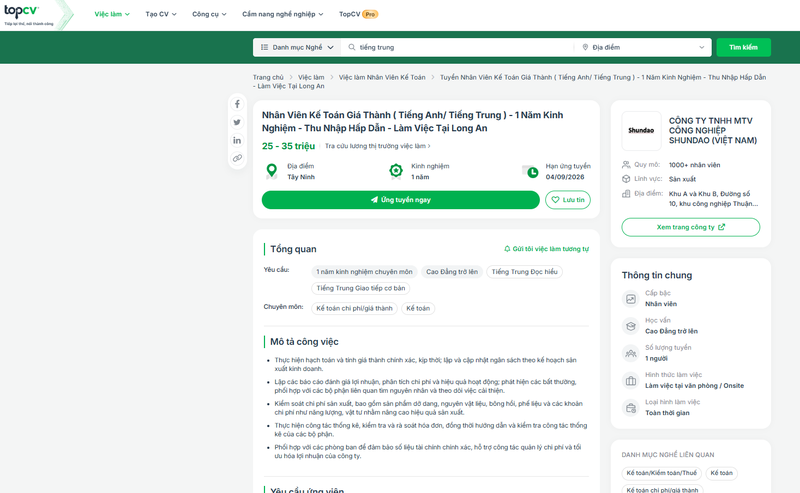
It specifies that candidates must be proficient in both Chinese and English. 86 million KRW).
(Screenshot from topcv) **Following rumors of "easy job placement". University cutoffs reversed** Changes are beginning to appear in university admissions.
In Vietnam, as production bases of Korean companies such as Samsung Electronics were established in large numbers, Korean language departments were once considered a "guarantee of employment. " As the aggressive expansion of Korean companies coincided with the Korean Wave craze, the admission cutoffs for Korean language departments soared.
At one point, the Korean media even used the expression, "Korean language departments are harder to get into than medical school. " However, this year, at some major universities in Hanoi, the admission cutoffs for Chinese language-related departments have surpassed those for Korean language departments.
"Classes ranging from basic and conversation to advanced levels like HSK (Chinese Proficiency Test) Levels 5 and 6 are completely full. " He noted a change in trends, noting that while students majoring in Chinese used to take classes to supplement their school coursework in the past, there has recently been a significant increase in students learning Chinese to secure employment at Chinese companies operating in Vietnam.
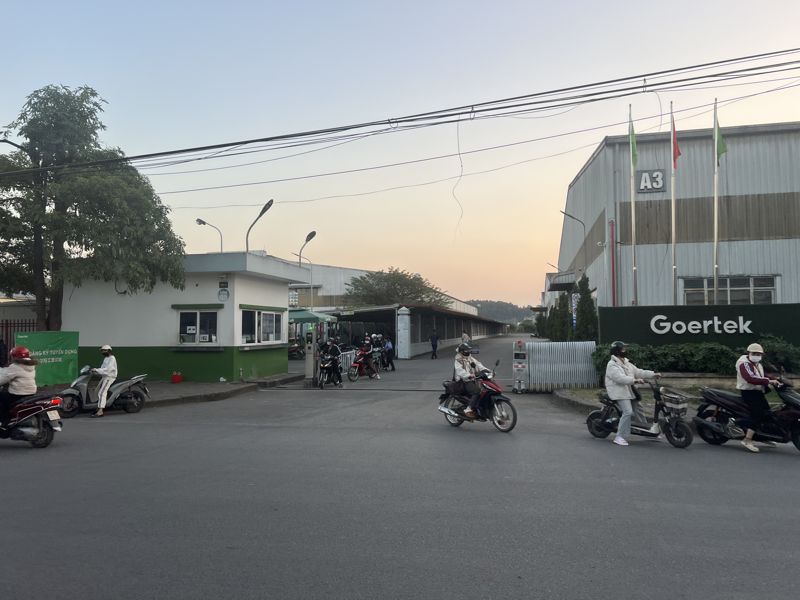
A resume rack for ongoing recruitment was placed next to the main gate. Photo by Correspondent Kim Jun-seok No.
1 in HSK Test-Takers. 'Recruitment Shortage' for Chinese Talent Vietnam's presence is also prominent in the Chinese Language Proficiency Test (HSK).
By 2025, Vietnam is projected to have over 146,000 HSK test-takers, accounting for 19% of all overseas test-takers and ranking first in the world. According to the Vietnamese Ministry of Culture, the number of HSK test-takers from January to June of this year is estimated at approximately 110,000.
With a scale equivalent to approximately 20% of the total 564,000 test-takers, Vietnam is expected to maintain its position as the world's largest test-taker country again this year. At the Thai Nguyen University test center, 39,000 people took the HSK in the first half of this year alone, nearly doubling compared to the same period last year.
Non-majors are also joining the Chinese language craze. In an interview with this publication, Dr.
Dinh Thu Hoai, a lecturer in the Department of Chinese Language and Culture at the University of Hanoi's Foreign Languages College, stated, "While in the past, mainly Chinese majors took the class, now students from various majors are coming to learn Chinese," adding, "The number of students studying Chinese for employment has definitely increased. " The influence of the Chinese language is also growing rapidly in the actual job market.
According to an analysis of over 581,660 job postings over the 10 months of 2025 by the Vietnamese recruitment platform JobOKO, the number of jobs requiring Chinese language skills reached approximately 13,000, an increase of nearly 50% from the previous year. The rate of increase in demand for Chinese-speaking personnel has reached approximately twice that of Japanese and more than five times that of Korean.
An official from an HSK academy in downtown Hanoi stated, "Interest in Chinese has risen significantly recently, and most classes are fully booked," adding, "The number of students has increased greatly not only in beginner classes but also in advanced classes and business Chinese programs. " Changes are also being detected in bookstores.
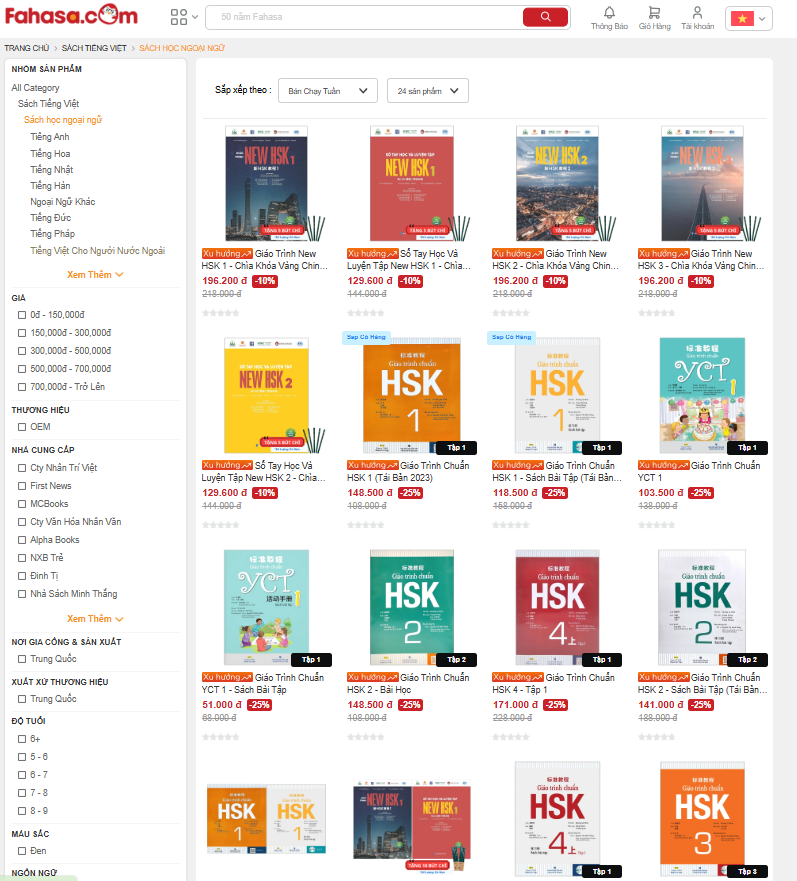
Chinese-related books are increasingly occupying the top spots in foreign language textbook sales rankings. The bestseller rankings for foreign language textbooks on the Vietnamese online bookstore Fahasa.
"Classes ranging from basic and conversation to advanced levels like HSK (Chinese Proficiency Test) Levels 5 and 6 are completely full. " He noted a change in trends, noting that while students majoring in Chinese used to take classes to supplement their school coursework in the past, there has recently been a significant increase in students learning Chinese to secure employment at Chinese companies operating in Vietnam.
Hang, a parent met at a large HSK academy in downtown Hanoi, said, "Whenever I see articles about DeepSeak or Chinese robots, I think China's importance will grow even more in the future, so I am sending my first-grade child here. " He added, "Vietnamese also has a high proportion of Sino-Korean words, so knowing a lot of Chinese characters helps with studying Vietnamese as well," and "I am satisfied that I had my child start studying Chinese early.
" An academy official explained, "In the past, many students prepared by targeting the niche market of Chinese classes to avoid the high competition rates of certain specialized high schools or gifted schools. Now, however, there has been a significant increase in students who start learning Chinese from the lower grades and obtain HSK Level 5 or 6 before entering high school.
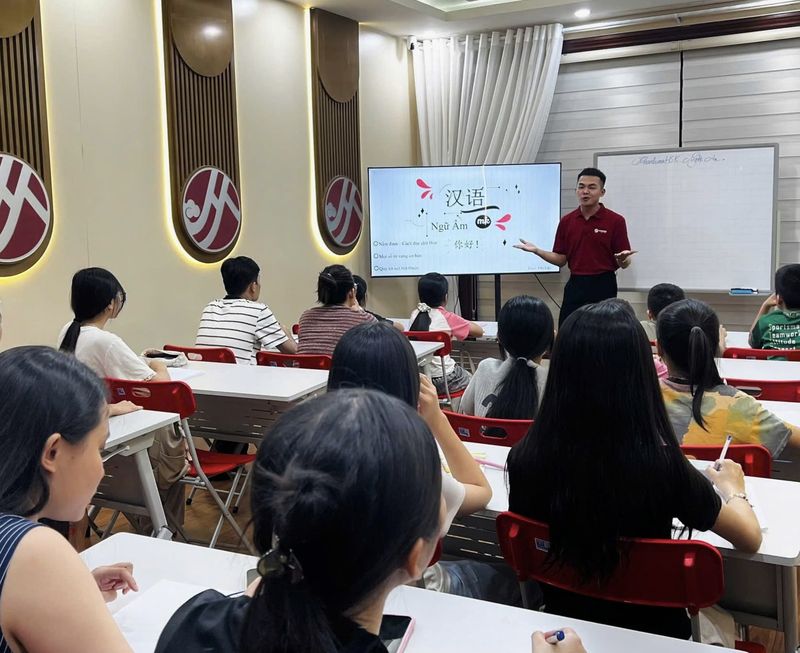
" On the 13th, an instructor at a large Chinese language academy in downtown Hanoi, Vietnam, is explaining basic Chinese characters to elementary and middle school students. Photo by Correspondent Kim Jun-seok 'Red Tech' Moves South.
"Classes ranging from basic and conversation to advanced levels like HSK (Chinese Proficiency Test) Levels 5 and 6 are completely full. " He noted a change in trends, noting that while students majoring in Chinese used to take classes to supplement their school coursework in the past, there has recently been a significant increase in students learning Chinese to secure employment at Chinese companies operating in Vietnam.
4535 trillion won) last year.
Key players in Apple's supply chain, such as Luxshare and Gore-Tex, have expanded their production facilities in Vietnam, while solar power manufacturer Trina Solar and electric vehicle makers BYD and Chery Automobile are also increasing local production.
The changes were also visible in front of the factories.
A permanent reception desk was set up in front of the Gore-Tex factory in the Que Vo Industrial Park in Bac Ninh Province, northern Vietnam, where people could leave their resumes in person.
An official from a Chinese company in the Que Vo Industrial Park stated, "We are short of personnel no matter how much we hire," adding, "Some companies have even gone so far as to hire employees first and then conduct free Chinese language classes internally or dispatch them to their headquarters for two to three months.
" [Southeast Asia Focus] covers major players in Southeast Asia, which has emerged as a key strategic hub for global supply chains, diplomacy, and security.This is a corner that delivers vivid and in-depth coverage of current issues and behind-the-scenes news from the field.[email protected] Kim Jun-seok Reporter