28 Months of 'Ethics Vacuum'... Criticism of 'Bipartisan Collusion' Too
- Input
- 2026-08-23 13:00:00
- Updated
- 2026-08-23 13:00:00
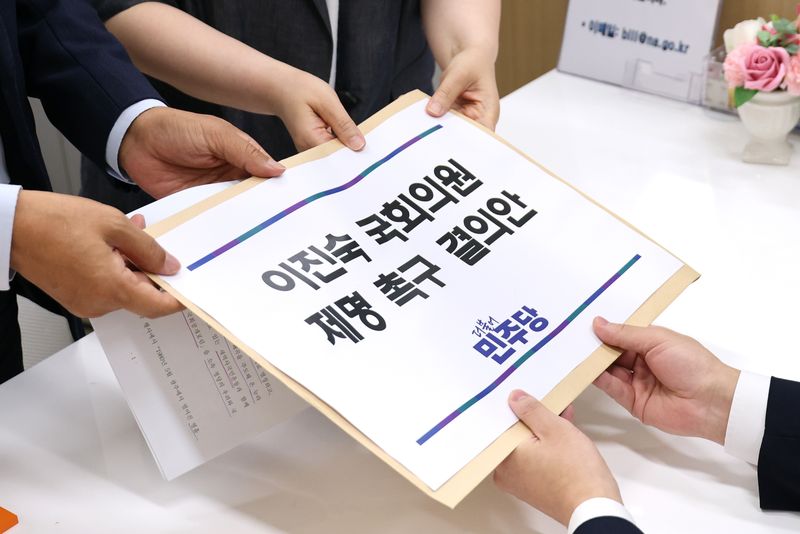
[Financial News] The National Assembly has been in an 'ethics vacuum' for 28 months. This is the first time since democratization in 1987 that the Ethics Committee has not been formed even in the latter half of a term. The fact that the committee has not even been launched, despite intensifying partisan conflict and repeated misconduct by lawmakers who should set an example as representatives of the public, is being criticized as a serious problem.
Following the controversy over People Power Party lawmaker Lee Jin-sook's '5.18 reevaluation forum,' the Democratic Party of Korea is calling for the Ethics Committee to be formed as soon as possible. However, there are also concerns that the committee could fail to restore ethics and discipline in the National Assembly and instead become a stage for political infighting. Critics are also arguing that the ruling and opposition parties' prolonged neglect of the ethics vacuum amounts to a form of tacit collusion.
46 lawmakers targeted by disciplinary motions, 60 by expulsion resolutions... 28 months of 'ethics vacuum'
According to the National Assembly Bill Information System on the 23rd, 55 disciplinary motions and 13 resolutions calling for expulsion have been submitted to the 22nd National Assembly so far. At the halfway point of the term, that is the highest level on record. A total of 46 lawmakers are named in the disciplinary motions, with independent lawmaker Jang Kyung-tae facing the most at three. The expulsion resolutions target 60 lawmakers, meaning motions have been filed against one-fifth of all sitting lawmakers.Although the number of disciplinary and expulsion motions is at a record high, the Ethics Committee, which is supposed to review them, has not even been able to get off the ground. Last year, the ruling and opposition leadership agreed to form the committee with equal representation, six members from each side, and the plan was approved by the Steering Committee in July. But in August, then-Democratic Party leader Jung Cheong-rae opposed the equal split and unilaterally scrapped the agreement. As a result, the committee has remained vacant for more than a year.
However, after the controversy over Lee Jin-sook's alleged disparagement of the 5.18 movement, the ruling camp appears to be moving faster on forming the Ethics Committee. New Democratic Party leader Kim Min-seok met with Speaker of the National Assembly Cho Jeong-sik on the 20th and said, "It is embarrassing to sit in the National Assembly with her," adding, "Violating the spirit of the Constitution is grounds for expulsion." Many Democratic Party lawmakers are also urging the committee to be formed quickly so that Lee's expulsion can be discussed.
Cho is also said to have a strong will to form the Ethics Committee. An official from the Speaker's office told Financial News, "It is an embarrassing sight for the public that the Ethics Committee has not been formed for more than two years," adding, "Regardless of the Lee Jin-sook case, there is a clear intention to form the committee." Still, since Kim Min-seok's leadership has only recently taken office, consultations between the ruling and opposition leadership will need to take place, and the Speaker's office says it will wait and see.
Tacit bipartisan collusion? "They won't form the committee because it would hurt both sides"
Some analysts say the Ethics Committee has been stalled for 28 months because of tacit collusion between the ruling and opposition parties. That is because disciplinary motions submitted to the National Assembly do not spare either side. Of the 55 disciplinary motions, 25 target lawmakers from the pro-government camp and 30 target those from the opposition. The expulsion resolutions also target 13 lawmakers from the ruling camp and 47 from the opposition.Some believe there are enough cases that could actually lead to disciplinary action or expulsion, or that could reignite controversy and cause fresh damage. Representative examples in the ruling camp include Choi Min-hee over the controversy involving her daughter's congratulatory money, Kang Sun-woo over allegations of abuse of power, and Lee Chun-seok over alleged stock trading under borrowed names. On the opposition side, examples include Lee Jin-sook over the 5.18 disparagement controversy, Kim Min-jeon over a 'Baekgoldan' press conference, and Lee Jun-seok over the 'chopsticks controversy.'
The argument is that the ruling and opposition parties are delaying the launch of the Ethics Committee to minimize controversy. One political source predicted, "Even with the Lee Jin-sook controversy, it will not be easy to form the Ethics Committee," adding, "Because it is an issue that hurts both sides, they may not even convene it."
There is also criticism that disciplinary motions and expulsion resolutions are being overused as tools in partisan conflict. Even in the 21st National Assembly of the Republic of Korea, where the Ethics Committee was formed, 53 disciplinary motions were introduced, but only one lawmaker was actually disciplined. Because so few cases lead to real punishment, criticism has persisted that the committee is little more than a shell. Others argue that unless the root cause of political polarization is addressed, the Ethics Committee alone cannot solve the problem.
[email protected] Lee Hae-ram Reporter