Trump Faces an Economic 'Triple Wave' as Midterm Elections Loom
- Input
- 2026-08-23 05:31:24
- Updated
- 2026-08-23 05:31:24
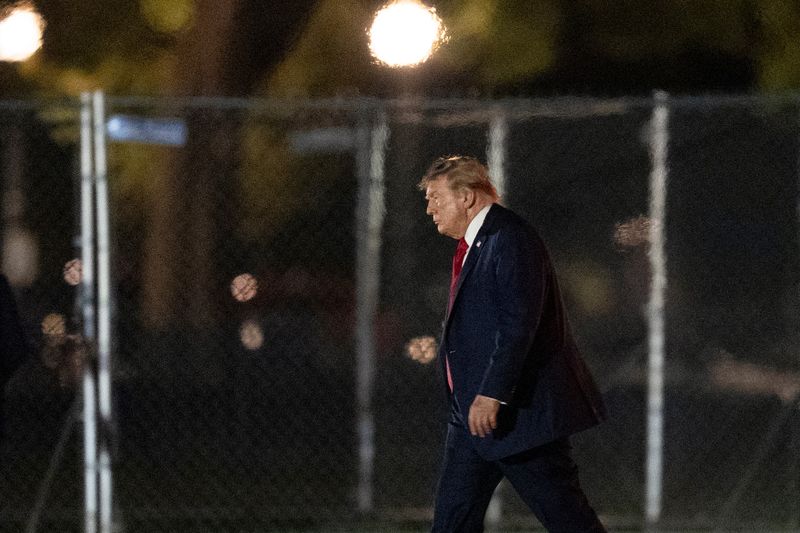
As cost-of-living inflation worsens amid the Iran War, U.S. President Donald Trump is facing an economic "triple wave." With the midterm elections just over two months away, the risk of a political crisis has also risen.
The Financial Times reported on the 22nd local time that Trump is confronting three major pressures: $40 trillion in debt, mortgage rates that have surged to 6.7%, and diesel prices that have climbed above $5 per gallon.
The FT especially emphasized that these are byproducts of the Iran War and tax cuts initiated by Trump.
Unstable markets... government intervention proves ineffective
New York stocks suddenly turned sharply lower on the 18th. Heavy debt and war-related inflation fears pushed the yield on 30-year U.S. Treasury bonds above 5.3%, the highest level in 19 years.
The next day, finance minister Scott Bessent said the size of long-term Treasury buybacks would be increased by "at least twofold," appearing to calm market panic. But the effect lasted only a day amid criticism that it was little more than a temporary fix. U.S. Treasury yields remained unchanged, while the value of the U.S. dollar fell instead.
On the 20th, Bessent said the market was "worrying too much," while Trump pointed to the stock market rally and claimed the economy was in a "boom."
Eswar Prasad, a Cornell University economics professor and former head of the IMF's China division, criticized the administration, saying, "The president's strong claims and the Trump administration's efforts to intervene in the foreign exchange and bond markets vanished into thin air and had little effect." He added, "They only made things worse and pushed market sentiment in a more negative direction."
As public support erodes, Trump's approval rating has fallen into the 30% range in less than two years since his presidential victory.
That casts a dark cloud over Trump's future.
The Democratic Party is determined to win the midterm elections in November, retake control of the House, and investigate Trump's corruption.
Government debt reaches $40 trillion
Government debt surpassed $40 trillion last week, setting a new record. Excluding the 2020 COVID-19 pandemic period, debt has been rising at the fastest pace ever. That is because Trump's tax cuts reduced revenue while spending increased.
Trump sharply cut budgets for social safety net programs such as Medicaid and food assistance for low-income households, but his sweeping tax cuts have significantly widened the fiscal deficit.
Diane Swonk, chief economist at KPMG US, warned that "U.S. fiscal spending continues to outpace tax revenue" and that "the war is driving spending even higher."
Government debt, which stood at 6.4% of GDP in fiscal 2024, eased slightly to 5.8% in fiscal 2025 after Trump took office, but the absolute amount is rising at a faster pace.
Finance minister Scott Bessent pledged to bring it down to 3% by the end of Trump's second term and said on the 20th that the chance of doing so was "very high."
However, Michael Strain, director of economic policy studies at the conservative think tank AEI, said that would require Trump to make very difficult choices. He noted that Trump would have to face serious political backlash, including deep cuts to Medicare and Social Security.
Strain said, "I hope what Secretary Bessent says is true," but added, "There are still huge challenges that must be addressed before reaching the target."
The era of $5 diesel
Above all, Trump's Iran War is driving up energy prices, which U.S. voters are especially sensitive to. That stands in stark contrast to his promise to cut energy prices in half during his term and lower the prices of basic consumer goods as well.
On the 21st, gasoline prices at U.S. gas stations reached $4.11 per gallon, surging about 40% since the Iran War began on February 28.
Diesel, a fuel essential for transportation and agriculture and one that has a major ripple effect on the U.S. economy, also jumped 40% to $5.58 per gallon.
The average U.S. diesel price has already surpassed the level seen under former President Joseph Robinette Biden Jr. during Trump's second administration.
Mortgage rates soar to 6.65%... housing costs rise further
Mortgage rates are also climbing sharply. That is because the yield on 10-year U.S. Treasury bonds, which influences mortgage rates, is rising alongside fuel prices.
The 30-year fixed mortgage rate, which stood at 5.98% before the Iran War, has now surged to around 6.65%.
Jaret Seiberg of TD Securities said, "Because mortgage rates fell in the fourth quarter of last year and the first quarter of this year, political pressure on the Trump administration to lower housing costs was limited." He added, "But now there is no alternative except to focus on lowering rates, even if the effect is temporary."
Clouds over the midterm elections
Amid surging government debt, high interest rates, and heavier fuel and food costs, consumer sentiment in the United States has fallen to a record low. Polls also show that voters believe the economy has worsened since Trump took office.
The economy is still growing, supported by spending led by investment in Artificial Intelligence (AI) infrastructure, but momentum is gradually weakening.
Most importantly, it remains far below the targets set by the Trump administration.
Commerce Secretary Howard Lutnick set a GDP growth target of 5% to 6%, while Bessent aimed for 3%. But growth last year came in at just 2.1%. Growth in the second quarter of this year was only 1.5%.
[email protected] Song Kyung-jae Reporter