Prime Minister Carney Declares a "Trade War"... Canada to Impose Retaliatory Tariffs Starting September 8
- Input
- 2026-08-23 03:09:21
- Updated
- 2026-08-23 03:09:21
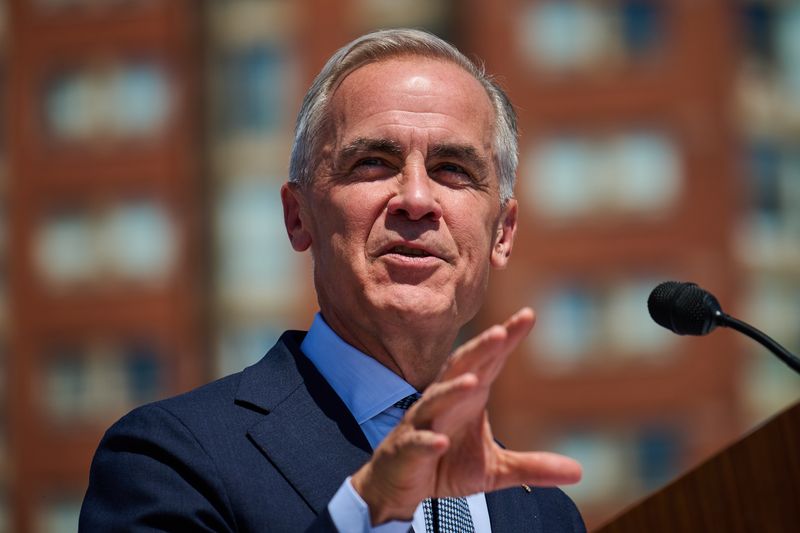
With trade talks failing, Prime Minister Mark Carney declared on the 22nd (local time) that the United States and Canada are "at war" over trade. Carney said U.S. President Donald Trump is escalating the tariff offensive because of a "miscalculation."
He said Canada will begin retaliatory tariffs on September 8 against an equal amount of U.S. goods, after the United States imposed 50% tariffs on about $20 billion worth of Canadian products starting on the 22nd.
"If you are attacked, it is war"
According to the Financial Times (FT), Carney said in a resolute address to the nation in Ottawa that the terms demanded by the Trump administration amounted to a "bad deal."
Carney told reporters, "If you are attacked, you are in a state of war," adding, "We were attacked." He criticized President Trump for underestimating Canada's resolve because of a "miscalculation," and said that led to the trade war. In other words, Canada did not want this, but entered a trade war because it was attacked.
He stressed, "We could not accept what they put on the table, and we could not give them what they demanded."
U.S. Pushes Ahead With $20 Billion in Tariffs
Earlier, the two countries held last-minute talks on the 21st but failed to reach an agreement, effectively starting a trade war.
According to CNBC, both sides spent the entire week in negotiations and at times appeared close to a deal. Trump extended the deadline for talks on the 19th, just hours before the tariffs took effect, and Dominic LeBlanc, Canada's trade minister, told reporters on the 20th that they were "very close" to an agreement.
But after failing to reach a deal, the United States imposed 50% tariffs starting on the 22nd on about $20 billion worth of imports, including Canadian wine, furniture, dairy products, cement, clothing, fishing rods, and hockey equipment.
Jamieson Greer, the U.S. Trade Representative (USTR), said in a post on social media platform X on the morning of the 22nd that "Canada refused final approval of a trade agreement based on the terms agreed earlier this week."
"The U.S. Demands Are Unfair"
Signs that the trade talks were collapsing became clear in a statement issued by Prime Minister Carney late on the 21st. The statement said that despite efforts to reach a deal, "not enough progress was made to achieve our objectives for Canadians." It added that the terms the United States changed and proposed at the last minute were "unfair, not economically viable, and raised doubts about whether any agreement was truly possible."
At a press conference on the morning of the 22nd, Carney said the U.S. demands had gone too far.
He said, "They asked for too much and gave up very little," adding that Canada had been willing to withdraw its steel retaliatory tariffs if the United States lowered its tariffs on steel, aluminum, and automobiles, but Washington did not do so.
"An Eye for an Eye" — One-to-One Retaliation
Carney said Canada would therefore impose retaliatory tariffs, which will take effect on September 8. He added that the measures will target U.S. steel, dairy products, agricultural equipment, pulp, and paper, among others. He also said details will be released within days, and stressed that, as previously announced, the retaliation will be "dollar for dollar." That means Canada will respond in kind: if the United States imposes tariffs on $20 billion worth of Canadian goods, Canada will impose retaliatory tariffs on $20 billion worth of U.S. goods.
Pressuring the U.S. With an Energy Card
Carney also pointed out that the two countries are closely linked through energy, using that as leverage against Washington. He said, "Canada powers U.S. growth," adding, "I don't think they want a situation where we send none of this energy."
New York and other parts of the U.S. East and Midwest are known to rely on Canadian electricity. In particular, the two countries' power grids are interconnected. Canadian electricity plays an important role in maintaining stable supply during the summer, when U.S. demand surges, and in winter, when severe cold hits. Canada also supplies more than 50% of the crude oil imported by the United States, as well as a significant share of the natural gas used for heating and power generation in northern regions.
[email protected] Song Kyung-jae Reporter