Risk of Yen Carry Trade Unwinding Returns to the Fore
- Input
- 2026-08-22 09:15:25
- Updated
- 2026-08-22 09:15:25
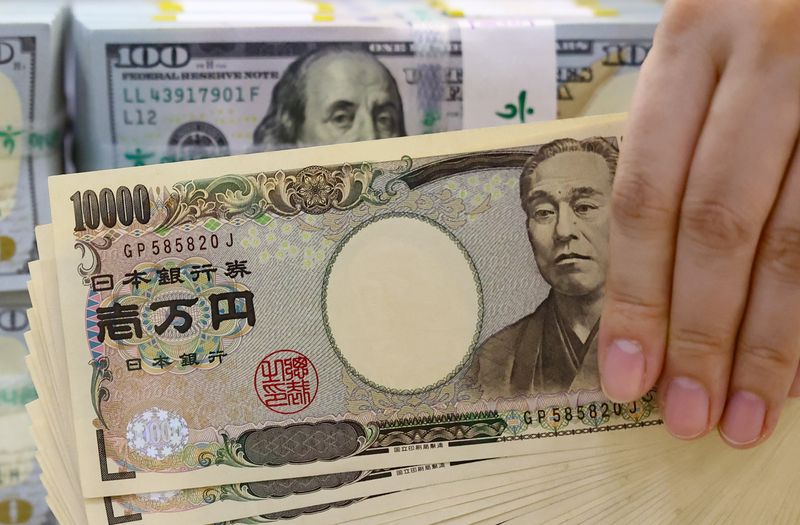
[Financial News] As U.S. and Japanese intervention in the foreign exchange market continues, concerns over a yen carry trade unwind have resurfaced, prompting calls for close monitoring across the financial markets.
On the 22nd, the Korea Institute of Finance (KIF) released a report titled "A Review of Japan's Monetary Policy Stance and Yen Carry Trade Unwinding Risks," saying that if coordinated intervention by the United States and Japan weakens expectations of yen depreciation, incentives to unwind positions could increase. The institute said related risks should be examined closely.
A yen carry trade is a strategy in which investors borrow funds in yen, a low-interest currency, and then invest in assets denominated in currencies with higher interest rates. In general, the strategy is easier to maintain when the U.S.-Japan interest rate gap remains wide, the yen stays weak, and market volatility is low. If even one of those assumptions weakens, highly leveraged positions are more likely to be adjusted all at once rather than gradually.
The report noted that the BOJ raised its policy rate to 1% in June, the highest level in 31 years, heightening concerns that the low-cost funding environment could change fundamentally. It explained that what matters more than the rate hike itself is the process by which market participants reshape expectations that they may have less time to borrow in yen.
In particular, the report pointed to the late-month coordinated intervention by the United States and Japan to defend the yen as another factor shaking market confidence in the currency's direction. It assessed that if expectations for yen weakness fade, that could increase the risk of a yen carry trade unwind.
Unwinding yen carry positions does not simply end with a stronger yen. When the yen strengthens, upward pressure on the won–dollar exchange rate may ease in periods when the won and the yen move in tandem. In other words, the foreign exchange market could see a short-term effect of exchange-rate stability.
The problem, however, is speed and simultaneity. A stronger yen alone may not pose a major risk. But if the U.S.-Japan interest rate gap narrows quickly, or if expectations of further monetary policy changes in Japan are reflected in the market at the same time and investors begin unwinding both risk assets and currency positions, the process could be triggered abruptly. In that case, volatility could rise further and the pace of adjustment across global financial markets could accelerate.
The report also cited a real-world example. In August 2024, weak U.S. employment data and a rate hike by the BOJ combined to trigger a sharp unwinding of yen carry trade positions. As a result, the KOSPI fell 8.8% and the KOSDAQ dropped 11.3%. The report said this was a typical case in which foreign exchange volatility and position unwinding spread into the stock market.
KIF said, however, that the likelihood of a sharp narrowing in the U.S.-Japan interest rate gap over the short term is limited. Since the BOJ is expected to continue raising rates at a cautious pace, the institute judged that the risk of large-scale unwinding is unlikely to materialize immediately. Still, it stressed that a low probability does not mean no risk. Markets often react to expectations and signals before they respond to actual numbers.
The report's key recommendation was ultimately about monitoring. KIF said, "To prepare for an unexpected rise in global financial market volatility, we need to closely monitor yen carry trade flows and their direct and indirect effects on the domestic financial market." It added that when major countries' monetary policy decisions differ from market expectations, volatility can expand rapidly, making it necessary to track foreign exchange, interest rates, and risk appetite indicators together.
The report also made clear where financial authorities and markets should be paying attention. A yen carry trade unwind is usually not just a matter of exchange rates, but is tied to the speed at which leveraged positions are closed. During an unwind, indirect signals such as changes in derivative prices, short-term liquidity conditions, and foreign currency funding costs may appear before spot exchange rates do, making an early warning system important.
A KIF official emphasized, "In an environment of rising global volatility, the domestic market can also be easily affected, so we need to observe the overall flow rather than focusing on a single indicator."
[email protected] Kang Gu-gwi Reporter