The semiconductor giants' big shareholder returns... Will market liquidity in Korea improve?
- Input
- 2026-08-22 06:00:00
- Updated
- 2026-08-22 06:00:00
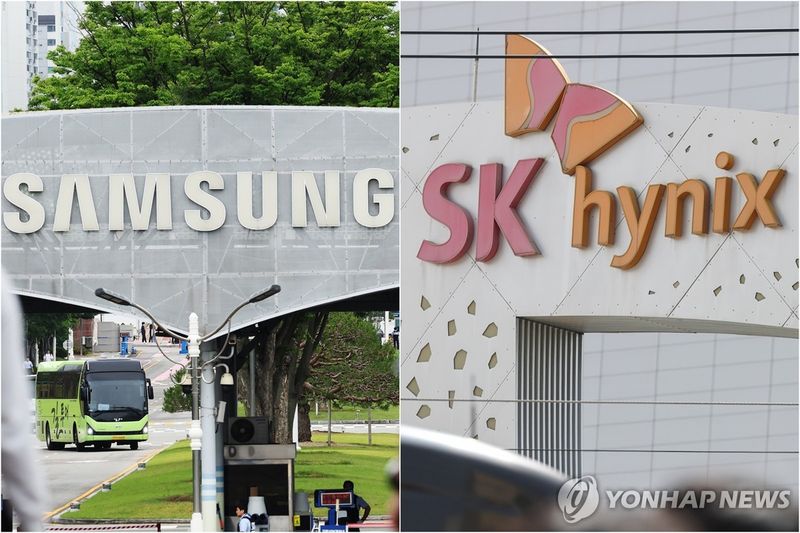
[Financial News] With Samsung Electronics following SK hynix in rolling out record-level shareholder returns, expectations are rising that the domestic stock market could gain upward momentum. Analysts say investor sentiment, which had weakened amid volatile trading, is likely to recover, improving market liquidity.
On the 22nd, Samsung Electronics disclosed through DART, the Data Analysis, Retrieval and Transfer System, that its Board of Directors had met the previous day and approved a plan to carry out shareholder returns worth 90 trillion won to 110 trillion won this year.
The plan follows the company’s three-year shareholder return policy for 2024-2026, which allocates 50% of free cash flow. The amount excludes the 29.3 trillion won already returned in 2024 and this year.
Samsung Electronics plans to distribute cash dividends of about 30 trillion won in the third quarter, including quarterly dividends. The details will be finalized at a Board of Directors meeting at the end of October. The remaining shareholder returns will be decided at a Board of Directors meeting in January next year, after this year’s business results are finalized.
Earlier, SK hynix also announced a shareholder return plan on the 19th. It said it would buy back up to 40 trillion won worth of treasury shares on the open market over a period of up to three months before canceling them strategically.
Brokerages expect companies' shareholder returns to have a positive effect on the stock market. In particular, they say investor sentiment is likely to improve through shareholder returns at a time of heightened uncertainty, including geopolitical risks and concerns over interest-rate hikes.
Lee Jae-won, a researcher at Yuanta Securities Korea, said, "For the time being, index gains will depend more on earnings per share improvements and expanded shareholder returns than on price-to-earnings ratio re-rating driven by falling interest rates." He added, "Greater shareholder returns can serve as a catalyst for valuation re-rating and help narrow the South Korea Is Becoming Uninvestable, Too discount."
In the domestic market in particular, liquidity is seen as a key variable, and analysts say shareholder returns will help improve supply and demand conditions.
Yang Il-woo, a researcher at Samsung Securities Korea, noted, "The domestic stock market generally tends to show a low correlation between return on equity and price-to-book ratio. Compared with other markets, earnings revision momentum and supply-demand conditions tend to matter more than valuation when determining stock prices."
He added, "Because earnings momentum is likely to be stronger in the future when current estimates are low, companies with low ROE tend to receive a premium, while those with high ROE may actually be discounted. For sectors that are disadvantaged in valuation despite having high ROE, stronger shareholder returns could help normalize valuations."
[email protected] Seo Min-ji Reporter