[Editorial] Preserve Yongsan Park and Raise Floor Area Ratios to Solve the Housing Shortage
- Input
- 2026-08-20 19:24:27
- Updated
- 2026-08-20 19:24:27
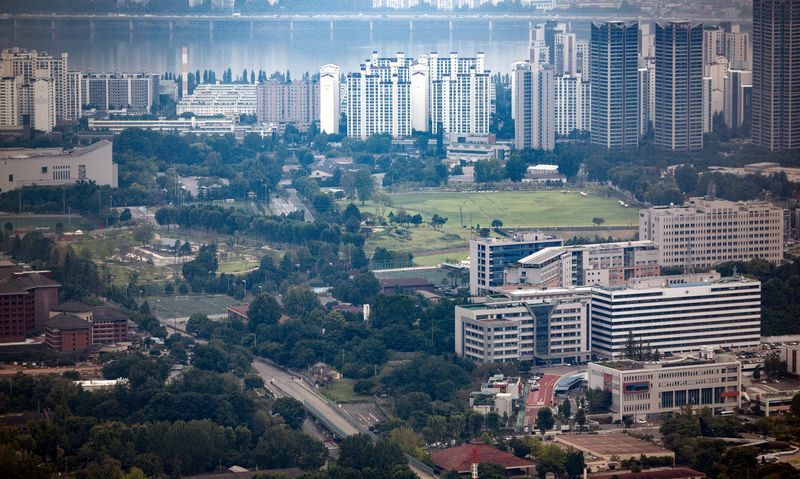
We find it difficult to support developing Yongsan Park as residential land and building apartments and other homes there. If you look at a map, Seoul appears to have plenty of green space. In fact, Seoul government data show that park area per person is slightly larger than in other capitals such as New York and Beijing. But if the scope is narrowed to parks that citizens can actually reach on foot, the amount of park space per person is much smaller. Most of the parks are mountains on the outskirts.
In that sense, Yongsan Park is effectively Seoul’s only large-scale park. It can be compared to Central Park in New York. Even though New York has high housing prices and a dense population, no one would agree to building homes in Central Park. The value of a park, which gives citizens a place to rest and helps cool the urban heat, is so great that it is almost impossible to overstate. Rather than eliminating Yongsan Park, the city should secure more park land there by any means possible.
It is true that Seoul lacks land for housing construction. But there are ways to address the problem. In the long term, the city must reduce population density by dispersing residents. As with the balanced regional development policy the government is pursuing, local areas should be developed so that people in Seoul can move there and live. If the population declines, housing demand will naturally fall and home prices will also ease. However, this will take a long time, so it is not a solution that can deliver immediate results.
The second option is to ease floor area ratio limits. Raising the floor area ratio would allow housing supply to increase. In other words, if horizontal expansion is impossible, supply must be expanded vertically. Seoul’s average floor area ratio is below 160 percent, while many major cities around the world exceed 200 percent. Looking only at central districts, New York stands at 3,300 percent and Tokyo at 1,800 percent, while Seoul is capped at 1,000 percent.
To overcome chronic housing shortages and high prices, Auckland in New Zealand increased housing supply by pursuing an up-zoning policy that relaxed floor area ratio and height restrictions across 75 percent of all residential areas. As a result, rents reportedly fell by 28 percent six years later, in 2022.
It would be more efficient to raise floor area ratios in areas people want to live in, including Gangnam, and expand housing supply than to eliminate Yongsan Park. To do that, redevelopment and reconstruction regulations must be significantly eased first. Of course, there are related issues to address, including transportation and parking. Vertical development would also create more open space at ground level, which could be turned into parks. The redevelopment of Roppongi Hills in Tokyo is a case worth studying.
Above all, the government’s stance makes no sense: it strongly opposes the redevelopment of Sewoon District 4 in front of Jongmyo Shrine, yet shows no hesitation about demolishing Yongsan Park. It feels as if the positions of the ruling and opposition parties have been reversed. Once a park is damaged and developed, it can never be restored. Buildings that are built high can always be torn down and turned into a park.
It is even less appropriate to push ahead by changing the law. It is certainly not something for a minister and a mayor to decide on their own. They should listen to the diverse views of experts and citizens. A short-sighted policy made in the moment could permanently damage the beautiful capital of the Republic of Korea, Seoul.