The exchange rate has fallen below 1,400 won... "It will drop further to 1,350 won"
- Input
- 2026-08-20 08:53:50
- Updated
- 2026-08-20 08:53:50
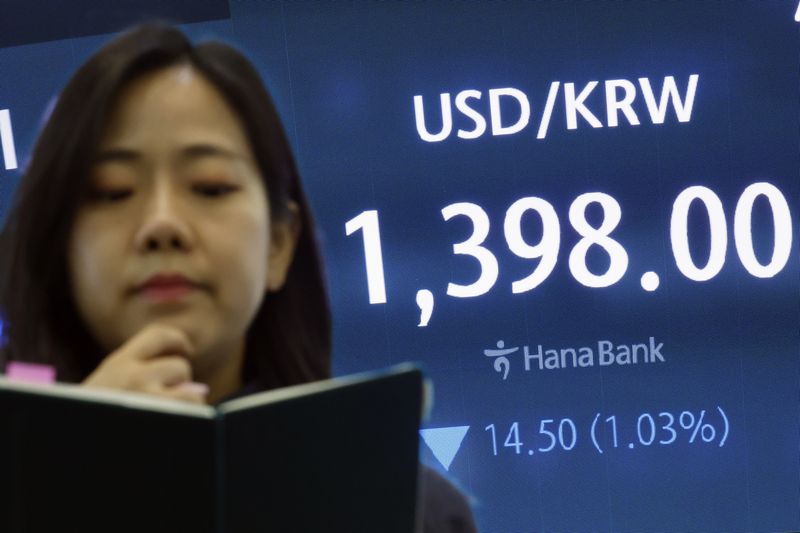
[Financial News] The won–dollar exchange rate fell below 1,400 won for the first time since Sept. 29 last year. In Yeouido, analysts said the trend could continue in the second half of the year, with the exchange rate potentially falling as low as 1,350 won. Park Sang-hyun, a researcher at iM Securities, said in a report on the 20th that "the biggest reason the downward trend in the won–dollar exchange rate has remained intact despite the sharp rise in U.S. and Japanese government bond yields is dollar supply and demand," adding that "the market is likely to remain in a dollar supply surplus for the time being."
He first pointed to an increase in foreign-exchange conversion by Samsung Electronics and SK hynix. Park noted that "the two companies are expected to convert foreign currency holdings as they are likely to announce large-scale shareholder return policies." He added that corporate tax prepayments due by the end of August, as well as funding needs for investments tied to the government’s Three Mega-Projects, would also lead to more currency conversion.
Park also said the sharp increase in the surplus of the domestic trade balance is favorable for dollar supply and demand. He explained that "the trade balance surplus from January to July this year reached $167.8 billion, and the annual surplus is highly likely to exceed $360 billion," adding that "this is about four times the previous record annual surplus of $95.2 billion in 2017."
In addition, pressure on dollar demand eased as foreign investors, who had been aggressively net sellers of domestic stocks in the first half of the year, slowed their selling.
Park forecast that the won–dollar exchange rate would fall to the 1,350-won range. He said, "The dollar supply surplus is expected to continue for some time, so the won–dollar exchange rate is likely to decline further," adding that "if the U.S. and Japan continue policies that encourage yen strength to stabilize the government bond market, the US dollar–South Korean won exchange rate could fall even more."
If the won strength continues, pressure for a base rate hike is also expected to ease. Since the Monetary Policy Board has cited inflation risks and the exchange rate as key issues in deciding the base rate, a sharp drop in the exchange rate could reduce pressure for an additional rate increase.
Park said, "It will also have a positive effect on foreign investment in domestic stocks and bonds," adding that "a sharp rise in the exchange rate has reduced the appeal of Korean stocks and acted as a risk factor for the stock and bond markets, but won strength could encourage greater foreign investment in the stock and bond markets through the end of the year."
However, he also noted that the decline in the won–dollar exchange rate could prompt domestic investors to increase overseas investments and may reduce sales and profits for export-oriented Korean companies, meaning negative factors remain.
[email protected] Han Young-joon Reporter