Japan to Ease Curbs on Overtime Beyond 45 Hours a Month; South Korea Also Debates R&D Working Hours
- Input
- 2026-08-20 09:19:11
- Updated
- 2026-08-20 09:19:11
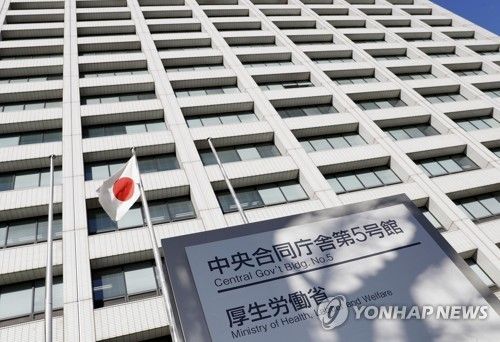
[Financial News, Tokyo = Seo Hye-jin, correspondent] The Japanese government will ease its blanket administrative guidance starting next month, which had required companies that signed special overtime agreements to keep overtime within 45 hours a month. The move will keep the legal cap at under 100 hours a month, but will broadly allow intensive work periods on the condition that health protection measures are in place. Business circles expect greater flexibility in corporate activity, while labor groups worry it could encourage longer working hours.
■ The law allows less than 100 hours a month, but guidance limits it to 45
According to The Asahi Shimbun and Nihon Keizai Shimbun (The Nikkei) on the 20th, MHLW will revise how labor standards inspectors guide overtime from next month. Companies that have signed a so-called 36 Agreement with a special clause will no longer be uniformly told to reduce overtime to within 45 hours a month.
Japan's statutory working hours are eight hours a day and 40 hours a week. If labor and management conclude a 36 Agreement, overtime is, in principle, allowed up to 45 hours a month and 360 hours a year.
If a special clause is added, overtime is allowed up to 720 hours a year, and overtime including holiday work is permitted up to less than 100 hours a month. However, the average over two to six months must remain within 80 hours a month, and the period in which overtime can exceed 45 hours is limited to six months a year.
A 2024 survey by MHLW found that only 49.7% of workplaces had signed a 36 Agreement. About 70% of those had a special clause. In other words, roughly 35% of all companies could be affected by the revised guidance.
Until now, labor standards inspectors had instructed even companies with special clauses to cut overtime to within 45 hours a month in order to prevent health damage from long working hours. Japan's business community pushed back, saying the government was restricting, through administrative guidance, working hours that the law already allowed and thereby stifling corporate activity.
In response, the Liberal Democratic Party's Japan Growth Strategy Headquarters proposed revising the guidance method to the government in April, and the related content was also reflected in the Japan Growth Strategy decided at last month's Cabinet meeting.
The latest revision is part of the Takaichi Cabinet's push to make working-hour regulations more flexible. The cabinet is also considering expanding the scope of the discretionary labor system, which treats hours predetermined by labor and management as worked regardless of actual hours, as well as revising the flexible working time system that adjusts hours according to busy and slow seasons. However, the two systems face wide differences between labor and management, so the Labor Policy Council is expected to discuss them through the end of the year. No specific direction has been decided yet.
Labor groups warn that companies may lose their willingness to reduce overtime, raising concerns that the reform of working styles could be rolled back. Lawyer Ryo Sasaki criticized the move, saying it appears to be heading toward tolerating long working hours. By contrast, Hosei University professor Hisashi Yamada gave it a somewhat positive assessment, saying companies can be informed of the scope of the current system's use without a large-scale legal overhaul.
■ South Korea also debates special R&D working-hour exemptions
Japan and South Korea share the same statutory working hours of eight hours a day and 40 hours a week, but they place different weight on regulation. Japan strictly manages the annual total of overtime hours, while allowing more flexibility for concentrated work during busy periods.
Japan generally limits overtime to 45 hours a month and 360 hours a year. In South Korea, labor and management can agree to allow up to 12 hours of overtime a week, capping total working hours at 52 hours a week, but there is no separate annual limit. Japan manages both monthly and annual caps, while South Korea mainly relies on a weekly cap.
The difference is even clearer in short-term intensive work. If Japanese companies sign a 36 Agreement with a special clause in advance, they can work beyond 45 hours a month without case-by-case government approval. However, they must keep overtime and holiday work combined below 100 hours a month, maintain an average of 80 hours or less over two to six months, and limit the number of months exceeding 45 hours to six per year.
South Korea also allows working hours to be adjusted over a certain period through flexible and selective working systems. For R&D work, the settlement period under the selective working system can be set at up to three months, but workers decide their own start and end times. The industry says this limits companies' ability to deploy staff uniformly in line with technology development schedules.
A semiconductor R&D company must obtain worker consent and approval from MOEL to use special extended working hours. If approval is granted for six months, the weekly total working-hour cap is 64 hours for the first three months and 60 hours for the following three months. Unlike Japan, it is not a system that allows intensive work based solely on a prearranged labor-management agreement.
For that reason, South Korea's advanced industries are demanding a separate special exemption that would allow them to deploy workers during periods of concentrated technology development without case-by-case government approval, and then give them time to rest afterward, rather than simply raising annual working hours across the board. Minister of Trade, Industry and Energy Kim Jung-kwan recently said it may be necessary to review options such as a white-collar exemption, which would exclude professionals above a certain income level from working-hour regulations, as well as expanding the selective working system.
MOEL, however, says concentrated work is already possible under the current selective working system and special extended working hours, and is cautious about creating a separate exemption. Labor groups fear the institutionalization of long working hours, while Cheong Wa Dae says discussions with labor groups and local communities, along with their consent, should come first.
[email protected] Seo Hye-jin Reporter