"A Weekly Salary of 1.6 Million Won Is a Burden" ... After SK hynix's 4 Trillion Won Buyback, Is a Stock Split Next? [Why the Market Moves]
- Input
- 2026-08-20 06:10:00
- Updated
- 2026-08-20 06:10:00
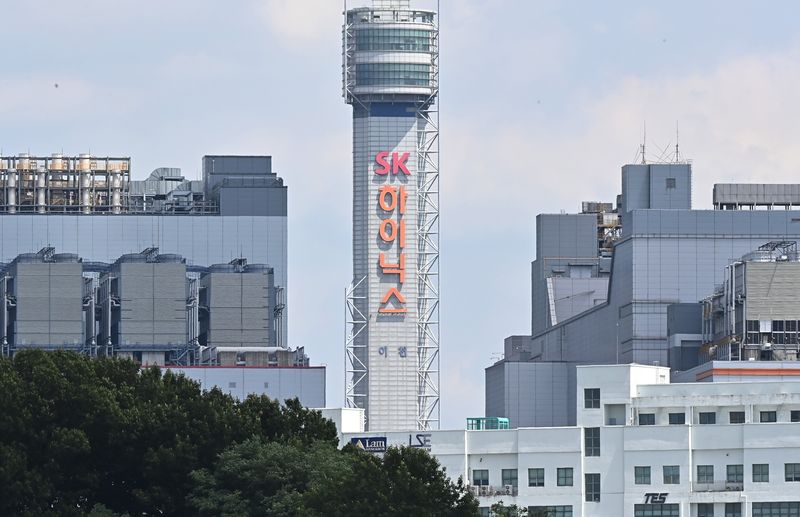
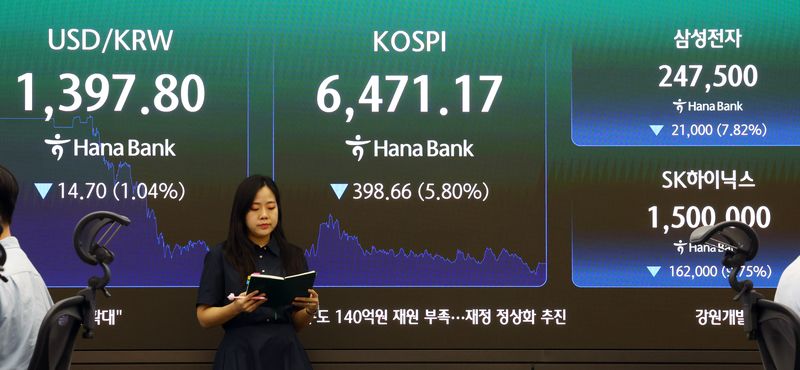
[Financial News] As SK hynix unveiled an unprecedented shareholder return plan involving 40 trillion won in treasury share buybacks and cancellations, market attention is shifting to its next move. In particular, with the stock price rising into the 1.5 million to 1.6 million won range and making entry more difficult for individual investors, calls for a stock split are also emerging. Samsung Electronics previously saw its share price climb sharply on improved earnings and stronger shareholder returns before carrying out a 50-for-1 stock split, so investors are now watching SK hynix's decision closely.■ Full cancellation of 40 trillion won in treasury shares ... shareholder returns beyond expectationsAccording to the financial investment industry on the 20th, SK hynix closed at 1.5 million won on the previous trading day, down 9.75% on the main market. As rising global long-term interest rates weighed on growth-stock valuations and foreign investors sold shares, profit-taking hit major semiconductor stocks such as Samsung Electronics and SK hynix.
Sentiment reversed after the market close. After SK hynix announced its 40 trillion won treasury share buyback and cancellation plan, it recovered most of its losses in the NextTrade (NXT) after-hours market and finished at 1,624,000 won, down 2.29% from the previous day. Compared with the regular-session close, that marked an 8.27% rebound.
Lee Jae-won, a researcher at Yuanta Securities Korea Co., Ltd., said, "The fact that improved earnings are being translated into actual shareholder returns is a strong factor for stock-price support and revaluation." He added, "A reduction in the number of shares outstanding through treasury share buybacks and cancellations can increase earnings per share (EPS) and lower the price-to-earnings ratio (PER), helping to close the valuation gap."
SK hynix will acquire 24.07 million common shares on the open market and cancel them in full. Based on the closing price of 1,662,000 won on the 18th, the planned purchase amount comes to 4,004,340,000,000 won, or about 3.3% of all outstanding shares. The purchase period runs from today through Nov. 19. The company plans to cancel all of the shares within one to two weeks after completing the buyback.
The scale also exceeded market expectations. Hana Securities had initially projected SK hynix's total shareholder return this year at 40 trillion to 60 trillion won, with treasury share buybacks accounting for 20 trillion to 30 trillion won of that total. The actual buyback announcement alone reached 40 trillion won, and with additional return measures also expected, the total shareholder return could surpass earlier forecasts.
Kim Rok-ho, a researcher at Hana Securities, said, "The 40 trillion won treasury share purchase is clearly positive from a shareholder's perspective." He added, "It exceeds the 20 trillion to 30 trillion won buyback scale that had been expected, and because additional return policies are also expected to be shared, the total should exceed our initial estimate."
A stock split lowers the share price without directly changing a company's value. As the number of outstanding shares increases, the per-share price falls by the same ratio, leaving market capitalization unchanged. At the same time, it can reduce the entry barrier for individual investors and help boost trading activity and liquidity.
Eom Su-jin, a researcher at Hanwha Investment & Securities Co., Ltd., explained, "When the price of one share is too high, such as several hundred thousand or even millions of won, it becomes a heavy burden for individual investors to buy, and trading volume tends to remain low." She added, "If a stock split lowers the price per share, access for individual investors improves, trading becomes more active, and the supply-demand base expands."
Samsung Electronics went through a similar process in the past. In January 2018, Samsung Electronics decided on a 50-for-1 stock split. On the day before the board resolution, the closing price was 2.49 million won, and there were persistent calls to ease the burden created by the high share price. As the stock rose sharply on improved 2017 earnings and aggressive shareholder returns, voices calling for a stock split grew louder.
After the split, the investor base expanded quickly. Samsung Electronics' share price fell from around 2.5 million won to about 50,000 won, and the number of retail shareholders jumped more than fourfold, from 144,283 at the end of 2017 to 627,549 at the end of the first half of 2018. Trading volume also increased significantly after the split.
SK hynix now shares some similarities with Samsung Electronics at the time, as its stock has climbed above 1.5 million won while it has also sharply strengthened its shareholder return policy. When Samsung Electronics decided on its stock split, it was pursuing a policy of using at least 50% of free cash flow (FCF) as a source of shareholder returns. SK hynix has now said it will return more than 50% of cumulative FCF from 2025 to 2027 to shareholders.
An industry source said, "For a company like SK hynix, whose stock price has risen sharply on the back of earnings growth and stronger shareholder returns, a stock split is meaningful not because it artificially raises corporate value, but because it lowers the barrier to entry for investors." The source added, "As in Samsung Electronics' case, it could improve access for individual investors and increase stock liquidity."
[email protected] Choi Du-seon Reporter