"A Clicking Sound Every Time I Open My Fingers"...This Condition Is Making New Mothers Cry [Health Talk]
- Input
- 2026-08-20 05:50:00
- Updated
- 2026-08-20 05:50:00
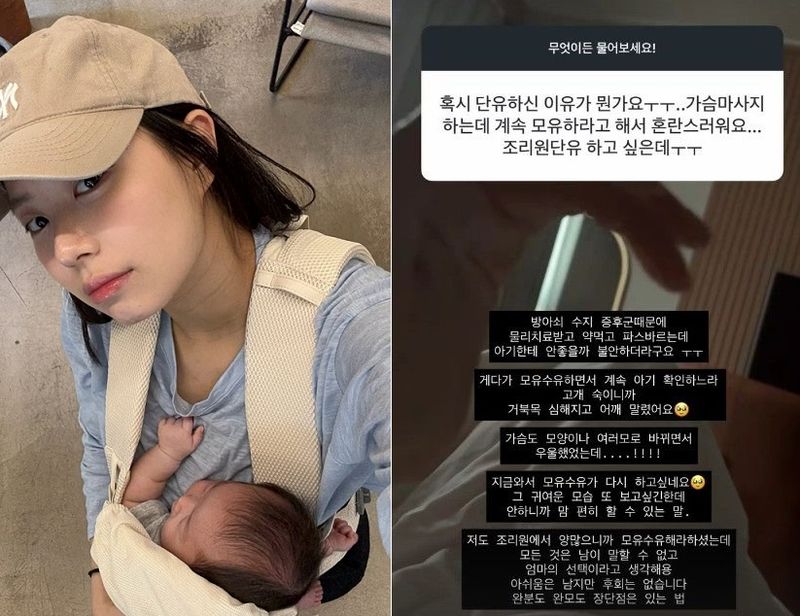
[Financial News] Interest in Trigger finger is rising after Choi Yeon-soo, the model and daughter of celebrity chef Choi Hyun-seok, shared why she stopped breastfeeding just one month after giving birth. It is a representative postpartum joint disorder that occurs when frequent nursing and repeatedly lifting a baby strain the fingers and wrists while the joints are still weakened after childbirth.
On the 17th, Choi Yeon-soo explained on her social networking service that she decided to wean early because she was worried that physical therapy, medication, and pain relief patches used to treat Trigger finger might affect her baby. She added, "I also felt psychologically depressed because of the nursing posture, forward head posture, rounded shoulders, and the physical changes in my body."
Trigger finger is a condition in which inflammation develops in the flexor tendon used to bend the fingers, or the pulley-like tunnel through which the tendon passes thickens and causes friction. The name comes from the clicking or catching sensation, like pulling a gun trigger, that occurs when moving the finger.
A finger catches and makes a clicking sound
When Trigger finger develops, bending or straightening the finger can feel stiff, as if it is catching on something. In severe cases, the finger may not fully straighten and must be forced open with the other hand. Each movement can produce the condition's characteristic clicking sound, and pressing the joint where the finger meets the palm may cause severe pain. The tendon area may also swell and feel like a small lump. Morning stiffness is especially noticeable, with the finger feeling rigid and difficult to move after waking up.
These symptoms are more common in postpartum women. Right after childbirth, a woman's body is under the influence of Relaxin, a hormone that helps with delivery, leaving the joints and ligaments loosened. When this is combined with nursing several times a day and repeatedly lifting a baby that can weigh several kilograms, the finger tendons are placed under excessive strain and can easily become inflamed.
In the early stages, improvement can be expected with conservative treatment such as minimizing finger use, limiting movement with a brace or splint, applying warm compresses, and taking anti-inflammatory painkillers. If inflammation and pain are severe, a small steroid injection may be administered under ultrasound guidance to calm the symptoms. If conservative treatment does not help, or if finger stiffness lasts for more than six months, a simple surgical procedure may be considered to cut the thickened pulley and widen the tendon passage.
Daily prevention and management are also important. During breastfeeding, using a nursing cushion or footrest can help distribute the baby's weight, and after work, warm-water stretching by soaking the hands and repeatedly clenching and opening them can improve blood circulation and relax the muscles. It is also best to avoid the habit of holding a heavy smartphone with one hand and repeatedly overusing the thumb while caring for a child.
Medical experts advised, "If finger pain after childbirth is dismissed as a common postpartum ache and left untreated, it can worsen into chronic inflammation," and added, "If catching or pain in the finger joints persists, patients should visit Orthopedics without delay and receive appropriate treatment early."
[email protected] Moon Young-jin Reporter