"Young People Suffering Are Disillusioned with Establishment Politics... A Generational Shift Will Happen Soon" [News Analysis from the Editorial Desk]
- Input
- 2026-08-19 18:34:02
- Updated
- 2026-08-19 18:34:02
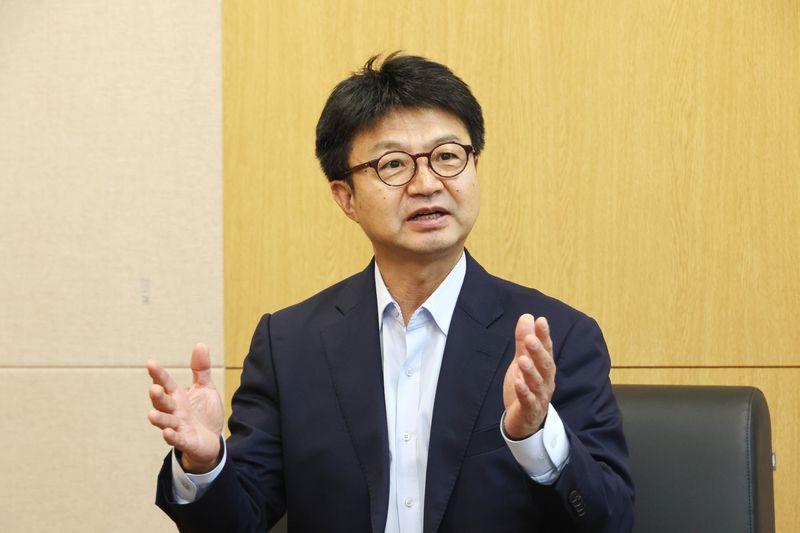
Ideological, regional, and generational conflict is a serious problem in Korean society. The pain young people face, including job insecurity, is growing by the day. Young people are rebelling against establishment politics and want a generational shift, but they lack the strength to turn that sentiment into a political force. We met with Kang Won-taek, a leading figure in Korean political science and a professor in the Department of Political Science and International Relations at Seoul National University, who will retire at the end of this month, to hear his views on the realities of Korean politics and the path it should take.
— Ideological conflict and division are severe. What is your view?
▲ Until the Kim Dae-jung administration, there was almost no ideological conflict. When Roh Moo-hyun emerged, progressive ideology gained strength by linking up with the 386 Generation. At the time, progressivism meant challenging authoritarian rule. Issues such as abolishing the National Security Act, improving relations with North Korea, and reducing dependence on the United States were raised. Conflict deepened amid incidents such as the Yangju highway incident. Today, meaningless regional conflict and the anger and hostility that followed Roh Moo-hyun's death were carried into Moon Jae-in's campaign to purge entrenched wrongdoing. To maintain political standing, that hostility and animosity have to be continually reproduced.
— You called it meaningless regionalism.
▲ The depopulation of local areas is the real issue, so what does it matter whether it is Gyeongsang or Jeolla? Everyone is struggling. That is why it is a meaningless conflict. It has no significance beyond regional interests, or the effort to push those interests through central power.
— What needs to be done to ease the conflict?
▲ It is a winner-takes-all system, isn't it? That applies to the president and lawmakers alike. To seize control of it, people have to unite along regional and factional lines. In the PK region, support for the two major parties has already shifted to roughly 50-50 or 60-40, and Daegu has changed as well. In Honam, younger voters in their 20s and 30s dislike the Democratic Party of Korea. If the electoral system were more proportional, or if other voices could be represented politically, things could change further. In a structure where the president controls everything from A to Z, there is no room for compromise or cooperation.
— Then the system has to change. There is also talk of constitutional revision.
▲ The process is extremely important. During the 1987 constitutional revision, the seat ratio between the ruling and opposition parties was 2 to 1, but they held an eight-person dialogue on a 4-to-4 basis. At the time, the ruling party gave up its entrenched interests and compromised on equal footing. President Lee Jae-myung seems to believe that the majority should lead. In the end, that means politics by numbers. There is no public persuasion, and no clear statement about whether he will seek a second term.
— What would decentralization look like in concrete terms?
▲ The prime minister should be elected by the National Assembly. The idea is to divide responsibilities so that the president handles foreign affairs, security, and long-term national development tasks. Unnecessary powers held by the central government should be transferred to local governments. The important point is that local areas are also dominated by a single party, so checks and balances do not work and political pluralism is not guaranteed. That is why political reform must come first. With bold decentralization based on reform, power should be divided vertically and horizontally so that ministers can also do their jobs properly.
— How should the election system centered on a two-party structure be changed?
▲ In fact, changing the electoral system is more important than constitutional revision. The Democratic Party of Korea talks about progressivism and reform, but does not actually carry them out. The issue I take most seriously is generational change. Space must open up for a third party to emerge, but that is difficult. The backbone of the Democratic Party is the 386 Generation. Younger people are deeply dissatisfied. Their current hardships are severe, and they have little hope for the future. This is especially a time of transition, isn't it? It is an era of upheaval driven by artificial intelligence and robots. Young people need leaders who can represent and understand them, but no such figure exists. That is why 20-somethings are angry over the Jamsil polling-place issue. The 386 era is different from today, but change is not being accepted. I think a dramatic shift toward a new era, one in which their voices can be expressed, may be coming.
— They did show something in the June 3 election, but their force is still weak, isn't it?
▲ Their own complaint is that they are smaller in number than the 386 Generation. I see it a little differently. Change will begin to show from the general election two years from now. If someone sparks it and a flame appears, dissatisfied middle-class voters will gather around it. I believe there is a middle layer waiting for change, not just a question of the size or capability of people in their 20s and 30s. They could emerge in a consolidated form.
— What changes have there been in student movements?
▲ Students have become so individualized that even forming a student council is difficult. There is no huge evil that everyone can unite against. Korea is democratized now. Their reality should be reflected in policy, but it is not. The 386 Generation is one generation removed, after all. Younger people see them as entrenched interests. In Thailand, a party created by young people once became the largest party. It has been 24 years since Roh Moo-hyun emerged, a generation has passed, and it is time for new forces to appear in a new form.
— In fact, if the younger generation has 10 or 20 years, won't it soon become the backbone of the country?
▲ Of course. It will not take that long for a new change to emerge. In 2002, when the era of the three Kims and regionalism ended, the unexpected Roh Moo-hyun appeared, and that is the pattern. I think a major shift will come in two years or at the next presidential election. If someone emerges who can lead the consolidated strength of the 2030 generation and its momentum for change.
— Isn't the younger generation relatively weak in its sense of ideology?
▲ When people are busy making a living, what ideology can they have? With very few exceptions, they are highly pragmatic. Ideology is a product of industrial society. It is an old paradigm in a world where factories are disappearing or being replaced by robots. Society is becoming post-ideological. Even in Europe, left-wing parties are collapsing. We are at a similar stage. Korea was never about a workers' ideology. It was more like an anti-communist ideology, and that no longer means anything.
— Then aren't unions left-wing from an ideological standpoint?
▲ That is the thinking of the 386 Generation. It is the idea that workers are weak and must be protected, while capitalists are the bad guys. That does not fit today. The Yellow Envelope Act and similar measures all reflect that old way of thinking. Policies that do not fit the times keep coming out. If Hyundai Motor Company were to introduce robots, would the state stop it? From the perspective of young people, that is frustrating. To them, unions are entrenched interests. If unions are reformed, jobs will be created and young people will be able to enter. Isn't that pragmatism?
— But the institutional groundwork has already been laid, hasn't it?
▲ We have not escaped 1980s-style thinking. The world is changing at an astonishing pace, especially with the arrival of AI and physical AI robots. The environment is completely different from the past, but the thinking remains the same, so the weak are not protected while entrenched unions are. The Samsung Electronics bonus issue is the most symbolic example. How are those people the weak? Policy innovation must keep pace with change if we are not to fall behind the tide of the times, but the people in charge are still old-school, so conflict arises.
— In the end, wasn't the Democratic Party's one-party dominance made possible by the people?
▲ I would first point to the collapse of the conservatives. The conservatives fell apart earlier. They stopped telling new stories. From the Park Geun-hye era, they went back to the old ways. The Capital Region is where the hardships of young people and others are concentrated. From the latter part of Park Geun-hye's term, conservatives failed to win many seats there. That was because they could not respond to real-world problems. The Democratic Party of Korea was chosen as the alternative. But now the Democratic Party is becoming the same. It no longer has a new story, and although it calls itself progressive, reform has disappeared. It has become another group of old-school conservatives. There has to be a major change for our politics and our society to find their proper direction and for politics to wake up.
— How can healthy conservatism be revived?
▲ First, it has to talk about the future. Election fraud is an old story. How can the leader of a party that wants to take power have nothing to say except election fraud? It makes no sense. There is no future-oriented message. There is no message aimed at the center. Why would there be no conservatives in Honam? They must have hit rock bottom for things to turn out this badly. The source of conservatism is competence. That virtue disappeared through the Park Geun-hye and Yoon Suk Yeol years. They should be offering a vision for healing the problems of this era, fixing them, and building a better society, but they do not.
— Can't conservatives attract younger voters?
▲ First, they need to give the impression that they speak for them. The people themselves must become younger, and the content must become younger too. There must be people who genuinely represent the concerns of younger generations. They need to empathize with those problems and also read the direction of social change. My conclusion after writing a book on the history of the British Conservative Party, How Conservative Politics Survived, was that conservatives are doomed if they simply try to preserve the status quo. British conservatives do not reject change. They accept it proactively and concede where they need to. In that way, society changes in an orderly manner. To make orderly change happen, you need power. To gain power, you have to answer the problems of the age. The British Conservative Party constantly listens to voters' opinions and concerns and reflects them. During the Industrial Revolution, new industrialists emerged, and the landed bourgeois class accepted them. In the 1930s, the Conservative Party was the first to build homes for workers and improve working conditions. After 1945, the Labour Party took power and pursued welfare policies, and when the Conservatives regained power, they inherited them. That flexibility kept the Conservative Party alive. It does not resist historical change. What does conservatism in Korea have now? Nothing.
— From the perspective of the People Power Party, shouldn't it shift toward the lower and middle classes?
▲ If necessary, yes. But it is still a party of Gangnam, the elderly, and Gyeongsang, isn't it? Park Chung Hee, whom conservatives revere, fostered and nurtured conglomerates through an economic growth strategy, but overall living standards rose. Now conservatism has lost its spirit. Conservatism lost its soul long ago, and progressivism has lost its desire for change and reform.
— What should President Lee Jae-myung do?
▲ He needs to think about how history will judge him. If handled well, the Honam semiconductor project could be seen as an effort to promote balanced regional development. Now is the time to focus on selected priorities and make a clear mark. What do people really remember about Park Geun-hye, Moon Jae-in, and Yoon Suk Yeol? Not much. More than a decade of lost time has already passed. Presidents who leave a legacy have a consistent message. If you look at Park Chung Hee's speeches, he kept repeating the message of modernizing the country and escaping poverty. It is important not to stir up unnecessary conflict or controversy, but to focus on achievements.
[email protected] Son Sung-jin Reporter