Household debt, fueled by home-buying and stock investing on borrowed money, tops 2,000 trillion won for the first time
- Input
- 2026-08-19 14:24:09
- Updated
- 2026-08-19 14:24:09
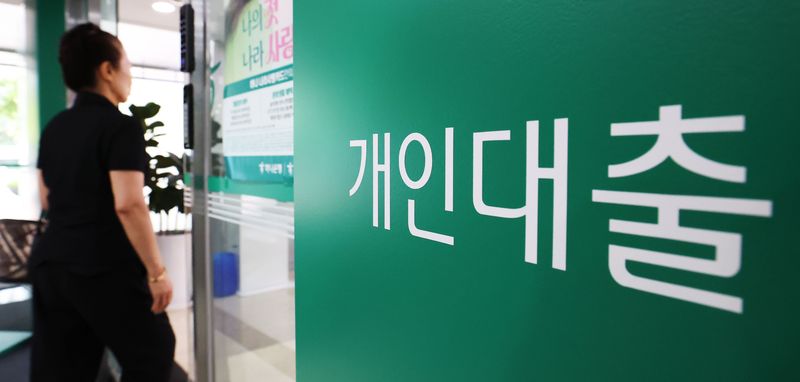
[Financial News] Household debt has exceeded 2,000 trillion won for the first time. As expectations of rising home prices boosted housing-related lending, other loans, including credit loans, also increased sharply on the back of a strong stock market.
According to the Bank of Korea (BOK)'s 'Household Credit for the Second Quarter of 2026' released on the 19th, the outstanding balance of household credit stood at 2,019.8 trillion won at the end of the second quarter. That was up 25.9 trillion won from the end of the previous quarter. It was the first time the balance had topped 2,000 trillion won, and the increase was the largest since the third quarter of 2021, when it rose by 34.8 trillion won.
Household credit is an indicator that adds sales credit, such as credit card spending, to household loans borrowed from financial institutions and others. The outstanding balance of household loans came to 1,891.3 trillion won, up 24.9 trillion won from the previous quarter. That was nearly twice the 13.4 trillion won increase in the prior quarter.
The rise in lending was seen in both housing-related loans and other loans. Housing-related loans increased by 12.1 trillion won, 4 trillion won more than the 8.1 trillion won increase in the previous quarter. The increase was affected by a rise in housing transactions in the second quarter.
Other loans, including credit loans, rose by 12.8 trillion won. That was 7.4 trillion won more than the 5.4 trillion won increase in the previous quarter. In the past, housing-related loans drove household debt growth, but this time other loans also rose by a similar amount. Analysts say the increase reflects not only 'yeongkkeul,' or borrowing heavily to buy a home, but also 'debt investing,' or borrowing to invest in financial assets such as stocks.
By institution, household loans at deposit banks shifted from a 200 billion won decline in the previous quarter to a 13.3 trillion won increase. The growth at non-bank deposit-taking institutions slowed from 8.2 trillion won to 3.1 trillion won. Other financial institutions and similar lenders saw their increase widen from 5.5 trillion won to 8.6 trillion won.
The outstanding balance of sales credit stood at 128.5 trillion won, up 900 billion won from the previous quarter. The increase was driven by a rise in individual credit card spending to 208.3 trillion won in the second quarter.
Meanwhile, the rise in household debt is seen as a factor that could constrain consumption in the future. If lending rates rise, the burden of repaying principal and interest will grow, leaving households with less room to spend. The Bank of Korea is also monitoring the possibility that an economic recovery driven by the semiconductor boom could support higher consumption.
[email protected] Han Seung-gon Reporter