Won-Dollar Exchange Rate Falls to the 1,300 Won Range for the First Time in 10 and a Half Months
- Input
- 2026-08-19 14:06:00
- Updated
- 2026-08-19 14:06:00
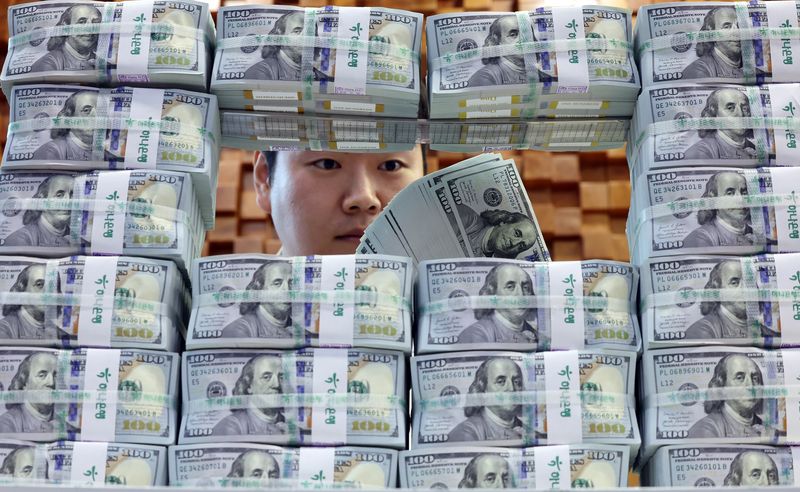
[Financial News] The won-dollar exchange rate fell below 1,400 won for the first time in about 10 and a half months. The dollar weakened as expectations for a September rate hike by the U.S. Federal Reserve System (Fed) faded, while dollar-selling orders from exporters also added to the decline.
At around noon on the 19th in the Seoul Foreign Exchange Market, the won-dollar exchange rate fell to 1,399.0 won. It was the first time the intraday rate had dropped below the 1,400-won level since Oct. 2 last year, when it stood at 1,399.5 won.
The rate opened at 1,413.3 won, down about 1 won from the previous trading day. It then extended losses as dollar-selling pressure continued during the session, breaking below the 1,400-won mark.
Weaker expectations for a U.S. rate hike are seen as the main reason behind the decline in the won-dollar exchange rate. Recent U.S. economic indicators, including Retail Sales, the Consumer Price Index (CPI), and the Producer Price Index (PPI), have all come in below market forecasts, strengthening views that the Fed will have difficulty raising rates next month.
As the likelihood of further U.S. rate hikes has diminished, the interest-rate advantage that had supported dollar strength has also weakened. Analysts say this has led to a softer dollar and, in turn, a stronger won.
Dollar-selling orders from exporters are also adding downward pressure on the won-dollar exchange rate. Companies that want to convert dollars earned from export proceeds into won have been steadily placing sell orders in the market, increasing dollar supply.
Market participants expect expectations over U.S. monetary policy and exporters' dollar-selling orders to remain the main downward forces on the won-dollar exchange rate for now.
However, volatility could widen again depending on external factors such as movements in international oil prices and geopolitical risks.
[email protected] Hong Ye-ji Reporter