Chinese Cicada Nymph Collection Sparks Controversy; Hangang Park Installs Banner Banning Unauthorized Gathering
- Input
- 2026-08-19 07:14:50
- Updated
- 2026-08-19 07:14:50
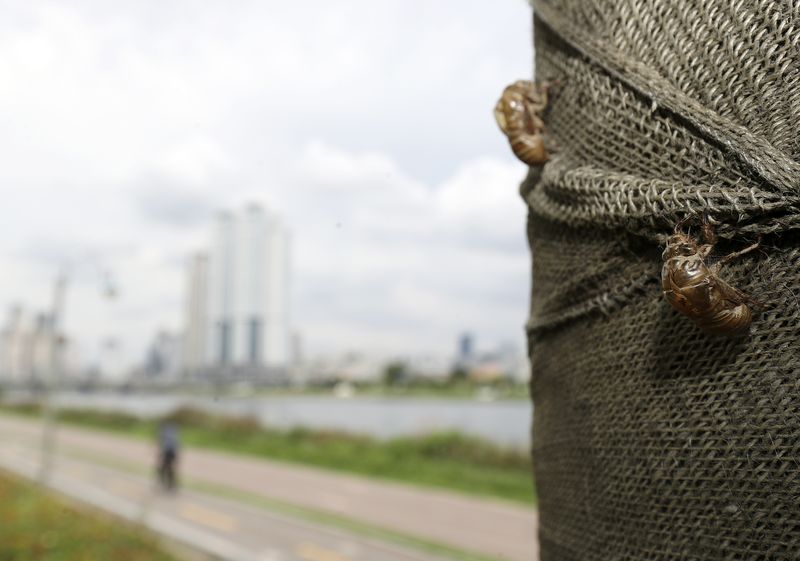
[Financial News] Seoul Metropolitan Government has installed banners in Hangang Park warning people not to collect cicada nymphs or other insects without permission. The move follows complaints last year that some Chinese nationals were mass-collecting cicada nymphs for food and other purposes. Those caught could face a fine of 100,000 won.
According to the Seoul Metropolitan Government on the 19th, the city recently put up informational banners around Yeouido Saetgang Ecological Park. The banners state that insects, including cicada nymphs, must not be collected without permission. The measure is intended to prevent repeated mass collection during the summer.
Last year, several complaints were filed about groups collecting cicada nymphs in the Saetgang area. At the time, residents reportedly said they had seen people carrying large containers and repeatedly catching the insects.
A Seoul Metropolitan Government official told Seoul Economic Daily, "Cases of cicada nymph collection were frequent in Saetgang last year," adding, "No related complaints have been received this year yet, but we installed the banners in advance to prevent problems."
Some Chinese nationals also drew criticism for mass-collecting cicada nymphs at a park in Busan
Similar incidents were reported outside Seoul as well. Last year, in an ecological park in Busan, some Chinese nationals were seen collecting large numbers of cicada nymphs, sparking controversy.
It has been reported that in some parts of China and Southeast Asia, cicada nymphs and adult cicadas are used as food ingredients. In places such as Shandong Province and Henan Province, cicada nymphs are known as "zhiliaohao" and are eaten as a summer delicacy. More recently, rising demand has led some to treat them as a premium ingredient.
In Hangang Park, unauthorized collection itself can be a problem, regardless of whether cicadas are designated as a protected species.
Cicadas are not legally protected as natural monuments or endangered wildlife. However, Hangang Park management areas are subject to the Basic Ordinance on the Conservation and Use of Hangang Park in Seoul. Collecting insects or plants without permission can result in a fine of 100,000 won under the relevant rules.
Also Seen at Several Parks in Tokyo, Japan
Similar incidents have also occurred in Japan. The Japanese media outlet President Online reported last year that people speaking Chinese were seen mass-catching cicada nymphs in several parks in Tokyo from dusk until late at night.
According to the report, families visiting the parks said they felt uneasy and called the police or park authorities. The reason for collecting the cicada nymphs was understood to be for use as food.
Conflicts with local park rules were also an issue. Tokyo Metropolis ordinances and park regulations in local governments prohibit or restrict the unauthorized collection or removal of plants and animals from parks.
In some cases, the media outlet said, organized groups were catching cicada nymphs in quantities ranging from dozens to hundreds. Local concerns have grown that the practice goes beyond personal collection and could burden park ecosystems and disrupt public order.
[email protected] Han Seung-gon Reporter