[Editorial] Extreme weather is becoming the norm; disaster response systems must be thoroughly reassessed
- Input
- 2026-08-18 19:38:42
- Updated
- 2026-08-18 19:38:42
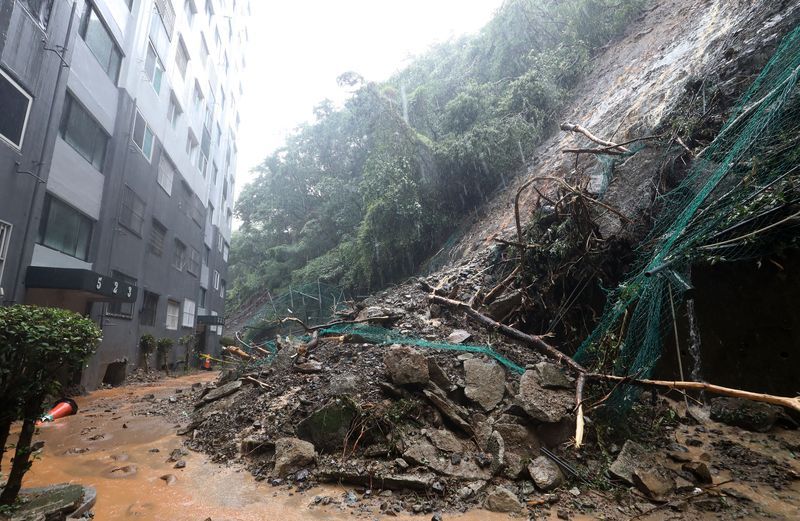
According to the Korean Meteorological Administration, Geoje received 654 mm of rain on the 17th alone, setting a new daily rainfall record since observations began in 1972. Among the all-time daily rainfall totals at the country's 97 comprehensive weather observation stations, only Gangneung and Daegwallyeong Pass recorded more than Geoje during Typhoon Rusa in 2002. The cumulative rainfall from the 15th to the 17th reached 927 mm in Geoje and 751 mm in Tongyeong, roughly equivalent to the amount of rain that normally falls over an entire summer in just three days. The intensity was also record-setting. Geoje saw 124.5 mm of rain in one hour, breaking the previous hourly rainfall record. The Korean Meteorological Administration said the area was hit by rainfall that could occur only once in 200 years.
At first, the rain was expected to ease drought conditions in the southern region. Instead, it took the form of localized torrential downpours that only worsened the damage. A low-level jet stream formed between a strong low-pressure system to the west and high pressure to the east, drawing in large amounts of moisture. That moisture then collided with the South Coast, concentrating the rain clouds over a single area.
The human and property damage was severe. Landslides, flooded homes, and power outages occurred in succession, leaving one person dead and four injured. More than 2,500 damage reports were filed, including reports of flooded homes and roads. A total of 240 people from 141 households are staying in temporary shelters such as senior centers and village halls.
Most alarming is the fact that sudden, intense downpours have been recurring after the monsoon season. Of the 15 cases last year of extreme rainfall exceeding 100 mm per hour, 12 occurred after the rainy season had ended. Before this latest storm, South Gyeongsang Province had already endured a drought earlier this month, with reservoir levels falling into the 30% range amid scorching heat above 40 degrees Celsius. Heat waves, droughts, and extreme downpours are now unfolding one after another within a single season, becoming the new normal.
Climate change lies behind these extreme weather events. According to a report by the Intergovernmental Panel on Climate Change, for every 1 degree Celsius rise in global temperature, the amount of water vapor the atmosphere can hold increases by about 7%. This increase in moisture, in turn, raises both the frequency and intensity of heavy rainfall.
Disaster prevention standards must now be fundamentally raised. Standards based only on past rainfall records should be reviewed, and disaster prevention facilities and urban drainage systems must be comprehensively reinforced so they can withstand extreme downpours. Above all, the government must urgently rebuild an integrated, cross-ministerial disaster response system that can promptly detect and effectively respond to sudden weather shifts such as localized cloudbursts that develop in an instant. Disaster preparedness standards must change to match the changed climate environment.