While Retail Investors Shed 55 Trillion Won, Brokerages and the Exchange Enjoy a 120 Billion Won Windfall
- Input
- 2026-08-19 04:40:00
- Updated
- 2026-08-19 04:40:00
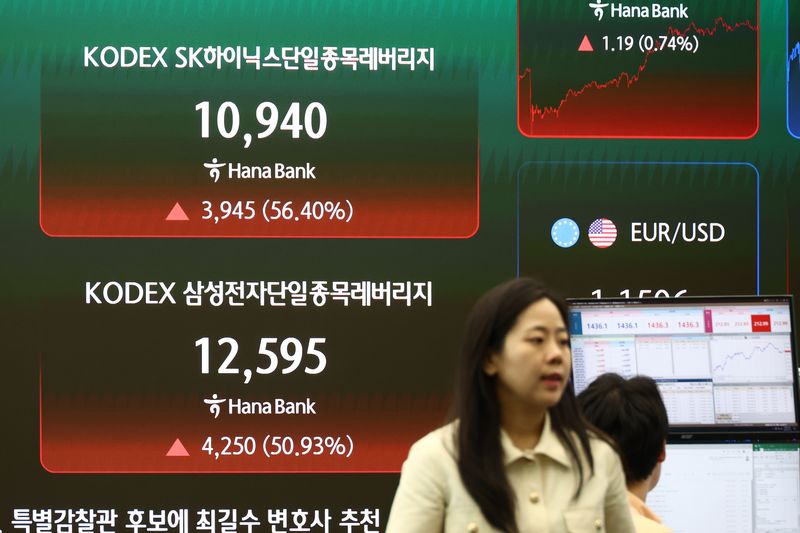
[Financial News] It has been revealed that the Korea Exchange and securities firms earned nearly 120 billion won in fee income just over two months after the launch of single-stock leveraged ETFs, which have been criticized for fueling extreme volatility in the domestic stock market. Critics say that while retail investors suffered massive losses, only market infrastructure providers and intermediaries reaped enormous unearned gains.
According to data submitted on the 18th by the Financial Supervisory Service and the Korea Exchange to the office of Park Sung-hoon of the People Power Party, a member of the National Policy Committee, fee income collected by the exchange and securities firms totaled 117.26 billion won from May 27, when 16 single-stock leveraged and inverse ETFs tied to Samsung Electronics and SK hynix were launched, through the end of July, when regulatory fixes were implemented.
A breakdown shows that brokerage commissions accounted for most of the total, at 89.35 billion won. Considering that some securities firms ran commission waivers and discount promotions, actual earnings were likely even higher. The Korea Exchange also collected 27.911 billion won, including 24.139 billion won in trading fees and 3.771 billion won in clearing and settlement fees. Over 45 trading days, that came to an average of about 620 million won a day flowing into the exchange's coffers. In addition, the Korea Financial Investment Association, which oversaw mandatory pre-investment education, earned about 3.2 billion won in course fees.
Retail investors, by contrast, fared terribly. Citigroup recently estimated in a report that losses suffered by domestic individual investors from high-risk leveraged ETF products, including single-stock leveraged funds, could reach about $38.7 billion, or roughly 55 trillion won, from their peak.
Financial authorities have also expressed concern over the imbalance in this profit structure. Lee Bok-hyun, governor of the Financial Supervisory Service, previously said, "The extreme turnover in these products is resulting in securities firms being the only ones to profit," adding, "I view it seriously that the players, meaning investors, gain nothing while only the management and operating system takes the profits."
As the controversy spread, the Financial Services Commission sharply raised the entry barrier from July 31 by increasing the base deposit requirement from 10 million won to 30 million won, cash only, and expanding the required pre-investment education. It is also pushing to cap individual investment limits at 20% of total investment funds.
Park Sung-hoon said, "While retail investors were left exposed to the risks of high-risk derivatives, the exchange and securities firms held a fee bonanza worth hundreds of billions of won," adding, "A thorough review is needed to determine whether the exchange and financial authorities fulfilled their duties as market overseers, along with institutional reforms."
[email protected] Moon Young-jin Reporter