"That Incident Is Over, and You Are Safe"...A Dedicated Police Officer Helping Crime Victims [Number 112]
- Input
- 2026-09-08 15:27:28
- Updated
- 2026-09-08 15:27:28
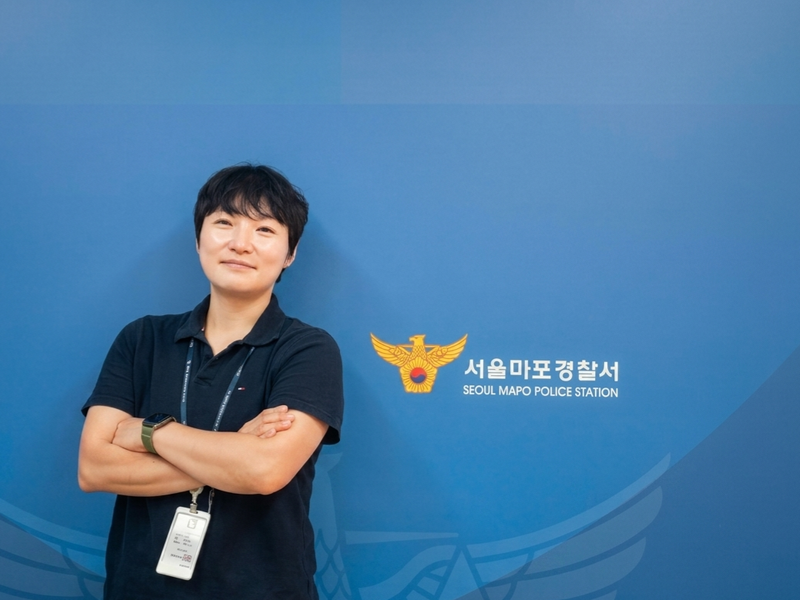
After a crime, some people remain by victims’ sides so they can return to their daily lives. Although each police station has only one or two such officers, they are police officers dedicated to victim support who help victims recover. Senior Police Officer Eom Jeong-yeon, whom we met on the 8th at Seoul Mapo Police Station, also works to prevent victims from becoming isolated. “Our role is to match the pace of victims who can easily become helpless after a sudden crime, helping them regain control of their own lives,” Eom said.
For Eom, supporting victims means setting time in motion again after it has stopped at the moment of the incident. She connects people suffering from post-traumatic stress disorder (PTSD) with professional counseling. For those who feel threatened, she arranges relocation assistance, provides smartwatches, and strengthens patrols around their homes. “The victim must always be the person who decides what treatment to receive and what level of protective measures to choose,” Eom explained. “Our priority is helping victims regain control of their daily lives, so when necessary, we even accompany them to court.”
That is why she repeatedly emphasizes to victims that they should not blame themselves. Once people fall into emotional pain, it can be difficult to escape on their own. Victims often blame themselves, asking, “Why did this happen to me?” Eom helps them regain their footing by pointing out the difference between perpetrators and victims. “A perpetrator is simply someone who possesses an additional option that ordinary people do not—the option to harm another person. A crime never occurs because of a victim’s fault or shortcomings,” she said. “I hope victims will not force themselves to understand the perpetrator’s motives or imprison themselves in guilt.”
Of course, facing victims’ suffering up close is not easy for Eom either. “There are many times when my heart feels heavy as I become immersed in a victim’s pain,” she admitted. Through the Korean National Police Agency’s Employee Assistance Program (EAP), she receives regular psychological counseling. She also pursues hobbies such as tennis to maintain a balance between work and everyday life. She believes that caring for her own mental health is also necessary in order to help victims.
There are also structural limitations that cannot be addressed through an individual police officer’s sense of duty alone. Eom identified “improving the timing of financial assistance” as the most urgent task. “Because support budgets and spending authority are divided among the Ministry of Justice, the Prosecution Service, and local governments, there are many times when those of us in the field can do nothing but watch complicated administrative procedures and delays,” she pointed out. “It is most heartbreaking that victims who urgently need treatment costs miss the period when assistance is most needed and have to endure for months.”
Although various practical constraints remain, Eom believes the essence of a police officer dedicated to victim support is not particularly extraordinary. The key is to listen to victims and connect them with the support they need. Her message to victims is closely tied to this belief: even amid institutional limitations and a harsh reality, there are people who will stand with them if they ask for help. To those who may still be spending long nights alone, Eom offered one final message: “Please do not feel that you are alone. Please ask for help. If you open up to us, we will find the support you need and stay with you until the end.”
[email protected] Eom Jeong-yoon Reporter