"We Only Shared a Towel, and the Whole Family Got It..." The Athlete's Foot That Survives Even the Washing Machine [Smart Wellness]
- Input
- 2026-08-18 14:06:16
- Updated
- 2026-08-18 14:06:16
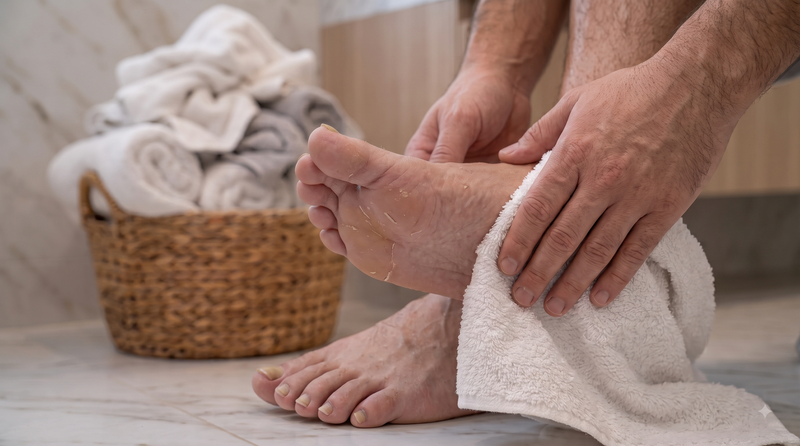
[Financial News] During the summer vacation season, many people have been complaining of itchy toes or peeling skin after visiting water parks and resorts. The cause is likely athlete's foot contracted during the trip. If left untreated in the early stages, it can become a chronic condition that causes lifelong discomfort, so extra caution is needed.
Infection can spread even from sharing a foot towel. Once it develops, treatment can take up to a year.
Athlete's foot is an infectious disease caused by dermatophytes, a type of fungus, that invade the outer layer of the skin. It is also called tinea. It can occur anywhere on the body that has keratin, but nail fungus and athlete's foot are the most common.
Athlete's foot, including foot fungus, can spread through contact with skin flakes shed by an infected person. Because dermatophytes live on keratin, they can survive for a long time even in tiny flakes that fall from a patient's feet. That means the infection can spread at home if family members share towels, slippers, or nail clippers with someone who has it.
What's more, swimming pools, water parks, saunas, public shower floors, shared slippers, and foot mats that many people use barefoot in summer become breeding grounds for dermatophytes. In particular, when skin has softened in water and the skin barrier is weakened, contact with contaminated surfaces allows the fungus to enter easily through tiny gaps in the barrier.
If you are infected with athlete's foot, symptoms may appear as interdigital type, which causes skin to become soggy between the toes; vesicular type, which produces small blisters; or moccasin type, which makes the entire sole thicken and peel. The moccasin type, which causes little or no itching, is often mistaken for simple dry skin or calluses and left untreated. If it is not treated in time, the fungus can spread to the fingernails or toenails, and treatment in that case can take several months to more than a year.
Because dermatophytes hide deep in the keratin layer, antifungal medication must be applied consistently even after symptoms appear to have subsided.
The head of the Mapo Gongdeok branch of Usuhan The Hill Dermatology Clinic said, "Even after symptoms improve, it is best to continue treatment for a few more days to prevent recurrence." He added, "If the lesions are extensive or keep coming back, oral antifungal medication may also be necessary."
Athlete's foot fungus can survive washing, so high-temperature laundering is essential.
Dermatophytes burrow deep into the fibers of socks, towels, foot mats, and bedding used by patients, along with skin flakes. The problem is that a typical home wash at 30 to 40 degrees Celsius does not kill fungal spores. The surviving fungus then spreads to other laundry in the washing machine and becomes a vehicle for infecting the entire family.
To eliminate dermatophytes, high-temperature washing at 60 degrees Celsius or higher, or boiling disinfection at 80 to 100 degrees Celsius, is essential. Fungi are highly vulnerable to heat and die after exposure to temperatures above 60 degrees Celsius for 10 to 20 minutes. Boiling them in water provides complete sterilization.
After washing, it is also a good idea to dry the items in the sun for additional disinfection. Keeping laundry thoroughly dry helps block any remaining mold from multiplying. Washing with oxygen bleach, such as sodium percarbonate, dissolved in warm water is also effective for breaking down protein-based skin flakes and disinfecting.
The way to make life healthy and energetic is not far away.[Smart Wellness]shares practical wisdom for caring for both body and mind, based on scientific evidence and the latest trends. If you subscribe to the reporter page, you can receive [Smart Wellness] conveniently.
[email protected] Kim Hyun-sun Reporter