ECB Warns U.S. Tech Stocks Could Face a Correction, Saying They Closely Resemble Past 'Boom and Bust' Cycles
- Input
- 2026-08-18 02:46:18
- Updated
- 2026-08-18 02:46:18
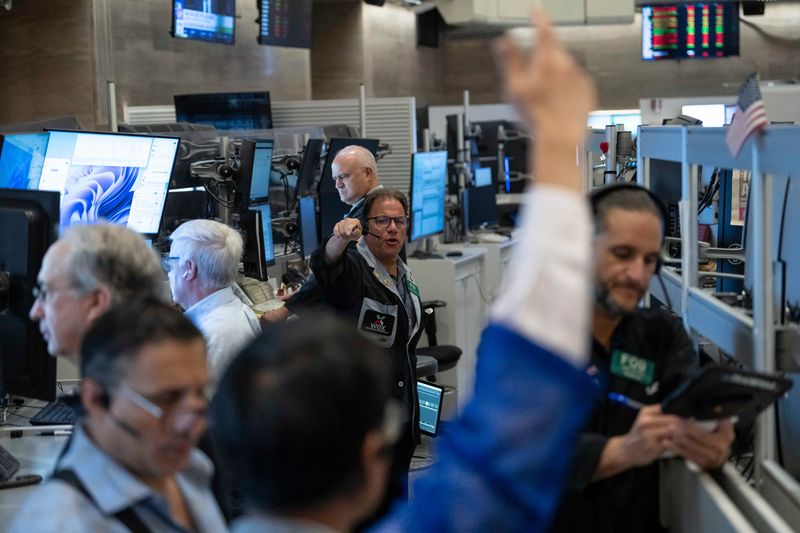
The ECB warned on the 17th (local time) that U.S. technology stocks are highly likely to enter a correction. It also expressed concern that a correction in U.S. tech shares could threaten financial stability in the Eurozone.
Still, the ECB added that if artificial intelligence (AI) proves to be a transformative technology and related stocks undergo a correction, their valuations could eventually rise far above current levels.
The ECB also stressed that a correction does not have to be driven by investors' 'irrational exuberance.' It said such a move would be inevitable even if current valuations were rational.
Railway boom, electricity and radio boom, dot-com bubble
According to the Financial Times, an ECB team of economists compared the current AI investment boom with the railway boom of the 19th century, the electricity and radio boom of the 1920s, and the dot-com bubble of the 1990s in a blog post published that day.
The ECB said that in each case, a truly transformative technology attracted investment and pushed up the stock-market valuations of companies applying it, but the end result was a sharp collapse.
The report explained that such technological breakthroughs create 'extreme uncertainty' because the broader economic impact is initially unclear. In the early stages, when a technical barrier is broken, leading companies such as NVIDIA attract early investors. In the best-case scenario, they reap huge gains. In the worst case, they could lose their entire investment.
The ECB explained that this 'option value' lifts the stock valuations of early adopters and sharply raises their price-earnings ratio (PER).
However, the economists noted that the situation changes if the technology succeeds and spreads across the broader economy. The uncertainty surrounding a breakthrough technology then shifts from individual companies to the economy as a whole.
The ECB argued that if something goes wrong with the technology later on, the entire economy will suffer.
Unlike risks tied to individual companies, economy-wide uncertainty cannot be diversified away. The report said investors will therefore demand greater compensation for taking on risk.
The economists added that although successful AI adoption could boost profits, the rise in risk premiums would push stock valuations in the opposite direction. That means even if the technology itself succeeds, share prices could ultimately fall.
Could rise far higher after a correction
They also said the 'boom and bust' cycle in tech stocks can begin when investors, driven by excessive confidence and optimism, push share prices beyond fundamentals.
The ECB warned that once such overconfidence gradually fades, share prices can fall even more sharply than in a rational scenario. It added, however, that it does not rule out the possibility of prices rising to a higher level than today after a correction.
The ECB said that if AI proves to be sufficiently transformative, valuations could be much higher in the future even after a correction. It also emphasized that because such 'boom and bust' patterns can only be identified in hindsight, it is impossible to determine in advance where we are in the cycle.
Eurozone retail investors in U.S. stocks
The reason a correction in U.S. tech stocks could spill over into the Eurozone is the exposure of Eurozone retail investors to U.S. stocks.
According to the ECB, Eurozone households have about 440 billion euros, or roughly 722 trillion won, exposed to U.S. tech stocks. Most of this is through investment funds, but insurance and pension funds are also heavily exposed to the so-called Magnificent Seven (M7) big tech names. In South Korea as well, individual investors have a high exposure to tech stocks on the New York market, raising concerns that a collapse in U.S. tech shares could deal a serious blow to the Korean stock market and broader financial markets.
The ECB also noted that U.S. and Eurozone stock markets have historically shown a high correlation, meaning that if Wall Street collapses, Eurozone investors would also be shaken.
In the report, the ECB said that a shock from a correction in U.S. AI stocks would not be limited to the United States. It warned that it could become a matter of financial stability in the Eurozone, especially if a market crash is combined with broader market turbulence.
[email protected] Song Kyung-jae Reporter