[Editorial] Trump’s Call to Scale Back ROK-US Exercises Threatens Alliance Security
- Input
- 2026-08-17 18:42:22
- Updated
- 2026-08-17 18:42:22
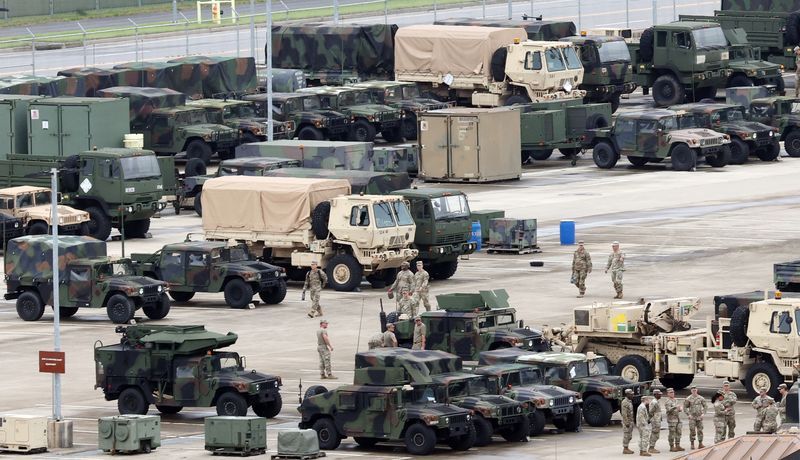
Trump said, "Given that Chairman Kim Jong Un and I have a very good relationship, I do not like the fact that the United States agreed long ago to take part in joint military exercises with South Korea." He added, "(The ROK-US joint exercises) are expensive," and said they send "a completely inappropriate and hostile signal to a country that has not been threatening to the United States and has respected the United States."
Although the drills are already under way, Trump’s order could still be implemented in practice. That is because President Lee Jae Myung said in December last year that "if it is necessary to create conditions for North Korea-US dialogue, we should also be able to consider adjusting the ROK-US joint exercises." Exercises were also scaled back during Trump’s first term. The People Power Party said, "The root cause of the United States' distorted perception that the Kim Jong-un regime is 'not threatening and has respected the United States' lies in the Lee Jae Myung administration's submissive North Korea policy," and urged the government to "restore the broken ROK-US coordination and normalize a practical combined defense posture."
As for the background to Trump’s remarks, some interpret them as a gesture aimed at resuming talks with North Korean leader Kim Jong Un ahead of the midterm elections, while others see them as an attempt to pressure South Korea over issues such as investment in the United States. Whatever the background or motive, we believe that if Trump’s order to scale back the drills is carried out, it will weaken deterrence against North Korea and harm security on the Korean Peninsula.
Unlike our government's conciliatory policy toward North Korea, Pyongyang's hostile stance has not changed. It continues to fire missiles indiscriminately, threatening not only us but also Japan and the United States. At the same time, North Korea is deepening its ties with Russia, including by sending troops to the Russo-Ukrainian War.
As allies, South Korea and the United States should strengthen security cooperation and respond firmly to North Korean provocations. Trump’s view that North Korea is "not threatening to the United States and has respected the United States" is also at odds with reality. North Korea continues to develop and test intercontinental ballistic missiles (ICBMs), threatening the U.S. mainland. If Trump’s intention is simply to open some kind of dialogue with such a North Korea, that is one thing. But that does not appear to be the case, which leaves us deeply concerned.
Inter-Korean dialogue or North Korea-US dialogue cannot be opposed if it serves peace on the Korean Peninsula. But there is no reason for South Korea and the United States to loosen their security posture first. If the ROK-US Alliance appears fractured, North Korea’s threats could grow even larger. What is needed is a dual-track strategy that combines stronger military deterrence with efforts to pursue dialogue.