The 'illusion' of record profits: Could KOSPI earnings expectations be cut by as much as 100 trillion won?
- Input
- 2026-08-18 06:00:00
- Updated
- 2026-08-18 06:00:00
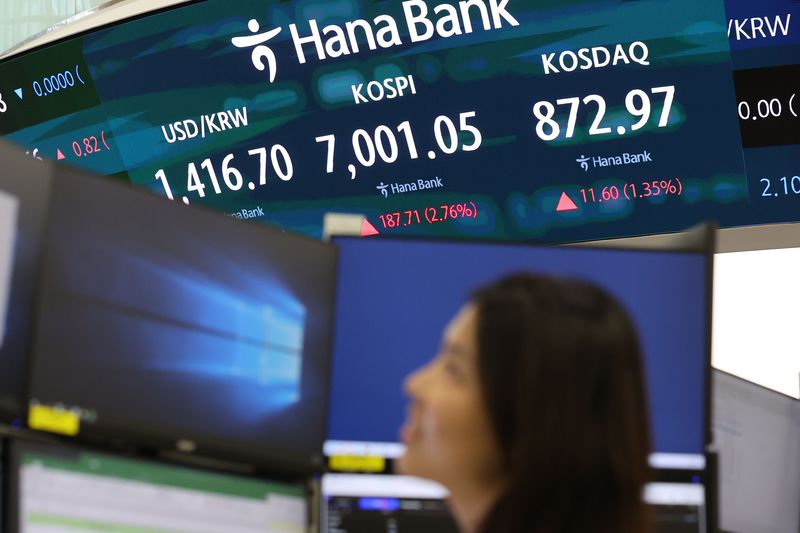
[Financial News] Analysts said the full-year net profit outlook for KOSPI 200 Index companies, which posted record earnings, could be revised down by as much as 100 trillion won. The reason is that one-off valuation gains that boosted second-quarter profits may instead become a burden on results in the second half of the year.■ Semiconductor-driven 'all-time results'According to FnGuide and the securities industry on the 18th, operating profit for KOSPI 200 Index companies in the second quarter of this year reached 245.3 trillion won, up 285.7% from a year earlier and 44.9% from the previous quarter. That marked the highest quarterly figure on record. Net profit attributable to controlling shareholders also rose to 237 trillion won, up 429.7% year on year and 69.0% quarter on quarter, setting a new all-time high.
The number of companies beating market expectations also rose sharply. Among KOSPI 200 Index companies, the share that posted operating profit more than 5% above market forecasts reached 57.4% in the second quarter, the highest level since the first quarter of 2021, when it stood at 60.7%.
Semiconductors led the earnings improvement. Operating profit for KOSPI 200 Index companies increased by 76 trillion won from the previous quarter, and Samsung Electronics and SK hynix, including SK Group and SK Square, accounted for 67.3 trillion won of that increase.
The semiconductor boom also pushed the operating margin of KOSPI manufacturing companies to 23.6%. That is far above the quarterly average of 7.36% since 2011. Samsung Electronics and SK hynix posted operating margins of 52.2% and 76.3%, respectively. In particular, SK hynix saw profitability improve sharply in a little over three years, from minus 66.9% in the first quarter of 2023, before artificial intelligence investment began in earnest.
However, one-off factors were heavily reflected in net profit. KOSPI 200 Index net profit attributable to controlling shareholders rose by 96.8 trillion won from the previous quarter in the second quarter, helped by valuation gains on investment assets such as SK hynix's stake in KIOXIA Corporation.
The valuation gain on investment assets recognized by SK hynix came to 63.3 trillion won. Including the equity-accounting effects on SK Square and SK Group, the related increase in net profit is estimated at 78 trillion to 79 trillion won. Excluding that, second-quarter net profit attributable to controlling shareholders for KOSPI 200 Index companies would have been about 159 trillion won.■ After stripping out the 79 trillion won 'illusion,' warning signs emerge for the second halfThe situation could change in the second half of the year. The value of the KIOXIA stake that boosted second-quarter net profit could turn into a valuation loss in the third quarter. Based on current KIOXIA share prices and their impact on SK hynix, SK Square, and SK Group, BNK Securities estimated that the third-quarter net profit outlook for KOSPI 200 Index companies may need to be cut by about 54 trillion won.
One-off costs in the fourth quarter are another variable. From 2020 to 2024, one-off costs for KOSPI 200 Index companies averaged 22.9 trillion won in the fourth quarter. This year, bonus payments could rise, especially at companies in sectors with improved earnings, including Samsung Electronics, SK hynix, defense, shipbuilding, machinery, and finance.
The steep rise in semiconductor earnings is also expected to lose momentum. Revenue growth for KOSPI manufacturing companies in the second quarter reached 37.4% year on year, the highest since the adoption of K-IFRS, but it is expected to stagnate in the third quarter as the won-dollar exchange rate falls and the pace of memory price increases slows. The year-on-year increase in export prices for DRAM and NAND flash memory has also been easing since peaking in June.
The market currently expects full-year net profit attributable to controlling shareholders for KOSPI 200 Index companies to reach 783.7 trillion won. In the first half, the figure stood at 377.3 trillion won, but it falls to 298.8 trillion won if the valuation gain on KIOXIA investment assets is excluded.
Kim Seong-no, a researcher at BNK Securities, said, "Considering the possibility of valuation losses on KIOXIA investment assets and one-off costs in the fourth quarter, full-year net profit attributable to controlling shareholders for KOSPI 200 Index companies needs to be revised down by 60 trillion to 100 trillion won from the current forecast."
[email protected] Choi Du-seon Reporter