Iran War, Kim Jong Un, Alliance Costs: Three Reasons Trump Cut Back the ROK-US Drill
- Input
- 2026-08-17 10:52:45
- Updated
- 2026-08-17 10:52:45
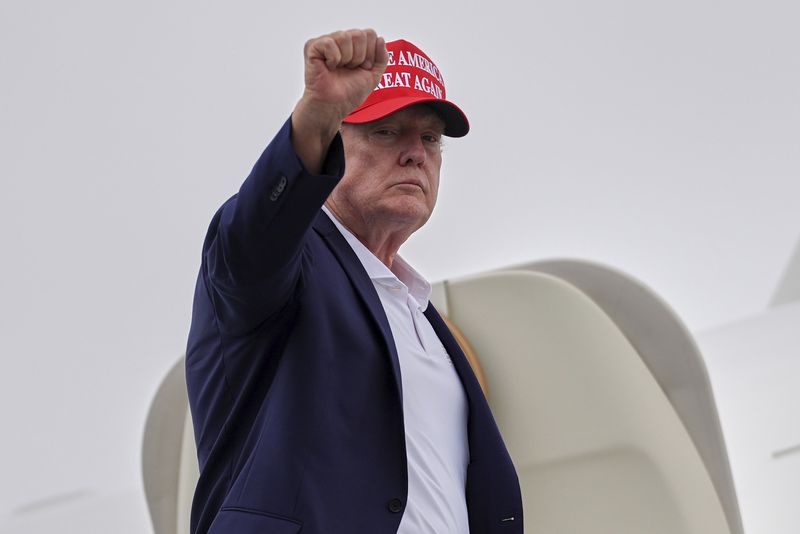
【Financial News, New York = Reporter Lee Byung-chul】U.S. President Donald Trump ordered a major reduction in U.S. military participation in the ROK-US Combined Military Exercise just one day before it was set to begin. On the surface, he cited his "good relationship" with North Korean leader Kim Jong Un and the cost of the drill. But analysts say the decision reflects a broader shift in U.S. military and diplomatic calculations after the Iran war. As Washington pours vast resources into the Middle East, its key weapons stockpiles are shrinking and military assets once deployed in Asia are being moved west. Trump’s familiar call for allies to share the burden, along with his push for direct diplomacy with North Korea, appears to have converged in this move.
Asia Strategy Shaken by the Iran War
On the 16th local time, Trump said on Truth Social that he had instructed Defense Secretary Pete Hegseth to "substantially reduce" U.S. military participation in the ROK-US Combined Military Exercise. Trump complained that South Korea had not joined the United States in the "denuclearization of the Islamic Republic of Iran." He also claimed that North Korea had been "not threatening and respectful" during his time in office. He further emphasized his "very good relationship" with Kim Jong Un.
Trump’s order came just one day before the start of Ulchi Freedom Shield, the ROK-US Combined Military Exercise. The drill was scheduled to run for 11 days starting on the 17th. About 18,000 Republic of Korea Armed Forces troops and U.S. military personnel were expected to take part.
A "bill" for South Korea, which did not join the Iran war?
Foreign media, however, are linking the decision to a larger trend: the redistribution of U.S. military resources after the Iran war. The Financial Times noted that the United States is shifting assets from the Indo-Pacific to the Middle East as it concentrates military power on the conflict with Iran.
The longer the Iran war drags on, the greater the strain on U.S. weapons stockpiles and force operations. Reuters reported earlier this month that most of the Army Tactical Missile System (ATACMS) and Precision Strike Missile (PrSM) stockpiles were used during the Iran war, while inventories of Patriot and Terminal High Altitude Area Defense (THAAD) interceptor missiles also fell sharply. Trump, however, rejected claims of a weapons shortage, saying the United States has "a tremendous amount of ammunition."
This situation raises a broader question beyond the cutback in the ROK-US drill: can the United States handle two strategic fronts at once, in the Middle East and the Indo-Pacific? As Washington pours resources into the Middle East while making China containment its top priority, concerns are growing among Asian allies such as South Korea and Japan that U.S. deterrence in the region could weaken. In fact, the United States is moving the USS George Washington, which had been deployed in the Pacific Ocean, to the Middle East.
The decision also appears to reflect Trump’s trademark transactional view of alliances.
In ordering the cutback in the ROK-US drill, Trump directly brought South Korea’s Iran policy into the discussion. He said South Korea had not joined the United States in the "denuclearization of the Islamic Republic of Iran." Although the ROK-US Combined Military Exercise and the Iran issue have no direct military connection, Trump linked the two as a matter of alliance cost-sharing.
Trump had previously demanded military support from South Korea in places such as the Strait of Hormuz, then changed course, repeatedly raising questions about allies’ roles during the Iran war. In South Korea, concerns have grown over Trump’s approach of tying alliance contributions to individual issues, even as U.S. demands continue to shift.
Patrick Cronin, an Asia security expert at the Hudson Institute, told The Wall Street Journal (WSJ) that "South Korea is needed as an ally more than ever to maintain deterrence on the Korean Peninsula and strengthen the U.S. industrial base in critical sectors such as shipbuilding and semiconductors." He added that "Seoul should not be penalized because of a lack of Middle East strategy."
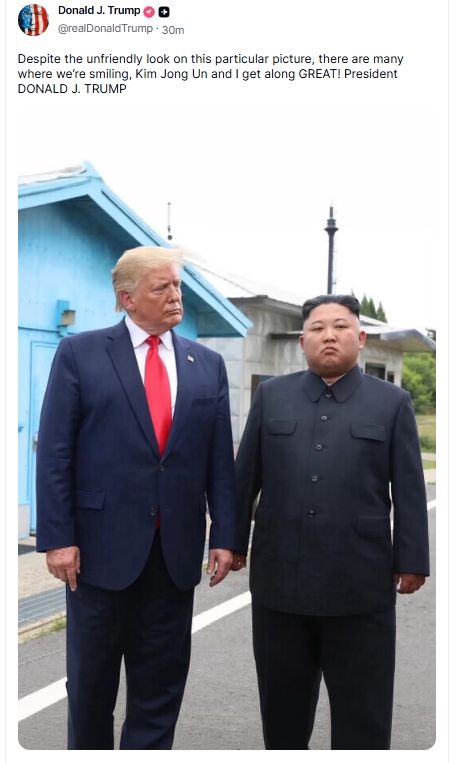
The "Kim Jong Un card" repeated after eight years
Trump’s approach to North Korea is another factor. Once again, he stressed his "very good relationship" with Kim. The move echoes his first term. After the 2018 Singapore North Korea-U.S. summit, Trump suspended the ROK-US Combined Military Exercise, citing the cost of the drill and the risk of provoking North Korea.
That is why some observers believe he may be trying once again to send a conciliatory signal to North Korea by scaling back the drill, then revive direct diplomacy with Kim.
The problem is that the security environment around North Korea is now worse than it was then. North Korea has recently resumed ballistic missile tests and deepened military cooperation with Russia. It is also seen as having gained real combat experience by sending troops to support Russia’s war in Ukraine. Kim and Russian President Vladimir Putin also recently reaffirmed the close ties between their countries.
[email protected] Reporter Lee Byung-chul Reporter