[Editorial] Why reform the grant system if funding is kept intact after cutting the automatic link?
- Input
- 2026-08-16 18:54:55
- Updated
- 2026-08-16 18:54:55
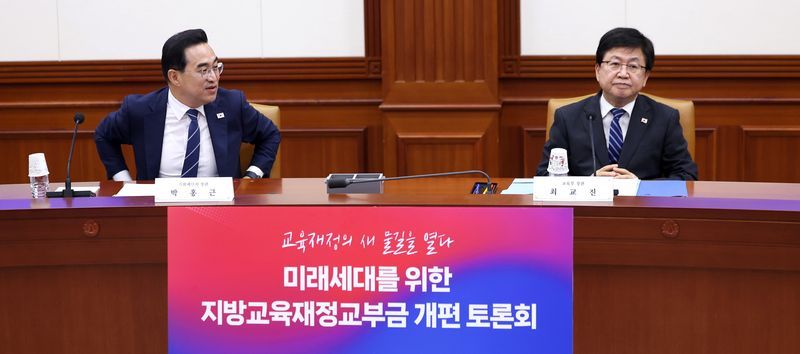
The problems with the internal tax linkage system are nothing new. Critics have long pointed out that the structure no longer fits the times, as grants automatically increase whenever tax revenue rises, even if student numbers and education demand fall. According to the Korea Development Institute (KDI) and others, the number of students, which exceeded 10 million in 1972, has fallen to about 4.75 million today, less than half that level. By contrast, the number of schools and teachers has increased, and education spending per student has risen sharply. The current system, which sets aside a fixed share of internal taxes regardless of the decline in school-age population, has deepened this fiscal imbalance.
This does not mean investment in elementary and secondary education should be reduced. In an era of low birthrates, the quality of education for each student must be improved, and sufficient resources should be directed to small local schools, childcare, and special education. But allocating budgets based on how much a given education project actually needs is a very different matter from automatically setting aside a fixed share of tax revenue. As the government is considering, it would be far more reasonable to calculate an appropriate grant level by reflecting economic growth and changes in the school-age population, then supplement it with separate funding if necessary.
In that sense, the education ministry's demand to accept the abolition of the internal tax linkage system while still legally guaranteeing funding at roughly the current 20.79% level makes little sense. If the linkage is cut but a similar amount is automatically secured through another mechanism, one has to ask what the reform is for. It is possible to discuss how broadly the Future Response Fund should be used for elementary and secondary education. But that, too, should be decided by weighing the need and effectiveness of each project, not turned into a backdoor route for preserving existing funding. What the education minister should be staking a post on is not protecting the grant total, but finding ways to improve education quality with limited resources.
It is also troubling that public disagreements between ministries over major policies are becoming more frequent. After the Ministry of Trade and Industry and the Ministry of Employment and Labor clashed over special exemptions to the 52-hour maximum workweek regulation for advanced industries, the heads of the education ministry and the Ministry of Planning and Budget are now facing off, even invoking the possibility of resigning. It is understandable for each ministry to defend the policies and interests under its jurisdiction. But it is not good governance when ministers publicly collide without sufficient internal coordination and then simply wait for a decision from the Blue House.
Reforming the grant system is not simply about cutting education spending. With welfare costs rising amid low birthrates and aging, and strategic investment needed to respond to global technological competition, the real issue is how limited national resources should be prioritized. Adjusting a decades-old automatic linkage system to match changed demographic and fiscal conditions is a task that can no longer be delayed. This time, the government must break the automatic internal tax linkage and come up with a rational alternative that reflects reality.