Does an Injury in Military Soccer Qualify for Veterans' Benefits? A Person of Distinguished Service?
- Input
- 2026-08-16 10:40:24
- Updated
- 2026-08-16 10:40:24
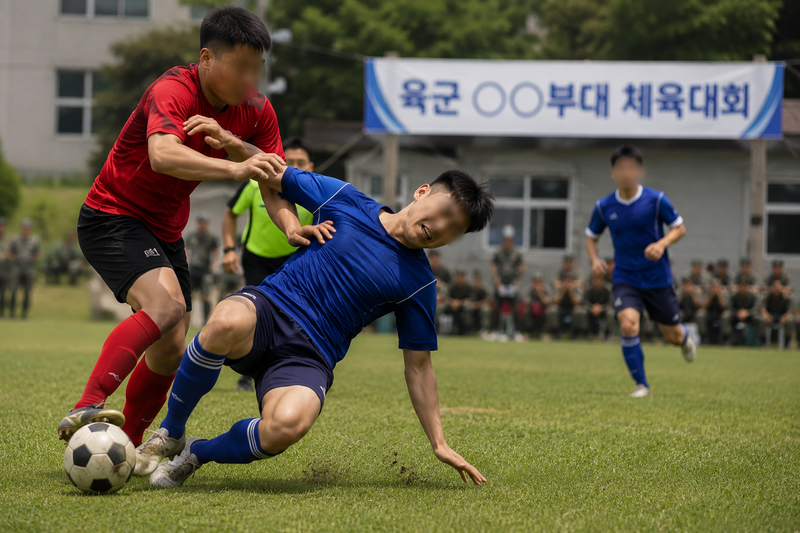
[Financial News] A reservist who was injured while playing soccer in a sports event during military service was recognized as eligible for veterans' compensation through a court ruling. The court said he could not be classified as a person of distinguished service to the state because soccer is not a duty directly related to national defense. However, it found that the injury could not be denied as one that occurred in the course of military service.
According to the Jeonju District Court on the 16th, Judge Ahn Jwa-jin of the single-judge administrative division ruled in favor of reservist A in a lawsuit seeking to overturn a decision by the head of the Jeonbuk Western Veterans Affairs Office that he was not eligible for veterans' compensation. The court ordered the veterans' authorities to cancel the decision that A did not meet the requirements for veterans' compensation. However, it did not accept A's separate claim to overturn the decision denying his eligibility as a person of distinguished service.
The case began on December 27, 2023, during a soccer match at a sports event held at a unit of the Republic of Korea Army (ROKA). A was injured in a physical clash with an opposing player during the game, hurting his left leg and pelvis before being hospitalized. Medical staff diagnosed him with left hip impingement syndrome and a labral tear.
After the injury, A underwent surgery and inpatient treatment, and was discharged from military service upon the expiration of his term in October 2024. After leaving the military, he applied for registration as both a person of distinguished service and a recipient of veterans' compensation, arguing that his injury occurred during military service. The veterans' authorities, however, concluded that neither application met the requirements. A then filed an administrative lawsuit.
At trial, the key issue was how far an injury sustained during a soccer match at a military sports event could be linked to military service. Under the Act on Support for Persons Eligible for Veterans' Compensation, recognition as a service-related injured soldier requires a substantial causal relationship between duty performance or training and the injury or illness.
The requirements for recognition as a person of distinguished service are stricter. Under the Act on the Honorable Treatment and Support of Persons of Distinguished Service to the State, recognition as a combat injured soldier requires that the duty or training be directly related to defending the nation, ensuring security, or protecting the lives and property of the public.
Based on that distinction, the court reached different conclusions on the two forms of recognition. It said the veterans' authorities were correct in finding that a soccer match held during a unit sports event could not be regarded as duty or training directly aimed at national defense, security, or the protection of public life and property. As a result, the court found no problem with the denial of person-of-distinguished-service status.
The conclusion was different, however, on veterans' compensation eligibility. The court found that A's injury was triggered by trauma sustained during the soccer match, rather than by a gradual worsening of an existing condition through its natural progression. In other words, it recognized a causal link between the sports activity carried out during military service and the actual injury.
The medical assessment also supported the ruling. In analyzing the cause of A's injury, medical staff estimated that trauma from military sports activity accounted for 70% of the contributing factors, while individual morphological factors accounted for 30%. The finding suggested that, even if some personal physical factors existed, the trauma from the military sports activity played a larger role in the injury.
Taking the medical assessment and the circumstances of the accident together, the court concluded that there was a substantial causal relationship between A's condition and his military service. It therefore ruled that the veterans' authorities had acted unlawfully in deciding that A did not meet the requirements for veterans' compensation eligibility and ordered the decision canceled.
[email protected] Jung Ji-woo Reporter