Trump, Xi, and Kim Jong Un May Meet in November... Lee Watches Closely as He Pushes to End the Armistice Regime
- Input
- 2026-08-16 10:35:12
- Updated
- 2026-08-16 10:35:12
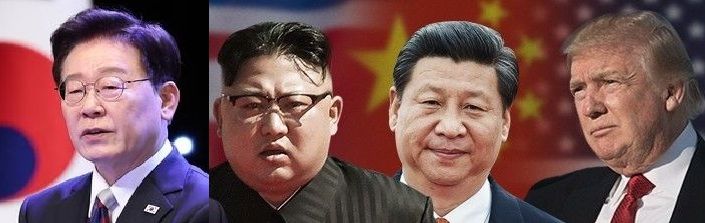
President Lee Jae Myung sparked renewed momentum for four-party talks when he said in his National Liberation Day of Korea speech on the 15th that he would end the armistice agreement signed in 1953.
The Korean Armistice Agreement was signed 73 years ago by military leaders from China, North Korea, and the United States. South Korea did not take part at the time. Lee has since said he intends to join the process as a party to ending the agreement.
According to diplomatic sources on the 16th, a four-way summit or a U.S.-North Korea summit could take place during the Asia-Pacific Economic Cooperation (APEC) summit, scheduled for November 18-19 in Shenzhen, China.
Lee Jae Myung, Donald Trump, and Xi Jinping are all expected to attend the event. If Kim Jong Un also attends APEC, a four-way meeting could become a reality. Kim has never visited Shenzhen. His father, Kim Jong Il, visited the city — a symbol of China's reform and opening — by private train about 20 years ago.
Signs of movement among the South Korean and U.S. leaders on building a peace regime on the Korean Peninsula have also been detected. Soon after Lee declared his push to end the armistice regime, Trump posted a photo of his 'impromptu Panmunjom meeting' with Kim on social networking service on the 15th local time, adding to the momentum. Expectations for four-party talks, along with a renewed atmosphere for a summit between the North and the United States, have been building again.
The United States has also recently been reviewing a strategy of sharing tactical nuclear assets in Northeast Asia to counter North Korea's advanced nuclear weapons program. Many have viewed it as a way to bring North Korea to the negotiating table. However, North Korea has continued its provocations by launching ballistic missiles repeatedly in recent days, making it unclear whether it will return to dialogue.
In addition, South Korea and the United States have yet to fully coordinate their positions on the government's push to end the armistice regime. Some say a cautious approach is needed, as sensitive issues such as the withdrawal of the United Nations Command and U.S. Forces Korea would be at stake if the armistice system were ended.
Differences remain within South Korea as well, with the pro-alliance camp and the pro-autonomy camp still at odds over a four-way summit. Chung Dong-young, the unification minister from the pro-autonomy camp, said in a presidential briefing on the 5th that he would push for a four-country summit to build a peace regime. In contrast, Foreign Minister Cho Hyun, who belongs to the pro-alliance camp, dismissed the unification ministry's proposal, saying that talking about four-party dialogue was idealistic and that it was a realistically difficult option.
[email protected] Kim Kyung-soo Reporter