2,909 Unsold Homes Piled Up and 84,000 Tourists Drop... Jeju Economy Faces 'Double Cold Wave'
- Input
- 2026-08-16 09:19:55
- Updated
- 2026-08-16 09:19:55
9%, respectively. 4% of the total at 2,339. While public sector orders are statistically boosting the construction market, private housing demand is failing to recover, and the decline in tourists is spreading to consumption and employment in the service sector.
Whether the Jeju economy can rebound ultimately depends on how quickly the warmth from the public sector translates into a recovery in private demand. According to the Bank of Korea Jeju Branch, the Ministry of Land, Infrastructure and Transport, and the Jeju Special Self-Governing Province on the 16th, the Jeju economy is struggling to regain vitality due to a decline in tourists and weakened consumer sentiment, despite improvements in public sector orders and employment indicators. The Bank of Korea's Jeju Branch projected that improvements in aviation supply conditions and the execution of the supplementary budget would partially alleviate downward pressure on the economy.
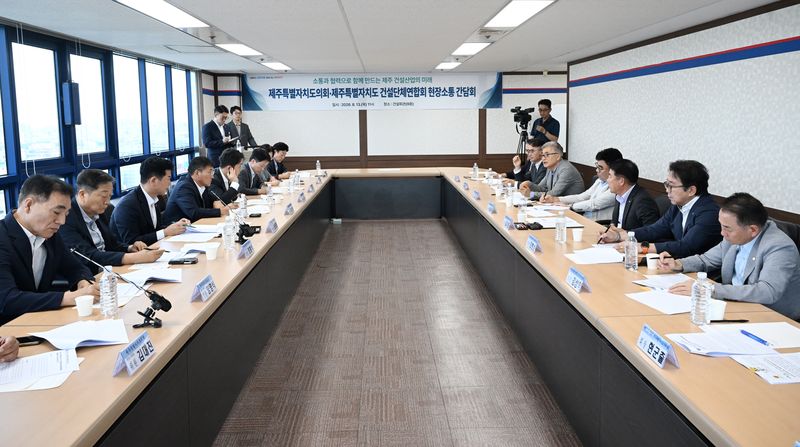
■ Orders Jump 19-fold, but Permits and Starts of Construction Decline Song Young-hoon, Chairman of the Jeju Special Self-Governing Provincial Council, and officials from the local construction industry are discussing measures to revitalize the local construction industry at an on-site communication meeting held at the Jeju Construction Hall on the 13th. On this day, eight construction-related organizations proposed measures such as splitting public works orders, expanding mandatory local joint contracting, and increasing the participation rate of local subcontractors. /Photo provided by the Jeju Special Self-Governing Provincial Council Extreme disparities were observed in Jeju's construction indicators.
5% compared to the same month last year. 1 times. 5%, driving up the overall figures.
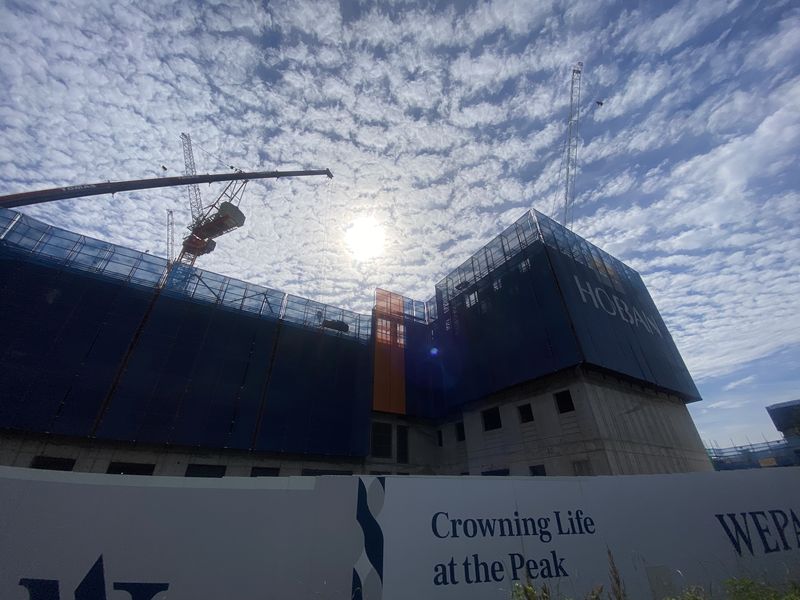
4%. The project site in the photo is not directly related to the unsold project site mentioned in the article. /Photo by Reporter Jeong Yong-bok 【Financial News Jeju = Reporter Jeong Yong-bok】 Construction and tourism, the two pillars of the Jeju economy, are cooling down simultaneously.
Construction orders refer to the value of new construction contracts signed by construction companies. Monthly figures can fluctuate significantly depending on the timing of large-scale public and civil engineering projects, and it takes time for orders to translate into actual construction starts and payment settlements. This is why it is difficult to conclude that the private construction market has recovered based solely on order figures.
In the housing market, the burden of unsold properties has increased. 7%) from the previous month. A more serious indicator is the number of unsold homes after completion.
These are homes that have received occupancy approval and are ready for move-in but remain unsold. 4% of the total unsold inventory. This represents an increase of 74 units in a single month and 309 units in the first half of this year alone.
This means that nearly 10% of the total 25,091 unsold homes after completion in non-metropolitan areas have accumulated in Jeju, a region with a population of around 700,000. The actual economic conditions felt on the ground are far removed from the growth rate of orders received. Ko Seong-gi, Chairman of the Jeju Special Self-Governing Province Chapter of the Korea Housing Builders Association, assessed the situation in the Jeju housing industry, stating, "As the increase in unsold homes, rising costs for construction materials and labor, and a liquidity crunch in real estate project financing (PF) overlap, the deterioration of business conditions—such as delays in groundbreaking and construction stoppages—is becoming a reality.
" PF refers to project financing, which raises funds based on the future profitability of the project itself. If presales are sluggish, the burden of recovering capital and raising additional funds can increase. It is also noteworthy that the local construction industry once again requested an increase in orders from the Jeju Provincial Council on the 13th.
Eight construction organizations, including the Jeju branches of the Korea Construction Association, the Korea Specialty Construction Association, and the Korea Housing Construction Association, proposed the timely implementation of key projects such as the Jeju Second Airport, the splitting of public works orders, the expansion of mandatory local joint contracting, and an increase in the subcontracting participation rate of local companies. The fact that the industry is demanding more work for local companies, despite total construction orders having jumped by over 1,800%, demonstrates that the increase in public orders is not immediately leading to a perceived recovery for local construction firms as a whole. ■ 'Win-Win Project' for 800 Unsold Units.
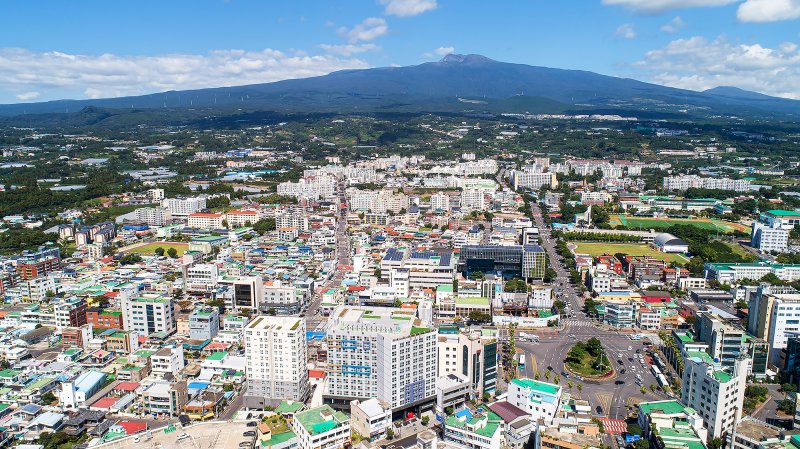
Actual Contracts Are Key A panoramic view of downtown Seogwipo. 4%) remaining unsold after completion. /Photo provided by Seogwipo City To reduce the backlog of unsold housing, Jeju Province launched the "Jeju Housing Co-prosperity Project" last June, the first of its kind in the nation.
The project operates by having private developers offer benefits such as discounted sales, deferred balance payments, and the provision of home appliances, while Jeju Province promotes these bundled with public benefits, such as acquisition tax support. Jeju Province consulted with 23 project sites that had 10 or more unsold units after completion and ultimately selected eight sites. The project targets 800 unsold units out of a total of 1,330 units across these eight sites.
The next indicator to assess the effectiveness of the policy is the actual volume of contracts, not the volume of promotional materials. However, the data on the Jeju Win-Win Project released so far does not separately present cumulative performance figures that led to actual contracts out of the 800 units across 8 project sites. The overall direction of the market has not yet changed either.
4%. The project site in the photo is not directly related to the unsold project site mentioned in the article. /Photo by Reporter Jeong Yong-bok 【Financial News Jeju = Reporter Jeong Yong-bok】 Construction and tourism, the two pillars of the Jeju economy, are cooling down simultaneously.
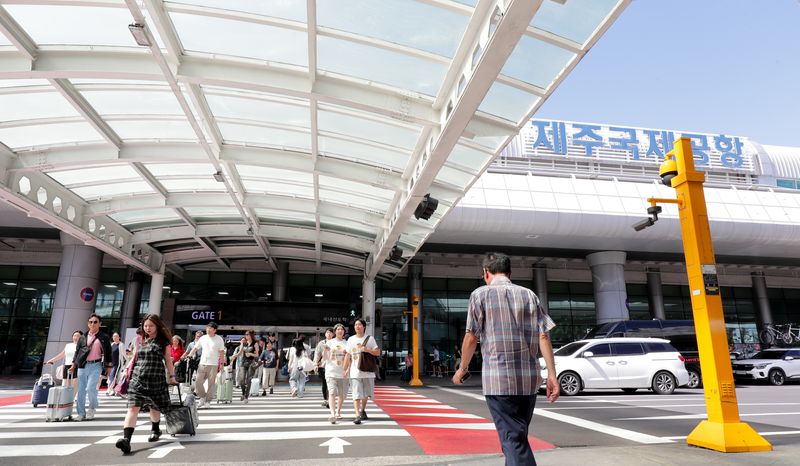
■ 84,000 Decrease in Tourists. Consumption and Service Sectors Also Facing Chill Tourists are entering Jeju through Jeju International Airport. The number of tourists visiting Jeju last July was 1,228,000, a decrease of 84,000 compared to the same month last year.
The number of domestic tourists was tallied at 963,000, a decrease of 90,000. /Photo=Newsis Tourism, one of the two pillars of the Jeju economy alongside construction, continues to experience a slump.
In July, the number of tourists visiting Jeju stood at 1,228,000, a decrease of 84,000 compared to the same month last year. The number of domestic tourists fell by 90,000 to 963,000.
While the number of foreign tourists increased by 6,000 to 265,000, the margin of increase narrowed significantly from the 18,000 recorded in June. Transportation supply also had an impact.
In July, the number of domestic flights at Jeju Airport decreased by 156 compared to the same month last year, while international flights increased by 110. Cruise operations saw a decrease of 6 flights and 11,000 passengers.
The Bank of Korea's Jeju Branch analyzed that factors such as the burden of airfares are influencing the downward trend in domestic tourists. The decline in tourists is not limited to the tourism industry alone.
4%. The project site in the photo is not directly related to the unsold project site mentioned in the article. /Photo by Reporter Jeong Yong-bok 【Financial News Jeju = Reporter Jeong Yong-bok】 Construction and tourism, the two pillars of the Jeju economy, are cooling down simultaneously.
0%. 6 a month earlier.
This signifies a simultaneous decline in tourists and weakening consumer sentiment. Employment figures also showed a divergence between total numbers and sentiment by industry.
In July, the number of employed people in Jeju stood at 415,000, an increase of 11,000 from the same month last year. Employment in the construction industry increased by 7,000.
Conversely, employment in the service industry decreased by 3,000. In particular, employment in wholesale and retail, accommodation, and food service sectors, which are closely linked to tourism consumption, fell by 7,000.
0%, jobs in the tourism and domestic sectors still feel chilly. ■ "Time needed for tangible recovery".
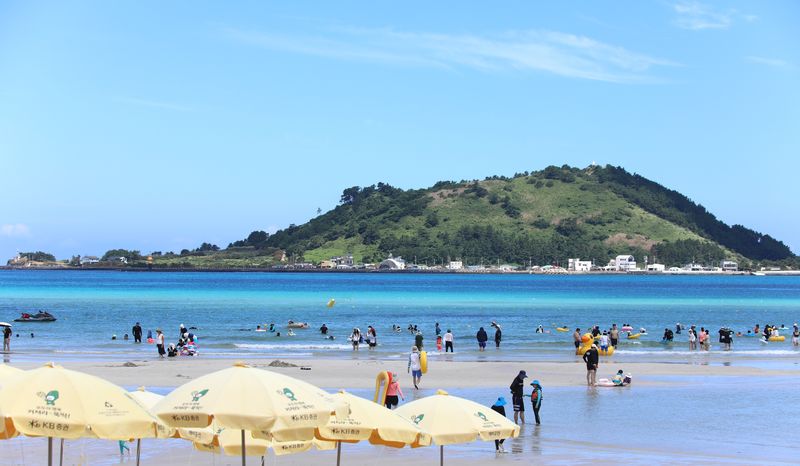
Public sector warmth must flow to the private sector Summer vacationers are enjoying water activities at Hyeopjae Beach in Hallim-eup, Jeju City. As tourism, a pillar of the Jeju economy, has slowed, the number of tourists visiting Jeju in July stood at only 1,228,000, a decrease of 84,000 from the same month last year.
The number of domestic tourists decreased by 90,000. /Photo = News1 The local business community is also wary of the "gap between statistics and perceived economic conditions.
" Yang Moon-seok, Chairman of the Jeju Chamber of Commerce and Industry, released the "2026 Jeju Economic Indicators. " While assessing that the Jeju economy is showing a gradual recovery trend, he stated, "It will take some time for a recovery to a level that residents and businesses can actually feel.
4%. The project site in the photo is not directly related to the unsold project site mentioned in the article. /Photo by Reporter Jeong Yong-bok 【Financial News Jeju = Reporter Jeong Yong-bok】 Construction and tourism, the two pillars of the Jeju economy, are cooling down simultaneously.
" At the same time, he defined the tourism industry as Jeju's foundational industry and emphasized the need to strengthen its competitiveness. This implies that the simultaneous slump in both industries cannot be taken lightly, as the construction downturn is not just a problem for construction companies but extends to materials, equipment, employment, and local commercial districts, while the tourism downturn can affect accommodation, food, distribution, and consumption.
There are also signs of a rebound. From August 1 to 11, the number of tourists visiting Jeju increased by 14,000 compared to the same period last year.
Domestic tourists increased by 4,000, and foreign tourists by 10,000. 5 billion won to invest funds in promoting consumption, small-scale public works projects, attracting tourists, and supporting small business owners.
The Bank of Korea's Jeju Branch anticipates that improved aviation supply conditions during the summer peak season and the execution of the supplementary budget will partially alleviate downward pressure on the economy. The key is how quickly the rebound generated in the public sector translates into private demand.
5% increase in construction orders must lead to actual construction starts and work for local companies, and 800 units of the win-win project must be converted into contracts. The rebound in tourism must also spread to sales in accommodation, food, and retail, as well as the recovery of employment in the service sector.
For the Jeju economy, which has seen simultaneous increases in unsold housing units (2,909) and a decrease of 84,000 tourists, the "recovery of private demand" to absorb this is becoming more critical than the "warmth from public orders" at this moment.
4%. The project site in the photo is not directly related to the unsold project site mentioned in the article. /Photo by Reporter Jeong Yong-bok 【Financial News Jeju = Reporter Jeong Yong-bok】 Construction and tourism, the two pillars of the Jeju economy, are cooling down simultaneously.
4%. The project site in the photo is not directly related to the unsold project site mentioned in the article. /Photo by Reporter Jeong Yong-bok 【Financial News Jeju = Reporter Jeong Yong-bok】 Construction and tourism, the two pillars of the Jeju economy, are cooling down simultaneously.
[email protected] Jeong Yong-bok Reporter