Outline for 73,000+ New Housing Sites Due in September... Attention on Whether Seoul Green Belt Is Included
- Input
- 2026-08-16 09:13:39
- Updated
- 2026-08-16 09:13:39
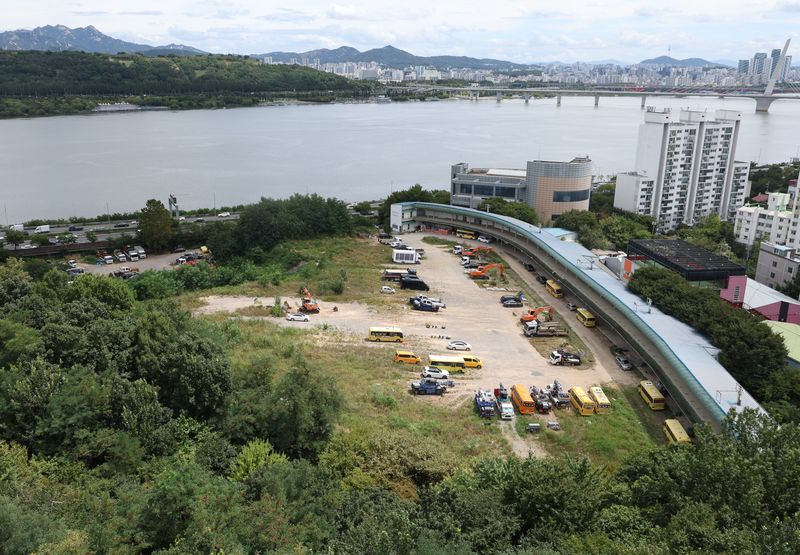
According to the government on the 16th, the Ministry of Land, Infrastructure and Transport recently unveiled its Aug. 13 supply measures, which call for creating new housing sites in three areas, including Gangseo in Seoul and Namyangju and Gwangju in Gyeonggi Province, and breaking ground on 27,000 homes by 2030.
The original candidate sites reportedly included the reserve forces training ground in Naegok-dong, Seocho-gu, Seoul; Segok-dong and Jagok-dong in Gangnam-gu; the Suseo vehicle depot; the area near the Olympic athletes' village in Bangi-dong, Songpa District, Seoul; and the Gambuk district in Hanam-si, Gyeonggi Province. These are green belt areas that have long been seen as potential housing supply sites, but they were left out of this plan.
The government says it will disclose candidate public housing districts totaling at least 73,000 homes as soon as possible, focusing on locations with favorable conditions after consulting the relevant agencies.
Before the candidate sites are announced, measures to block speculative demand have also been put in place. On the 13th, when the plan was announced, the government designated 49.41 square kilometers in Gangseo, Seoul, and in Namyangju and Gwangju, Gyeonggi Province, as land transaction permit zones for five years until Aug. 17, 2031. It also temporarily designated 503.82 square kilometers of green belt land in Seoul and nearby areas as land transaction permit zones through the end of this year.
In Seoul, green areas in 19 districts were included in the designation, excluding Jung-gu, Yongsan-gu, Seongdong-gu, Dongdaemun-gu, Yeongdeungpo-gu and Dongjak-gu. Land in Gyeyang District, Incheon, which borders Seoul, as well as areas in Seongnam, Uijeongbu, Anyang, Bucheon, Gwangmyeong-si, Goyang, Gwacheon, Guri, Hanam-si and Gimpo in Gyeonggi Province, was also designated.
Some of the designated areas have no realistic possibility of being developed into new housing sites, including national parks. The move appears to reflect concerns that if only selected areas were designated, speculative demand could concentrate around likely candidate sites, so the government chose to cover the broader green belt areas near Seoul.
The government says discussions on housing supply with the relevant local governments for the additional sites have mostly been completed. However, differences with the Seoul Metropolitan Government remain unresolved. To highlight the effect of easing the housing shortage in Seoul, Seoul-area sites, including the Gangnam green belt, would need to be included among the candidates, but it is unclear whether the two sides can reach an agreement smoothly.
Seoul Mayor Oh Se-hoon has recently said in a broadcast interview and on social networking service platforms that he opposes damaging green spaces that should be passed on to future generations. He believes the city should focus its resources on urban housing supply through redevelopment projects rather than green belt development.
The government plans to continue talks with the Seoul Metropolitan Government and seek common ground. Kim Yun-duk, Minister of Land, Infrastructure and Transport, said at a press briefing marking his first year in office on the 14th, "Only when the ministry and Seoul City join hands can we narrow our differences and move forward with housing supply, and that is how the public will benefit," adding, "We will cooperate with Seoul City as much as possible."
Kim and Oh will meet again on the 20th, following their previous meeting on July 24. They are expected to discuss housing supply measures using the green belt and Yongsan Park once again.
If the two sides fail to resolve their differences, attention will turn to whether the government will first disclose the candidate sites and then choose to lift the green belt on its own authority. Under the Development Restriction Zone Act, the Minister of Land, Infrastructure and Transport has the authority to designate or lift green belt restrictions.
In principle, urban and county management plans required for designation or removal are drafted by the head of the relevant local government. However, when the matter is linked to a national plan, the government may draw up the plan directly. In that process, the opinion of the local government head must be heard, but consent is not required.
Even so, if local urban planning and the central government's green belt policy clash, it could lead to disorderly development and damage trust between the government and local authorities. For that reason, it is common for both sides to narrow their differences as much as possible before a project moves forward.
Kim also suggested that while talks with the Seoul Metropolitan Government will come first, the government may exercise some of its authority if necessary. He said, "Even if the central government has the authority, it should not say, 'We will just go our own way,' simply because it has the power and disagrees with Seoul City," but added, "At the same time, it should not go in the direction of showing helplessness by doing nothing just because Seoul City is opposed."
[email protected] Choi Ga-young Reporter