Concerns Grow That the U.S. SPR Could Collapse Underground Storage Caverns as Releases Continue, Raising Fears Over a Crude Oil Price Shock Buffer
- Input
- 2026-08-16 04:28:50
- Updated
- 2026-08-16 04:28:50
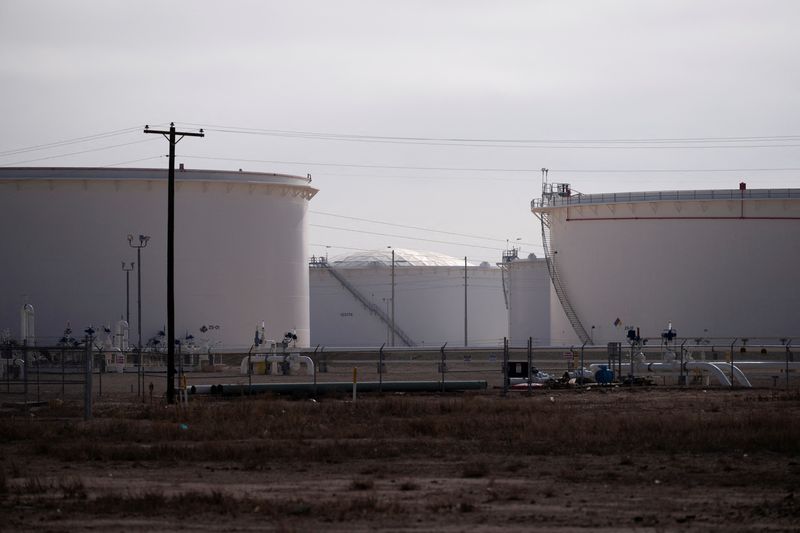
Concerns are mounting that the depletion of the U.S. strategic petroleum reserve (SPR) could trigger a collapse of the underground salt caverns that store the oil.
The Donald Trump administration says there is no problem because releasing oil from the SPR only changes the ratio of water to oil. Experts, however, warn that lower salinity could cause the salt formations to dissolve.
CNBC reported on the 15th local time that, amid a series of warnings from experts that the U.S. SPR has fallen to its lowest level in 40 years because of the Iran War, risks to the storage facilities themselves are also being raised.
If the underground salt caverns are damaged, as experts fear, the ability to respond to future energy emergencies will weaken. A smaller SPR stockpile could also lead to instability in global oil prices.
An SPR that only releases oil may end up undermining its own storage system.
The U.S. SPR is stored at four sites along the Gulf region in Texas and Louisiana. Oil is held in 60 salt caverns located 600 to 1,200 meters underground.
But after President Trump launched the Iran War on Feb. 28, the United States released large amounts from the SPR to prevent a surge in oil prices.
According to a report from the United States Department of Energy (DOE) on the 10th, the current stockpile has fallen below 300 million barrels for the first time since the SPR was filled in the early 1980s. The United States has released 172 million barrels so far. Once the releases are complete, the SPR is expected to stand at just 243 million barrels.
The DOE says the salt caverns can be safely managed with as little as 70 million barrels.
Amos Hochstein, who served as a senior energy adviser to former President Joseph Robinette Biden Jr., pushed back on that claim on the 13th. He called the DOE's argument nonsense and said that if the reserve falls to 70 million barrels, the SPR cannot be restored.
Hochstein had previously warned in June that the salt caverns would become vulnerable if the SPR fell below 300 million barrels.
The concern over a collapse of the salt cavern storage system stems from the way the SPR is drawn down.
Oil in the caverns is not pumped up from above. Instead, large amounts of water are injected into the caverns, and the pressure forces the oil to the surface. In the process, the injected water dissolves the salt walls and thins the key salt pillars that support the space between caverns.
In addition, the SPR salt caverns were designed to withstand only five full drawdowns, but over the past four decades they have undergone dozens of release-and-refill cycles. As a result, salt ceilings have fallen and structural deformation has accumulated.
Continuing to draw down the reserve by injecting fresh water would increase the risk of cavern collapse.
Minimum operating level
Siddharth Misra, a professor in the petroleum engineering department at Texas A&M University, said the minimum level for effectively operating the salt cavern storage system is between 250 million and 300 million barrels. In an email to CNBC, he warned that the current inventory puts the caverns' structural safety and overall operating capacity at serious risk.
Misra noted that the SPR storage caverns were originally designed for five full drawdowns, but dozens of large and small releases have taken place over the past 40 years. He said severe cavern deformation has already occurred.
Rapidan Energy estimates the SPR's "flexible floor" at about 170 million barrels. Below that level, additional releases would be difficult because of structural stability concerns and limits in pumping infrastructure.
Global oil market could lose its safety valve
Damage to the U.S. SPR storage facilities could also affect supply-demand stability in the global oil market, leading to renewed price volatility. That is because the amount of oil held in reserve for future emergencies would inevitably shrink.
Although the size of the U.S. SPR has fallen sharply from its peak in the 2010s, it still has a major psychological impact on the market.
In particular, since the SPR has served as a safety valve against a global oil price spike during this war, growing fears that stored crude may no longer be retrievable because of structural problems at the facilities could send prices swinging again.
[email protected] Song Kyung-jae Reporter