Samsung, Google, and Apple Gather Within 2 km in Tokyo as the Foldable Showdown Heats Up [Japan Inside]
- Input
- 2026-08-17 06:00:00
- Updated
- 2026-08-17 06:00:00
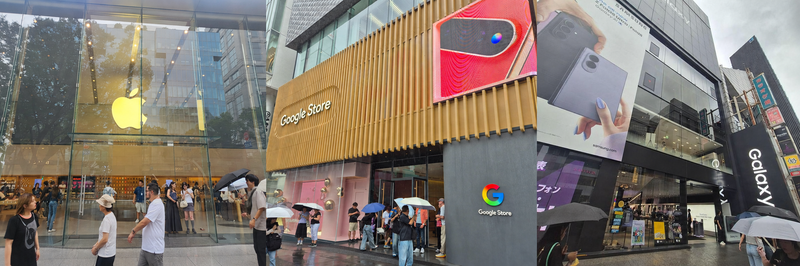
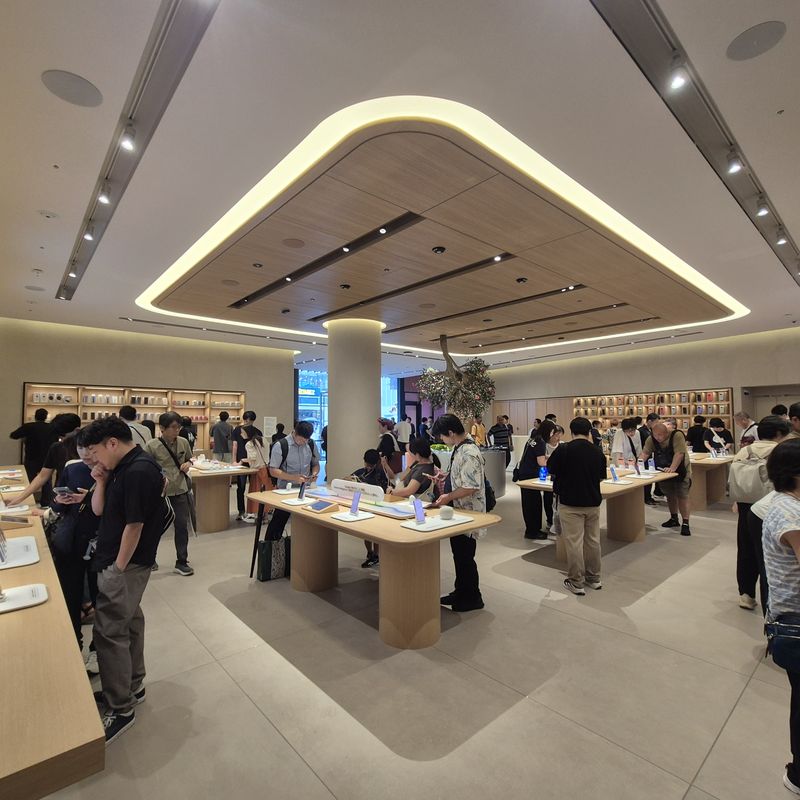
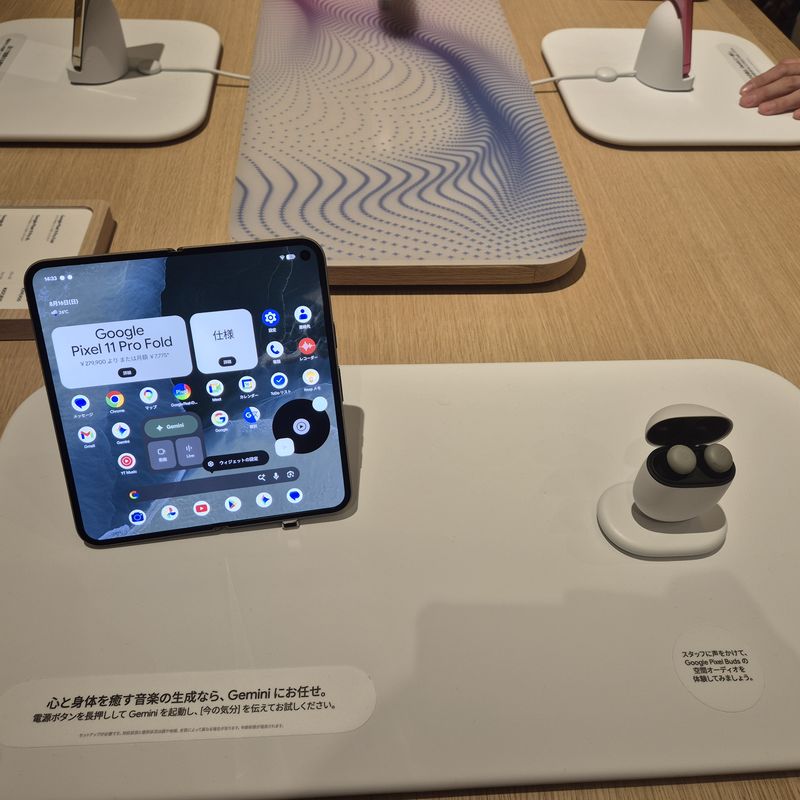
[Financial News, Tokyo = Reporter Seo Hye-jin] At Google Store Omotesando in Shibuya, Tokyo, on the 16th, visitors crowded around Google's new foldable smartphone, the Pixel 11 Pro Fold, which is set for official release on the 20th. Customers were seen checking its thickness and weight, or trying out Google's generative AI, Gemini, on the unfolded screen. The device has been on display since the 13th, allowing visitors to test it and place preorders.
This is Google's first direct-run store outside the United States, and it drew heavy crowds from the day it opened on the 13th. Long lines formed before the doors opened, and all of the opening-day souvenirs prepared for the first 1,000 visitors were gone within three hours. As Google's first overseas flagship store and a place where visitors can experience its latest smartphones and AI technology in one location, it has attracted strong interest from Japanese consumers.
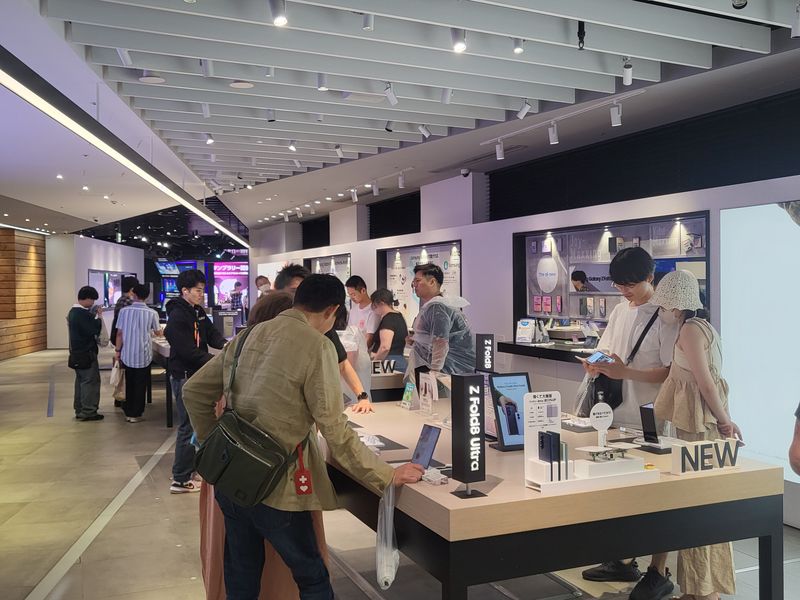
If you walk about 870 meters, or around 10 minutes, toward Harajuku from there, you reach Samsung Electronics' experiential flagship store, Galaxy Harajuku. Samsung moved first by launching the Galaxy Z8 series in Japan on the 7th, six days ahead of Google. At Galaxy Harajuku, sales of the Fold8 were about twice those of the previous model, and all colors and storage capacities temporarily sold out, marking a strong early performance.
On the opposite side, toward Omotesando, stands Apple Store Omotesando, which dominates more than half of Japan's smartphone market. Apple is expected to unveil its first foldable iPhone in September. With Apple, Google, and Samsung all lining up official stores along the roughly 2-km stretch from Omotesando to Harajuku, and with the entry of Apple, the industry's final heavyweight, now imminent, Japan, the home of the iPhone, is emerging as the front line of the global foldable phone war.
■ Samsung makes the first move with a passport-sized Z8, while Apple prepares for a September debut
According to Nikkei, Inc. and Japan's IT industry on the 17th, Samsung Electronics launched three Galaxy Z8 series models in Japan on the 7th. The newly added model is notable for folding down to a size similar to a passport. It features a wider screen for video viewing and document work, and it comes with Google's generative AI, Gemini.
As Samsung makes a bold move by changing even the device form factor, market attention is shifting to Apple's next step. Industry watchers expect Apple to unveil its first foldable iPhone in September, with a display roughly the size of the iPad mini. There is also speculation that, when folded, it will be about passport-sized, just like Samsung's new model.
Apple is said to have encountered more complex technical problems than expected during engineering tests. That has raised the possibility that mass production and shipments could be delayed by several months. More recently, however, views have gained ground that the production issues have been resolved and that the company can still meet its September unveiling schedule. Even so, some expect the overseas launch to be delayed by two to three months.
If Apple actually enters the market, the industry expects the foldable phone market, which Samsung Electronics and Huawei have been building since 2019, to accelerate its move into the mainstream.

■ Google's first store outside the U.S. targets Japan with Pixel and Gemini
Google is also stepping up its challenge by introducing a new foldable phone under the Pixel brand. Google Store Omotesando is the company's 11th direct-run store worldwide, following 10 locations in the United States, and the first to open outside the country.
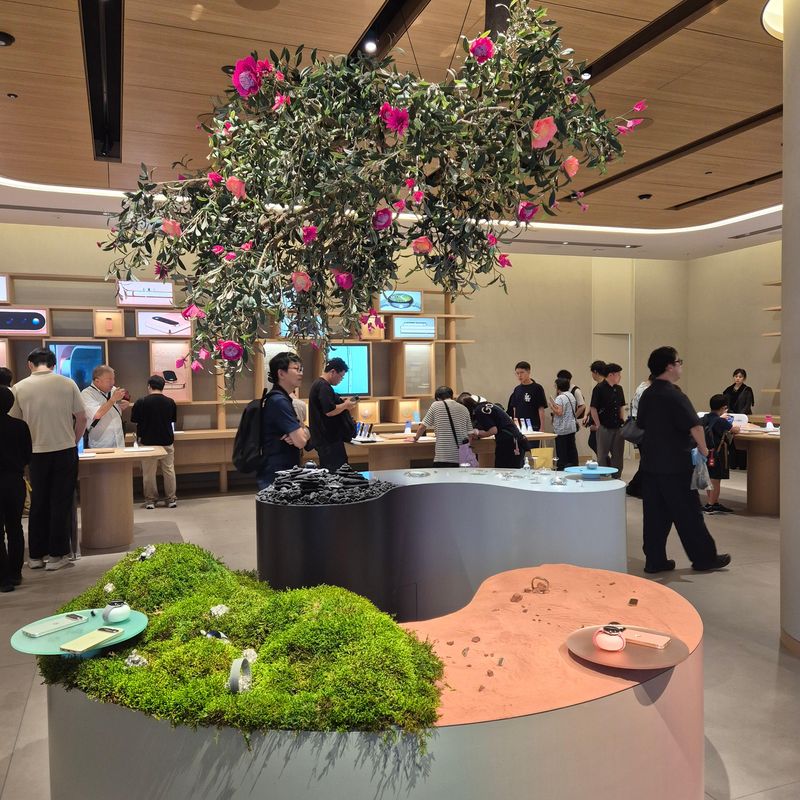
With a total floor area of 1,158 square meters and three floors from the basement level to the second floor, it is also the largest Google Store ever. The first floor displays and sells key devices such as the Pixel 11 series, while the second floor offers hands-on experiences with AI technologies, including image and video generation using Gemini. The basement floor houses customer support services for product pickup, consultations, and repairs.
What stands out in particular is its location between the official stores of Apple and Samsung. Beyond simple product sales, the strategy appears aimed at letting consumers experience smartphones and AI services in one place, drawing iPhone and Galaxy users into the Pixel ecosystem.
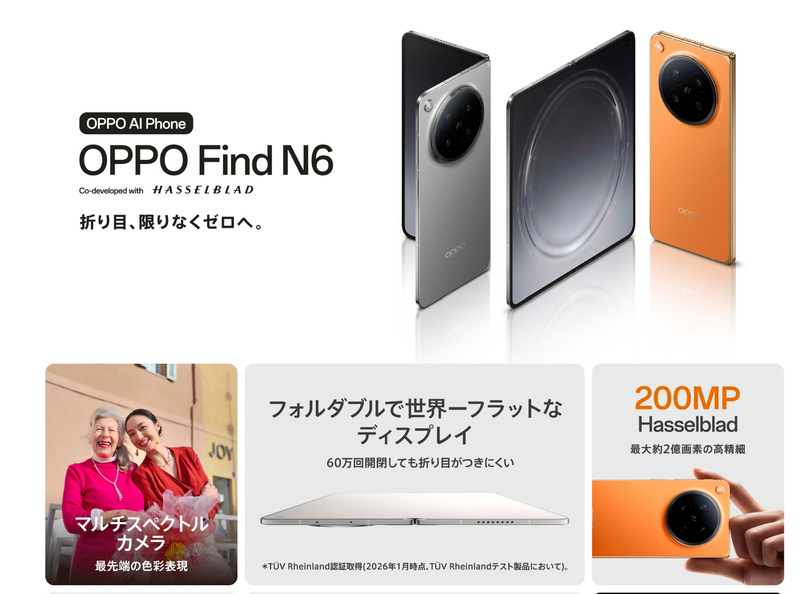
Chinese smartphone maker Oppo is also pushing into Japan's foldable phone market with high-end products. The 512GB model of its horizontal foldable phone, the Find N6, launched in Japan in April, is priced at 318,000 yen, or about 2.83 million won. That is more expensive than Samsung Electronics' Galaxy Z Fold8 with the same storage capacity, priced at 299,880 yen, or about 2.67 million won, but cheaper than the top-end Z Fold8 Ultra, which costs 326,780 yen, or about 2.91 million won.
Oppo has applied its own hinge technology to keep the screen crease to 0.05 mm when the phone is unfolded. The company has emphasized that the flat, large display allows users to write directly on documents with a stylus pen and run multiple messengers and work apps at the same time.
Oppo's decision to launch an ultra-premium product priced at around 3 million won is aimed at establishing itself as a premium brand in Japan, where Apple holds more than 50% of the market. The company appears to have concluded that high-priced products can also succeed after its bar-type smartphone, the Find X9, sold four times as many units by February this year as its predecessor after launching in December last year.
Japan's foldable phone market is still small. According to MM Research Institute, a Japanese market research firm, foldable phone sales in Japan in fiscal 2023 totaled 225,000 units, accounting for less than 1% of the overall smartphone market. Still, demand is growing, especially among office workers, as the appeal of using documents and multiple apps simultaneously on a large screen becomes more apparent.
A Big Camera official said, "More consumers are now looking for foldable phones from the start," adding, "The number of office workers choosing them for work use is also increasing." Since large-screen smartphones are gaining popularity in Korea among office workers in their 40s and 50s, who are beginning to experience presbyopia, similar demand could also grow among middle-aged consumers in Japan.
■ Even Japan's four major carriers join the battle for foldable customers
Japan's mobile carriers are also fueling market expansion. The country's four major carriers, NTT Docomo, KDDI CORPORATION, SoftBank, and Rakuten Mobile, Inc., are competing fiercely for customers with the Galaxy Z8 series. Buyers of foldable phones are valuable customers because they are more likely not only to choose unlimited data plans but also to subscribe to paid content such as Netflix and YouTube Premium.
SoftBank has tightened its discount conditions for customers switching carriers. According to the company, the number of customers it attracts through foldable phones is about twice that of regular bar-type smartphones.
Rakuten Mobile, which is selling a horizontal foldable phone for the first time, has positioned itself as the low-price option. It set the prices of its three new models at 199,900 to 299,900 yen, or about 1.78 million to 2.67 million won. If customers use both a number-porting plan and a device purchase program, they can buy the Fold8 for 4,490 yen a month, or about 40,000 won.
KDDI offers a 30,000-yen discount, or about 270,000 won, from the launch date to all customers, including those switching carriers, device upgraders, and new subscribers. NTT Docomo, instead of competing on price, is highlighting its same-day repair network and specialist support staff. About 1,500 Galaxy Ambassadors with expertise in Galaxy products are stationed at Docomo stores.
■ Soaring memory prices and a weak yen push prices higher... "A big screen alone is not enough"
The high price of foldable phones is the biggest variable in market expansion. Memory chip prices have surged amid the AI boom, and Japan is also facing a weaker yen. Apple has recently raised iPhone prices in Japan by about 10%.
According to Omdia, memory and storage account for more than 60% of the total material cost of entry-level smartphones and more than 30% even for premium models. Samsung Electronics raised the U.S. price of some Galaxy Z8 series models by $100, or about 140,000 won, compared with the previous generation.
Sung-Win Chow, a senior analyst at Omdia, said, "For products priced above $1,500, or about 2.13 million won, memory makes up a smaller share of total component costs than it does in midrange models, so there is more room to absorb price increases." He added, "The harder question is what justifies the high price. A big screen alone is no longer enough."
IDC expects the global smartphone market to shrink by a record 14% this year because of factors such as memory shortages, while foldable phone shipments are projected to rise 20%. With Samsung, Google, and Chinese manufacturers crowding into Japan ahead of Apple's entry, competition for leadership in foldables is expected to intensify further around AI features, work usability, pricing, and services.