"A 270% Return, Retiring After Making 500 Million Won"... Mysterious Verification Posts Fuel Anxiety [Young People Hooked on a One-Shot Life 3]
- Input
- 2026-08-17 06:00:00
- Updated
- 2026-08-17 06:00:00

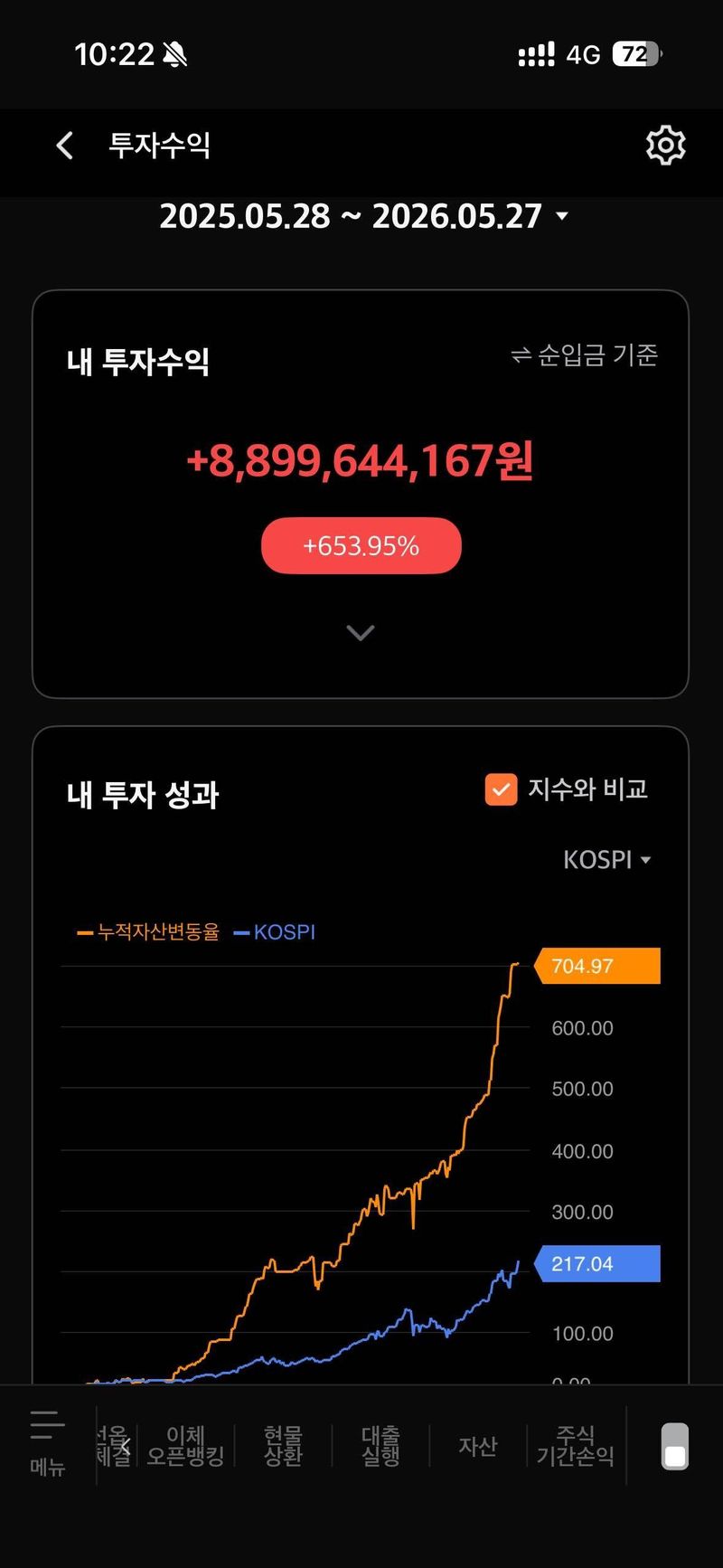
Stock communities and social networking service (SNS) platforms are filled with repeated posts showing investment gains and stories about soaring stocks. Screenshots of other people’s accounts may look like investment tips, but in reality they often trigger comparison anxiety. In a world where other people’s profit verification posts stand out more than the time it takes to save a paycheck, people even use the self-mocking phrase "one-shot life." This installment looks at how online investment information and investment tip chat rooms shake young investors’ judgment.
[Financial News]#. A salaried worker in his 30s, identified as A, often saw screenshots of stock gains on social networking service (SNS) platforms after work. Some users claimed monthly returns of 80%, while others said they had made more money in a single day than their monthly salary. Loss screenshots were rarely seen.At first, he was just browsing. But when the same stock name kept appearing across multiple accounts, he started searching for it. On stock message boards and open chat rooms, posts such as "It’s not too late yet" and "This is just the beginning" kept appearing. A checked the reactions to those posts before looking at disclosures or earnings.
A said, "It felt like there was information I didn’t know about." When profit verification posts appeared repeatedly, they felt less like bragging and more like a signal. He bought one stock just before the market closed and saw it fall the next day. A few days later, the account that had posted the gains had already moved on to talking about another stock.
When profit verification posts become a reason to buy
Investment communities and SNS platforms have become fast information channels for young investors. Earnings releases, theme stocks, overseas stock issues, and intraday surging stocks are shared in real time. The problem is that information, promotion, opinions, and incentives are all mixed on the same screen.
Profit verification posts are less like investment information and more like content that triggers comparison anxiety. It is difficult to verify whether they show actual trades, and some screenshots may be edited. With AI image generation and screen-manipulation tools now widespread, it has become even harder to confirm real profits from account screenshots alone.
A salaried worker in his 20s, identified as B, bought a foreign small-cap stock after following a profit verification post he saw on SNS. At first, he thought it was free information. But once he entered the chat room, the people who had bought earlier kept posting screenshots of their gains. B started with a small amount, but after repeated comments in the room that "you can’t make big profits with a small sum," he increased his investment.
The structure of investment communities also plays a role. People who make big gains post about them, while those who suffer losses quietly leave. What remains are high returns, strong conviction, and short reasons for buying. The shorter a young investor’s experience, the easier it is to be influenced by that atmosphere.
Investment tip chat rooms build trust through screenshots
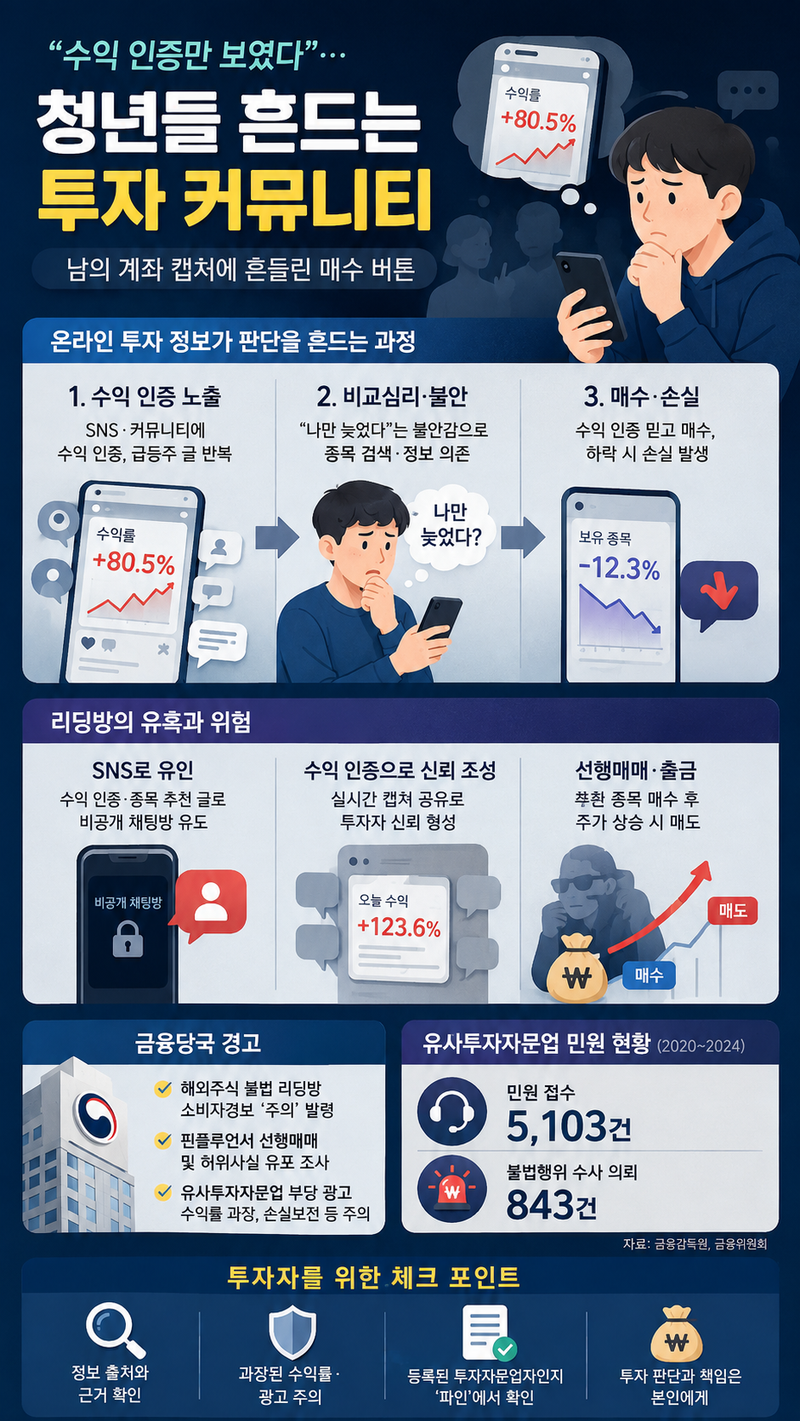
Online profit verification posts are also used as a tool to lure investors into private chat rooms. The pattern often starts with profit screenshots and stock recommendations posted on SNS, then leads users to Telegram, open chat rooms, or paid investment tip chat rooms.
In October 2025, the Financial Supervisory Service issued a Consumer Alert of "caution" over illegal overseas stock investment tip chat rooms. According to the agency, illegal operators posted messages and videos on SNS platforms such as Threads and Instagram with titles like "high-return U.S. stock investment strategies," then lured investors into private chat rooms on Telegram and other services.
In those private chat rooms, profit verification screenshots were shared in real time. Some operators also introduced themselves as stock investment experts and recommended specific stocks listed on overseas exchanges, urging members to buy heavily at certain prices and times.
The Financial Supervisory Service explained that the overseas stocks used in illegal investment tip chat rooms are often little known to domestic investors, have a small number of shares in circulation, low trading volume, and low prices. Even a small wave of buying can send the stock price soaring, but if the group that accumulated shares first sells and exits, latecomers may be left with the losses.
Finfluencer front-running also under investigation
Unfair trading using SNS and investment tip chat rooms has also emerged as a problem in the domestic stock market. In March, the Financial Services Commission and the Financial Supervisory Service said they would intensively inspect unfair trading by finfluencers and launch a high-intensity investigation. A finfluencer is a person who shares investment information on SNS and video platforms.
The financial authorities said they would focus on front-running and the spread of false information through major information channels such as YouTube, Telegram, and open chat rooms. Investigations will target cases in which someone buys a stock in advance, recommends it on SNS or in an investment tip chat room, and then cashes out once buying pressure builds, as well as cases involving false claims and rumors spread to exploit anxious investors.
Similar forms of fraudulent trading have already been uncovered. In December 2024, the Securities and Futures Commission said it had detected fraudulent trading practices, including front-running through SNS investment tip chat rooms. Room operators bought recommended stocks in advance, then promoted them. When buying pressure pushed prices higher, they sold their holdings.
The FSC also warned investors to be careful. It advised them not to be misled by baseless information or rumors and to check the source and basis of any information. It also said they should verify whether the operator of an investment tip chat room is a registered investment adviser on the Financial Supervisory Service’s FINE Financial Consumer Information Portal.
More unfair advertising in quasi-investment advisory businesses
Complaints related to investment tip chat rooms and quasi-investment advisory businesses are also numerous. From 2020 to 2024, 5,103 complaints were filed regarding quasi-investment advisory businesses. Of those, 843 were referred for investigation over illegal activity.
The most common complaints involved refunds and contract cancellations. Reports also included unregistered investment advice, unregistered investment management, and false or exaggerated advertising. Because quasi-investment advisory businesses can operate simply by filing a report, investors may easily misunderstand the nature of the company. When that is combined with efforts to gather investors through SNS and open chat rooms, the damage can grow.
The financial authorities are also taking issue with unfair advertising by quasi-investment advisory businesses. In April, the Financial Services Commission and the Financial Supervisory Service released the results of inspections and investigations into such businesses, saying, "Unfair labeling and advertising that misleads consumers, such as exaggerating returns or suggesting that losses are covered or profits guaranteed, increased from the previous year, so investors need to be especially careful."
The financial authorities found 133 violations by 105 quasi-investment advisory businesses in 2025 and imposed a total of 470 million won in fines on 35 of them. While information presented through profit verification posts and high-return advertisements distorts investment decisions, latecomers may be left with losses and refund disputes.
A said that when he looks at profit verification posts these days, he first checks the account’s past posts. Even so, he admitted that the feeling of being shaken has not changed. "It’s someone else’s account, but I end up comparing it as if I were looking at my own bank balance," he said. "In the end, I’m the one who presses the buy button, but it all starts with someone else’s screenshot."
[email protected] Han Seung-gon Reporter