"House bought for 100 million won worth 5 billion won"... 70-year-old who owned the house for 30 years faces tens of millions of won in Comprehensive Real Estate Tax despite having no income [Tax War 2]
- Input
- 2026-08-18 05:00:00
- Updated
- 2026-08-18 05:00:00
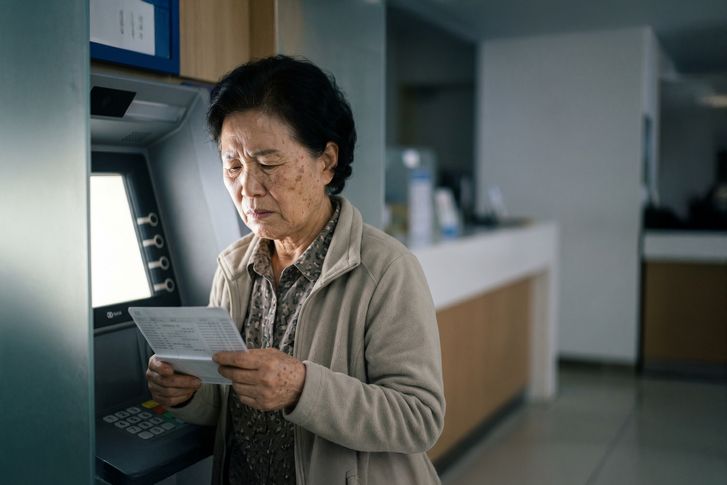
/ Photo = Getty Images Bank The August 3 tax reform plan released by the Lee Jae-myung administration has escalated into a [real estate-driven tax war]. The elderly, who have "accidentally become owners of high-priced homes simply by living there for a long time," have been hit hard and are facing unprecedented tax resistance.
Accordingly, Financial News will conduct an urgent six-part series diagnosing the problems with the tax reform plan. [Financial News] "I have owned only one house for over 30 years.Now, simply because housing prices have risen, I have to worry about taxes amounting to hundreds of millions of won every year. " On the 14th, a post was uploaded to a real estate forum on a portal site by a 66-year-old man identified as "Mr.A," who introduced himself as a high-priced single-home owner in Seocho-gu, Seoul. Mr.
/ Photo = Getty Images Bank The August 3 tax reform plan released by the Lee Jae-myung administration has escalated into a [real estate-driven tax war]. The elderly, who have "accidentally become owners of high-priced homes simply by living there for a long time," have been hit hard and are facing unprecedented tax resistance.A stated, "When I calculated it using a property tax calculator, the holding tax skyrocketed starting in 2028, regardless of whether I was 'living' or 'non-living. ' This tax bill represents a tax increase beyond imagination." He then shared his dilemma regarding whether to continue holding onto the house or sell it. Regarding the tax reform plan announced by the government on the 3rd, concerns are deepening among single-home owners who have long held high-priced properties in areas such as Gangnam, Seocho, and Yongsan in Seoul.In particular, among the elderly whose earned income has decreased or stopped after retirement, there are appeals asking, "Do I have to sell my house?" The core of the August 3rd tax reform is to increase the burden of the Comprehensive Real Estate Tax (CRE Tax) on owners of high-priced homes, while simultaneously shifting the special deduction for long-term capital gains tax to be "resident-centered. " This is why complaints are emerging from elderly single-home owners who have long resided in the property and possess assets worth billions of won due to rising housing prices, but lack the cash flow to pay taxes immediately.
"I've owned it for 36 years. 'Holding tax will exceed 200 million won by 2030'" 2026 Tax Reform Plan.
/Source: Ministry of Finance and Economy, Graphic: ChatGPT The officially assessed value of the house owned by Mr. 092 billion won.
He has owned this house for 36 years since 1990 and lived there himself for over 13 years, but is currently renting it out. Using a private tax calculation program, Mr.
/ Photo = Getty Images Bank The August 3 tax reform plan released by the Lee Jae-myung administration has escalated into a [real estate-driven tax war]. The elderly, who have "accidentally become owners of high-priced homes simply by living there for a long time," have been hit hard and are facing unprecedented tax resistance.
69 million won in 2028, and approximately 150 million won in 2029. By 2030, it is calculated to reach between 210 million and 230 million won, depending on whether he actually resides there.
/ Photo = Getty Images Bank The August 3 tax reform plan released by the Lee Jae-myung administration has escalated into a [real estate-driven tax war]. The elderly, who have "accidentally become owners of high-priced homes simply by living there for a long time," have been hit hard and are facing unprecedented tax resistance./ Photo = Getty Images Bank The August 3 tax reform plan released by the Lee Jae-myung administration has escalated into a [real estate-driven tax war]. The elderly, who have "accidentally become owners of high-priced homes simply by living there for a long time," have been hit hard and are facing unprecedented tax resistance.
When asked about Mr. 7 million won this year to approximately 18 million won by 2027, more than tripling.
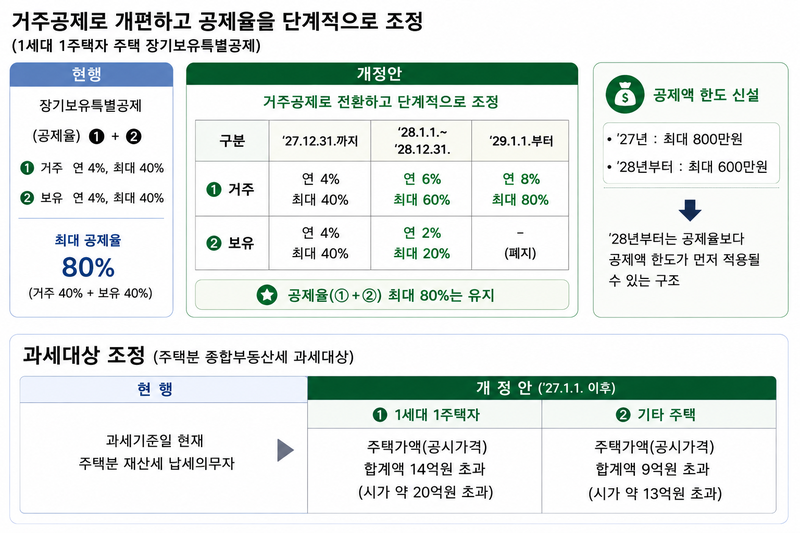
By 2028, the figure will differ depending on whether he has actually resided there for 15 years or more. 6 million won, while if you are a non-resident, you must pay around 50 million won.However, it must be taken into account that the actual assessed tax amount varies depending on the upper limit of the property tax assessment base, detailed items in the calculation process for the tax burden limit, the application of urban area surcharges by local governments, and fluctuations in officially assessed prices. Looking at the government's tax reform plan, one can understand the background behind Mr.A's concerns. Currently, owners of a single primary residence receive Comprehensive Real Estate Tax credits based on age: 20% for those aged 60–65, 30% for those aged 65–70, and 40% for those aged 70 or older.By adding deductions based on the holding period, they can receive a combined deduction of up to 80% based on age and holding. The government's proposal gradually transitions the deduction based on the holding period to a deduction based on the period of residence.
In 2027, the higher of the holding and residence deductions will be applied, but from 2028 onwards, only the residence deduction will be recognized. If you have resided for more than 15 years, you receive a 50% deduction, maintaining the maximum deduction rate of 80% when combined with the age deduction.
The problem is that a monetary limit is being imposed on the deduction amount for the first time. Tax credits will be limited to a maximum of 8 million won in 2027 and 6 million won from 2028 onwards.
Shin Bo-yeon, a professor in the Department of Real Estate AI Convergence at Sejong University, pointed out, "These people are not speculators but actual residents who have lived there for a long time. If taxes are significantly increased simply because housing prices have risen, it could be perceived as a de facto demand for those without the cash capacity to pay holding taxes to move out.
" She added, "It is necessary to re-examine the tax reform plan by looking at the impact on the elderly and long-term actual residents. " "Liveed in the same house for 26 years.
'1 billion won deduction limit' even when selling" The reason for the dilemma of whether to "continue holding or sell" is clear. This is because the burden of capital gains tax would also increase if the property were to be sold.
/ Photo = Getty Images Bank The August 3 tax reform plan released by the Lee Jae-myung administration has escalated into a [real estate-driven tax war]. The elderly, who have "accidentally become owners of high-priced homes simply by living there for a long time," have been hit hard and are facing unprecedented tax resistance.
Mr. B purchased a 30-pyeong apartment in Yongsan, Seoul, around 2000 by pooling together loans and has been living in the same apartment for 26 years.
/ Photo = Getty Images Bank The August 3 tax reform plan released by the Lee Jae-myung administration has escalated into a [real estate-driven tax war]. The elderly, who have "accidentally become owners of high-priced homes simply by living there for a long time," have been hit hard and are facing unprecedented tax resistance./ Photo = Getty Images Bank The August 3 tax reform plan released by the Lee Jae-myung administration has escalated into a [real estate-driven tax war]. The elderly, who have "accidentally become owners of high-priced homes simply by living there for a long time," have been hit hard and are facing unprecedented tax resistance.
While he tightened his belt to repay the loan, Seoul's housing prices skyrocketed, significantly increasing the value of his assets. However, the thought of selling this house in the future fills him with worry.
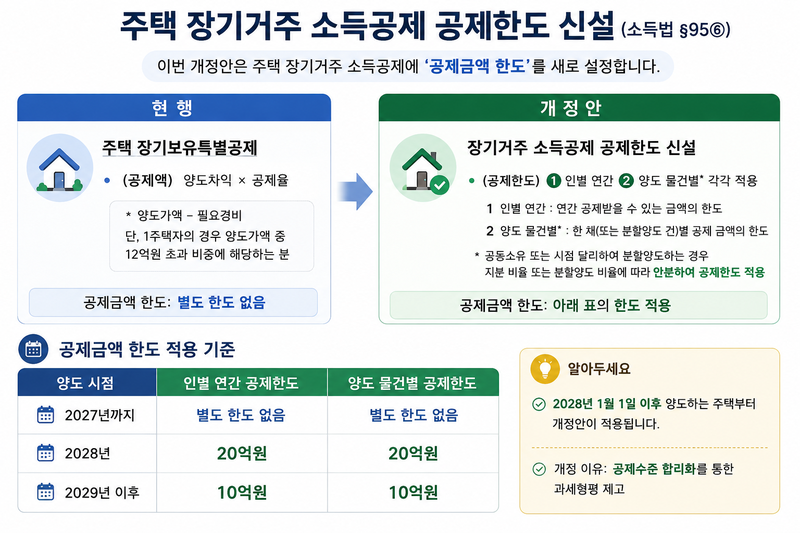
The government's proposal gradually shifts the special long-term ownership deduction for single-home owners to a "resident-centered" approach. While long-term actual residents maintain the same deduction rate as the current maximum of 80%, the problem is that a separate cap on the deduction amount will be introduced.
In 2028, the income deduction limit for long-term residency will be 2 billion won per person annually and per transferred property, respectively, and will be lowered to 1 billion won each starting in 2029. The government described this as "enhancing tax equity through the rationalization of deduction levels.
" Ms. B argued, "I have lived in the same apartment for over 20 years; is it right to place a cap on capital gains tax deductions simply because the housing price has risen?" She added, "Instead of treating those who have lived there for more than 10 years the same, there is a need to subdivide and protect long-term residents of 20 or 30 years.
" "A house bought for 100 million won is now worth 5 billion won". The worries of an elderly couple whose income has been cut off 2026 tax reform plan.
/ Photo = Getty Images Bank The August 3 tax reform plan released by the Lee Jae-myung administration has escalated into a [real estate-driven tax war]. The elderly, who have "accidentally become owners of high-priced homes simply by living there for a long time," have been hit hard and are facing unprecedented tax resistance.
/Source=Ministry of Finance and Economy, Graphic=ChatGPT·Getty Images Bank Ms. C, in her 70s, who has been living in an apartment purchased with her husband for about 100 million won over 30 years ago, also shared similar concerns.
/ Photo = Getty Images Bank The August 3 tax reform plan released by the Lee Jae-myung administration has escalated into a [real estate-driven tax war]. The elderly, who have "accidentally become owners of high-priced homes simply by living there for a long time," have been hit hard and are facing unprecedented tax resistance./ Photo = Getty Images Bank The August 3 tax reform plan released by the Lee Jae-myung administration has escalated into a [real estate-driven tax war]. The elderly, who have "accidentally become owners of high-priced homes simply by living there for a long time," have been hit hard and are facing unprecedented tax resistance.
C said, "Since there is no immediate income, I am worried about the property tax, but if I sell it, I am worried about the capital gains tax. I have no children, so I cannot gift it to anyone, leaving me stuck in a dilemma.
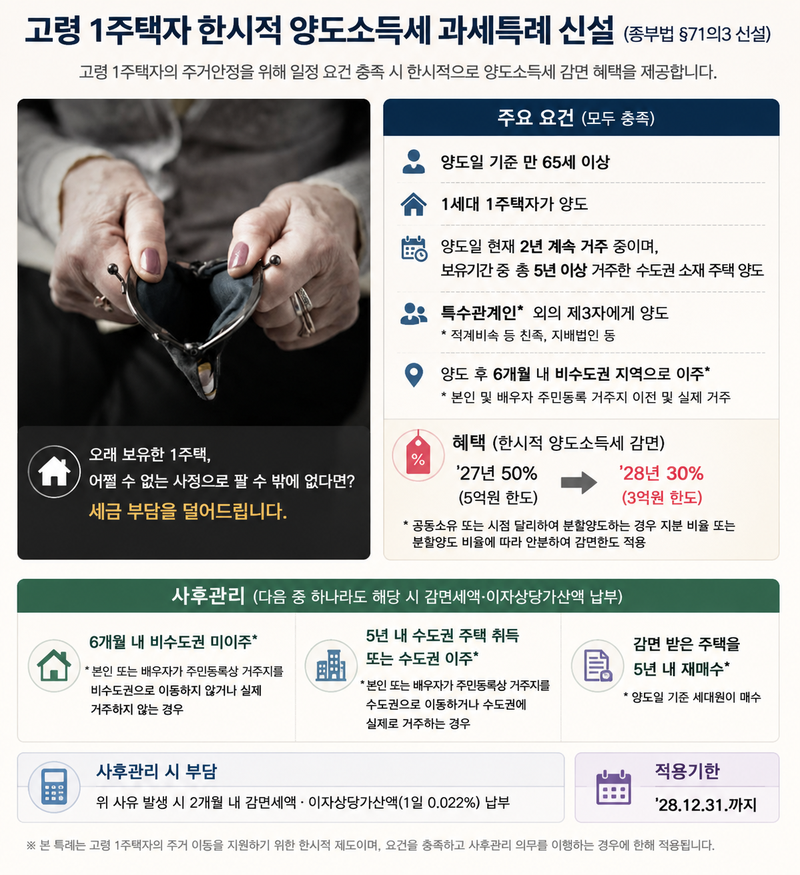
" The government has also decided to expand the deferral system for the Comprehensive Real Estate Tax (Jongbu Tax) to consider the burden on elderly single-home owners with insufficient cash flow. Currently, payment deferral is available for single-home owners whose Jongbu Tax payment exceeds 1 million won, who are 60 years of age or older, have owned the property for at least 5 years, and whose total income in the previous year was 70 million won or less.
The government proposal relaxes the total income threshold to 80 million won and the comprehensive income threshold to 70 million won. Additionally, it allows for payment deferral applications from those aged 65 or older who have resided in the property for at least 10 years and whose holding tax accounts for 10% or more of their income in that year.
A mechanism has also been established to reduce the surcharge equivalent to interest during the deferment period within the scope of the insurance premiums paid, provided that a tax guarantee insurance certificate is submitted as collateral for tax payment. However, it is pointed out that payment deferral has limitations in resolving the fundamental burden on the elderly, as it is a system that delays the payment date rather than reducing the tax itself.
Experts: "Taxes must be predictable. Cash flow of the elderly must also be considered.
" Experts point out that this controversy cannot be viewed simply as a matter of "tax cuts for the rich versus tax increases for the rich. " This is because the value of real estate assets does not necessarily correlate with a taxpayer's actual cash income.
/ Photo = Getty Images Bank The August 3 tax reform plan released by the Lee Jae-myung administration has escalated into a [real estate-driven tax war]. The elderly, who have "accidentally become owners of high-priced homes simply by living there for a long time," have been hit hard and are facing unprecedented tax resistance.
Cheon Gyeong-wook, Representative Tax Accountant at Songwoo Tax Law Firm, stated, "The standard of poverty can vary from person to person, and taxes must fundamentally be borne in accordance with the law," but added, "What is important is the taxpayer's predictability.
/ Photo = Getty Images Bank The August 3 tax reform plan released by the Lee Jae-myung administration has escalated into a [real estate-driven tax war]. The elderly, who have "accidentally become owners of high-priced homes simply by living there for a long time," have been hit hard and are facing unprecedented tax resistance." He said, "If the taxes expected two or three years ago differ significantly from the taxes that must be paid now, it is difficult to plan for asset disposal or housing.
" He continued, "While tax rates may change, if the tax base or deduction methods are made excessively complex and drastically altered year by year, controversies regarding tax equity are bound to persist.
" Professor Shin also remarked, "It is necessary to distinguish between those who have actually resided in a home for a long period and those who hold a house for the purpose of short-term capital gains," adding, "We need supplementary measures that consider not only asset values but also the cash flow and actual tax-paying ability of retired seniors.
"
[email protected] Seo Yoon-kyung Reporter