Chey Tae-won Says He Is Reviewing Semiconductor Plant Construction in the United States... "Memory Supply Shortage Is a War-Like Situation"
- Input
- 2026-08-14 19:37:32
- Updated
- 2026-08-14 19:37:32
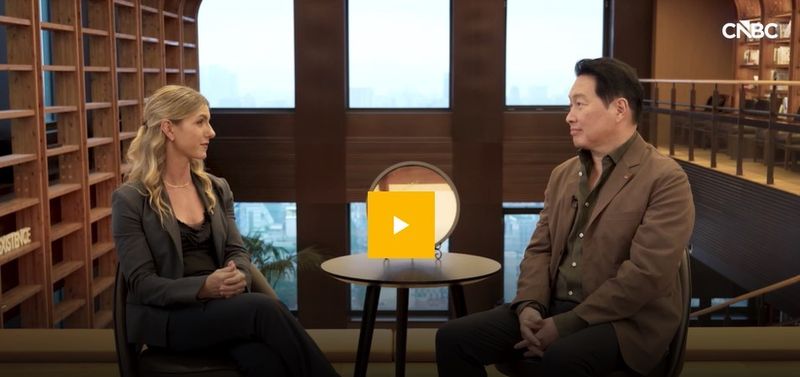
[Financial News] Chey Tae-won, chairman of SK Group, said he is reviewing plans to build a cutting-edge semiconductor fab in the United States. He said memory semiconductor demand could rise to four to five times the current level over the next 10 years, and added that he is aggressively considering all options to expand production.
In an interview released by CNBC on the 13th local time, Chey said, "Every country wants to attract manufacturing facilities for core technologies within its own territory, and we are also open to the idea of building an advanced memory fab in the United States." Chey, who also serves as chairman of the Korea Chamber of Commerce and Industry (KCCI), said at the Jeju Forum hosted by the KCCI last month that he was also considering building semiconductor fabs in the United States, alongside the Honam Semiconductor Cluster in South Korea.
Chey also said in the interview, "We need power, water, skilled talent, and a semiconductor ecosystem to support all of that," adding, "If those basic infrastructure conditions are met, along with subsidies and incentives from the U.S. government, we would be willing to invest in the United States." He added, "Behind a large memory fab are 600 to 700 companies supplying materials, chemicals, and services. If we can secure power, water, land, and move the related ecosystem as well, we can build fabs anywhere in the world, including the United States."
He described the current supply-demand situation in memory semiconductors as "war-like." Chey said, "We announced plans to double semiconductor production capacity over the next five years, but demand is rising so sharply that even doubling may not be enough." He added, "Looking at the long-term trend, memory chip demand over the next 10 years could grow to four to five times the current level."
He also warned that next year could be the most severe period for memory semiconductor supply and demand. He explained that customer demand is already nearly double this year's level, but production expansion has not yet been sufficiently prepared.
Chey said, "In the AI era, one person may use multiple AI agents, which changes the structure of memory demand," adding, "The memory cycle will not disappear, but it will become much longer than before."
[email protected] Jo Eun-hyo Reporter