LDP leaders coordinate group visit to Yasukuni Shrine on Liberation Day
- Input
- 2026-08-14 19:22:19
- Updated
- 2026-08-14 19:22:19
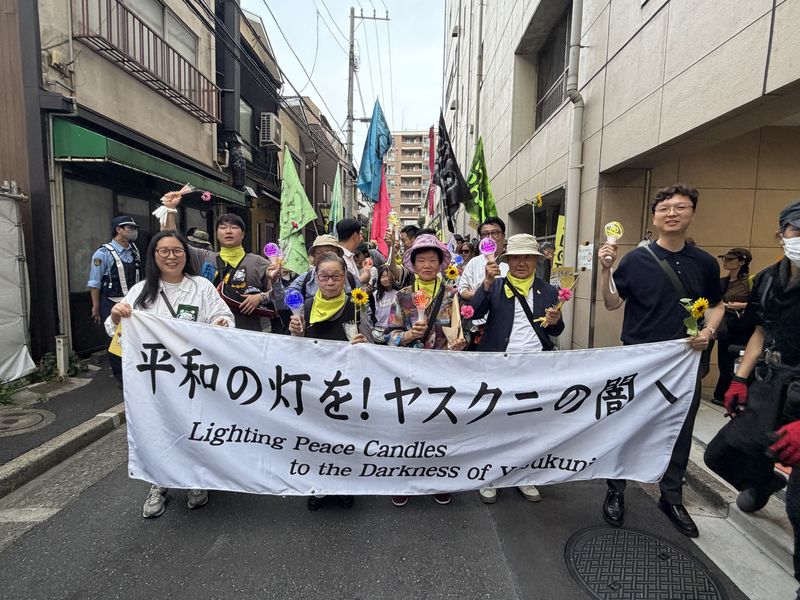
[Financial News] On August 15, National Liberation Day of Korea and the anniversary of Japan's defeat in the Pacific War, senior leaders of Japan's ruling Liberal Democratic Party (LDP) are reportedly coordinating a group visit to Yasukuni Shrine, where Class-A war criminals from the Pacific War are enshrined.
According to local media reports on the 14th, including Sankei Shimbun and Kyodo News, LDP Secretary-General Shunichi Suzuki, General Council Chair Haruko Arimura, and Election Strategy Committee Chair Yasutoshi Nishimura are coordinating a visit to Yasukuni Shrine on the 15th. Takayuki Kobayashi, who had initially been considering a visit, is said to have changed course, citing his response to flood damage in Chiba Prefecture.
While some party leaders have visited Yasukuni Shrine individually in the past, a group visit by the leadership is unusual. One LDP official argued, "This is a visit on behalf of the party, and sincerely mourning the war dead is important." Kyodo News analyzed that the group visit is intended both to appease conservative supporters and to prepare the ground in advance for a possible visit by Prime Minister Sanae Takaichi in the future.
Yasukuni Shrine is a memorial facility for about 2.466 million people who died in civil wars around the time of the Meiji Restoration and in numerous wars launched by Imperial Japan. Because 14 Class-A war criminals, including former Prime Minister Hideki Tojo, are enshrined there, it is regarded as a symbol of Japanese militarism.
By contrast, Prime Minister Sanae Takaichi is reportedly planning not to visit Yasukuni Shrine on the 15th, citing domestic priorities such as handling the Kumamoto Earthquakes. Although the official explanation is disaster response, the move is widely seen as reflecting concern over the impact a visit could have on improving ties between South Korea and Japan, as well as on trilateral cooperation among South Korea, the United States, and Japan.
Takaichi, who used to visit Yasukuni regularly and had pledged to pay her respects there upon becoming prime minister, has since taken the approach of offering a private tribute in her own name instead of making a personal visit. Attention is now focused on whether she will also offer a tribute on this year's defeat anniversary. Chief Cabinet Secretary Minoru Kihara said on the 7th, in response to a related question, "It is something the prime minister should judge appropriately."
Concerns are also being raised in Japanese political and academic circles. Junya Ogawa, head of the Centrist Reform Alliance (CRA), wrote on X that "a group visit by ruling party leaders could have a greater impact on relations with neighboring countries and on diplomacy." Kumiko Haba, professor emerita at AGU, also urged caution, saying, "On the defeat anniversary, officials should be careful not to cause problems for diplomacy with neighboring countries."
Meanwhile, another key point of interest is whether Prime Minister Takaichi will mention "reflection" and a "pledge of pacifism" in her memorial address at the ceremony for war dead on the first defeat anniversary she will face since taking office. The phrase, which had been removed after the Abe administration in 2013, reappeared last year for the first time in 13 years under former Prime Minister Shigeru Ishiba.
[email protected] Yoon Jae-jun Reporter