Massive Oil Spill After Ship Attack in the Strait of Hormuz Leaves Iran's Qeshm Island Coastline in Environmental Crisis
- Input
- 2026-08-14 18:46:56
- Updated
- 2026-08-14 18:46:56
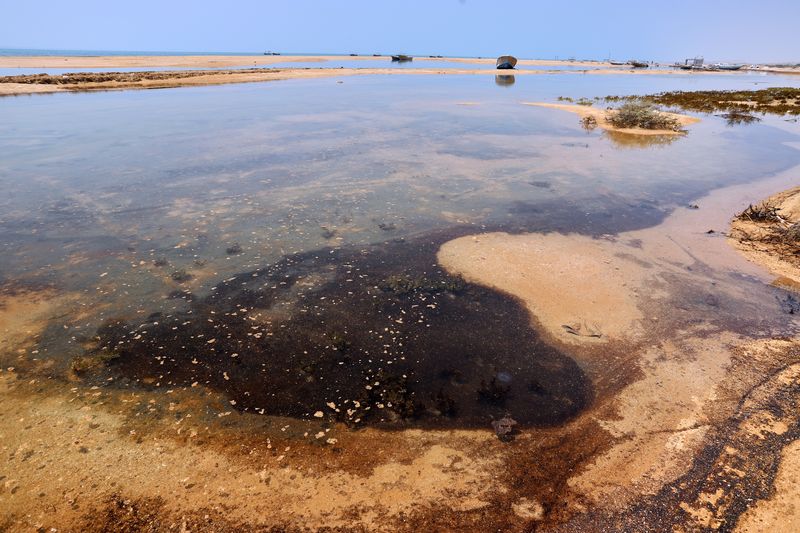
[Financial News] A ship attack in the Strait of Hormuz has triggered a massive oil spill, causing an environmental disaster that has polluted the coastline of Qeshm Island in Iran.
On the 13th local time, the BBC reported that satellite image analysis and verified footage showed the spill originated from the Minoan Pioneer, a vessel flagged in Oman that was attacked in Omani waters.
BBC Verify, the BBC's fact-checking unit, said fuel leaked from the Minoan Pioneer, which was attacked on the 3rd, spread across a wide area of the Strait of Hormuz within a week.
Satellite image analysis from the 10th showed the oil slick had spread over 300 square kilometers, about 100 times the size of Yeouido and equivalent to more than 40,000 soccer fields.
John Amos, head of the environmental satellite monitoring group SkyTruth, described it as a major accident in which at least 100,000 gallons, or about 380,000 liters, of oil had spilled.
Videos posted on social media showed black, sticky clumps of oil washing ashore on the southern Suza beach of Qeshm Island. On the opposite side of the island is the Hara Protected Area, a UNESCO-designated biosphere reserve, raising further concerns about the damage.
Environmental experts warned that the spill would pose a serious threat to Qeshm Island's rare ecosystem and local fishermen.
They also noted that, beyond the oil floating on the surface, heavy oil components that sink to the seabed could remain in the marine ecosystem for years and cause lasting damage.
The incident occurred amid heightened military tensions in the Strait of Hormuz following U.S. and Israeli strikes on Iran in late February. According to shipping intelligence firm Kepler, a total of 67 vessels have been attacked near the Strait of Hormuz since the conflict began.
Iran has tightly controlled or attacked passing vessels in this chokepoint, through which about one-fifth of the world's oil and natural gas shipments pass. Samir Madani, co-founder of shipping intelligence firm TankerTrackers, called it a self-inflicted outcome for Iran, saying it was the result of attacks on ships using the Omani route.
Meanwhile, a spokesperson for Iran's Foreign Ministry said the source of the pollution was a "foreign cargo ship," while local environmental authorities claimed that "cleanup work is nearly complete." However, no independent verification has yet been carried out.
[email protected] Yoon Jae-joon Reporter