Retail Investors Go Against the Grain Again, Selling Samsung Electronics and SK hynix and Buying Inverse ETFs
- Input
- 2026-08-14 16:15:48
- Updated
- 2026-08-14 16:15:48
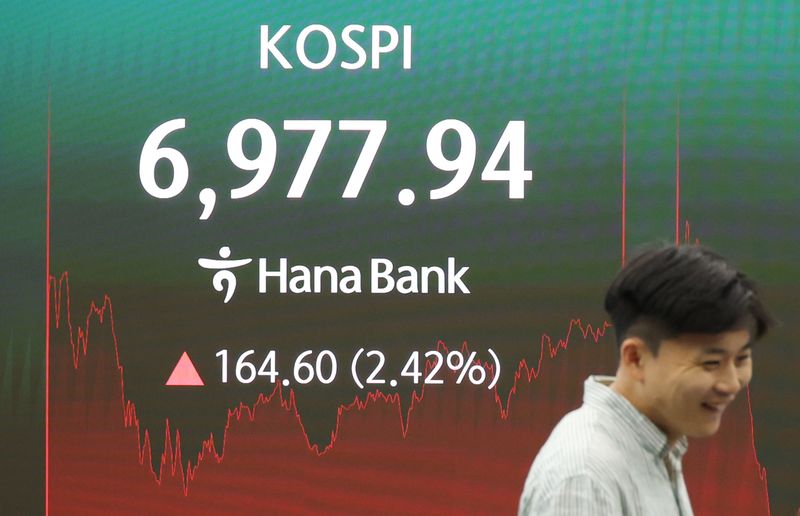
[Financial News] Although the KOSPI has rebounded more than 8% over the past week, individual investors have been selling off domestic stocks and buying inverse exchange-traded funds (Inverse ETFs) that bet on a market decline. That is the opposite of the trend among foreign investors, who have resumed buying, led by Samsung Electronics and SK hynix.
According to the Korea Exchange on the 14th, the KOSPI rose 8.21% from the 7th to the 13th. Over the same period, individual investors posted a net sell of 483.51 billion won in the Korea Exchange Main Board.
Selling was especially concentrated on the 12th and 13th, when the index posted larger gains. Individuals sold 319.11 billion won on the 12th and 274.10 billion won on the 13th, for a total of 593.21 billion won over the two days. Foreign investors, by contrast, bought 283.54 billion won and 211.02 billion won, respectively, during the same period.
Individual investors' selling was concentrated in large-cap semiconductor stocks that had driven the recent rebound. From the 7th to the 13th, they sold Samsung Electronics worth 255.88 billion won and SK hynix worth 164.94 billion won on a net basis. Combined, the two stocks accounted for 420.82 billion won in net selling, or about 87% of the total net selling in the Korea Exchange Main Board during the period.
At the same time, investors were also betting on a market decline through derivatives-linked products. The top net-buy item among individual investors in ETFs during the period was 'KODEX 200 Futures Inverse 2X,' which attracted 132.8 billion won. 'KODEX Inverse ETF' also drew 84.2 billion won, ranking third in net purchases.
However, as the KOSPI rebounded sharply during the same period, returns on inverse ETFs were weak. From the 7th to the 13th, KODEX 200 Futures Inverse 2X fell 15.63%, while KODEX Inverse ETF dropped 7.97%.
Brokerage analysts say individual investors have recently shifted away from chasing the upward trend and toward buying on dips and taking profits on rebounds. In fact, since late July, days with strong gains have tended to see net buying by foreign investors and net selling by individuals, while the opposite pattern has appeared on down days.
By contrast, conditions for foreign capital inflows are seen as improving. U.S. inflation data have matched or come in below market expectations, easing uncertainty over interest rates. Strong earnings from AI infrastructure companies are also supporting investor sentiment.
Lee Jae-won, an analyst at Yuanta Securities Korea, said, "Easing rate pressure as inflation stabilizes, along with the recent decline in the KOSPI 200 Volatility Index, creates a favorable environment for foreign investors to return." He added, "For the KOSPI's upward trend to continue, it is important for foreign investors to resume steady net buying."
[email protected] Bae Han-geul Reporter