"Promised 11 Million Won a Month," a Woman in Her 30s Became Part of a Cambodian 'No-Show Scam' Ring [True Crime]
- Input
- 2026-08-15 09:00:00
- Updated
- 2026-08-15 09:00:00

[Financial News] "If you place the order and supply the goods on our behalf, we will pay you later."
The call was made to look as if it came from a military unit or a hospital. The scammers first asked a company to order and supply goods on their behalf, then lied that payment would follow. They later posed as that company and approached victims as if they would deliver the actual goods, persuading them to send money to bank accounts. It was the so-called no-show scam.
The scam's base of operations was not in Korea. The group set up offices and lodging in Sihanoukville, Kingdom of Cambodia, and equipped itself with computers, iPads, earphones and soundproof booths, as well as mobile numbers and mule accounts needed for the scheme. A woman in her 30s, identified as A, also worked there under the alias "Yuja."
From ringleader to first- and second-stage agents: a divided no-show scam operation
The group's roles were strictly divided. The unidentified ringleaders recruited new members and oversaw the distribution of allowances based on criminal performance. Team leaders prepared the scam scenarios, handed out scripts to the call agents and trained them on how to carry out the fraud. They also received reports on the agents' calls and the progress of the scheme, and arranged the accounts used to receive the stolen money.The agents who deceived victims were also split into first- and second-stage roles. First-stage agents pretended to be military units or hospitals and lied that they would pay after a company ordered and supplied goods on their behalf. Second-stage agents then posed as that company, tricked victims into believing they were selling the real goods and induced them to transfer money into bank accounts.
Pay also varied by role. First-stage agents were promised a base salary of $2,000 plus incentives calculated according to the amount of criminal proceeds. Second-stage agents, including A, were set to receive monthly pay of about $7,000 to $8,000.
Promised $8,000 a month, she worked under the alias "Yuja"
A's role was that of a second-stage agent. She left for the Kingdom of Cambodia in July 2024, returned home in February the following year, and then departed again in March of the same year. According to the ruling, A worked as a second-stage agent in Sihanoukville from late January to mid-May 2025.A agreed to a monthly salary of $8,000 and used the alias "Yuja." She lived in housing arranged by the group and used scripts to impersonate "Naju Chicken Distribution" and "Huaba Distribution." Her job was to deceive targets into believing real goods would be supplied and to induce them to transfer payment to bank accounts. Based on these actions, the court recognized that A had joined and participated in a criminal organization.
Passports were handed to managers, and even food deliveries required approval
Control inside the organization was also strict. To prevent members from leaving, the ringleaders set up offices overseas and posted guards outside. They also placed team leaders in the hierarchy and pushed members to produce results. Members used aliases with one another, and passports were collected by managers for centralized safekeeping. They had to get permission to go out, and during working hours they had to hand over their personal mobile phones to managers.Talking, playing games and watching media were also banned during working hours. Even ordering food delivery required approval, and when members went out or entered the premises, they had to submit photos showing their faces and everything below.
"I only did it until early May" ... changed testimony in court
A's side argued that she had worked for the criminal organization only until early May 2025, not until mid-May. However, accomplices who had worked in the group testified that A remained active even after early May. A herself had consistently told investigators that she worked until mid-May, but changed her account in court and said it was only until early May. The court said it was difficult to find a reasonable explanation for the reversal and found her in-court testimony hard to believe.
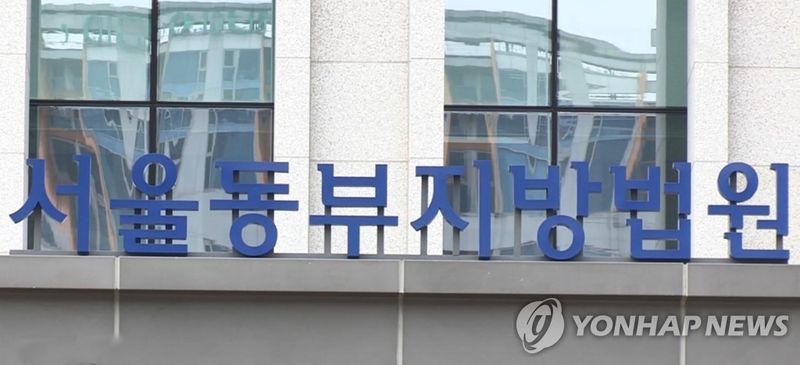
According to the legal community on the 15th, Criminal Division 11 of the Seoul Eastern District Court, presided over by Chief Judge Ko Chung-jung, sentenced A to three years in prison on charges of joining and participating in a criminal organization. The court also ordered the confiscation of 30 million won and prepayment of an amount equivalent to the confiscated sum. The ruling was handed down on June 12.
The court noted that organized voice phishing crimes using telecommunications not only inflict irreparable harm on an unspecified number of victims, but also cause serious damage to society.
It added that because A joined and worked for a criminal organization whose purpose was to commit crimes with serious social harm, strict punishment was unavoidable. The court also considered it an aggravating factor that A had previously received multiple criminal penalties, including suspended prison terms, for other offenses. On the other hand, it took into account as mitigating factors that A largely admitted to the crimes and that her family and acquaintances had petitioned for leniency.
[email protected] Kim Ye-ji Reporter