"Kim Jong Un May Seek a Summit With Trump After the U.S. Midterms"... Experts Analyze
- Input
- 2026-08-14 09:03:28
- Updated
- 2026-08-14 09:03:28
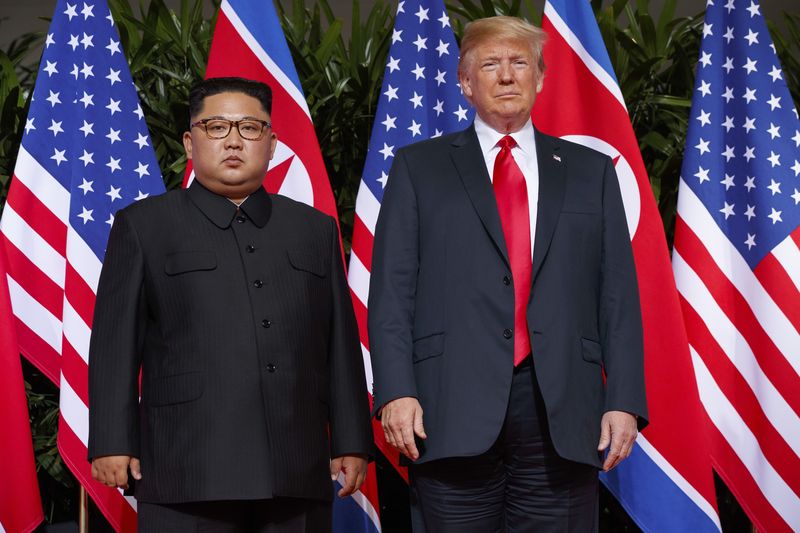
[Financial News] A U.S. expert on the Korean Peninsula has argued that a North Korea-U.S. summit could take place if North Korean leader Kim Jong Un adopts a revisionist strategy that breaks with conventional thinking.
Victor Cha, the Korea Chair at the Center for Strategic and International Studies (CSIS), made the forecast in an analysis posted on the CSIS website on the 13th (local time) under the title, "After Iran: Scenarios for Reviving a Trump-Kim Summit."
Cha said, "If Kim Jong Un takes a revisionist stance, he could aim for a meeting with Trump to reaffirm the basic principles of the Singapore Joint Statement adopted at the first North Korea-U.S. summit in 2018."
The Singapore Joint Statement centers on four points: establishing new North Korea-U.S. relations, building a lasting peace regime on the Korean Peninsula, working toward the complete denuclearization of the Korean Peninsula, and recovering the remains of prisoners of war and missing persons.
Cha predicted that if Kim pushes for a summit, the timing would come "potentially after the ruling party, the Republican Party, loses the U.S. midterm elections." He added that "the two leaders may avoid detailed denuclearization talks and instead leave them to their negotiating teams to flesh out over the next six months."
As a premise, Cha pointed to whether Kim has a revisionist mindset. If Kim does hold such a view, he may try to seize every possible opportunity to achieve his core goal of solidifying North Korea's status as a nuclear-armed state.
Keeping Channels Open Is the Best Way to Manage Kim Jong Un and Trump
The conventional view is that North Korea, which is now drawing closer to Russia through troop deployments for the war in Ukraine and has agreed to expand trade cooperation with China, would not want a North Korea-U.S. summit with President Trump. But Cha argued that Kim could break from that assumption.
He cited North Korea's move to align itself more closely with Russia, which is fighting the war in Ukraine, as an example of Kim departing from the common expectation that he would focus on restoring trade with China after the COVID-19 pandemic.
Cha also said that because Trump has taken a flexible position, maintaining the goal of North Korea's denuclearization while also referring to North Korea as a "nuclear-armed state," "Kim Jong Un may see an opportunity in restarting ties with Trump."
Cha further noted that North Korea's reading of Trump's diplomatic and negotiating style through the Iran war also increases the chances of a summit. He said, "North Korea has learned another lesson: the best way to manage Trump, who is unpredictable and prefers the use of military force, is to keep channels open."
Accelerating the Push for U.S. Recognition as a Nuclear-Armed State
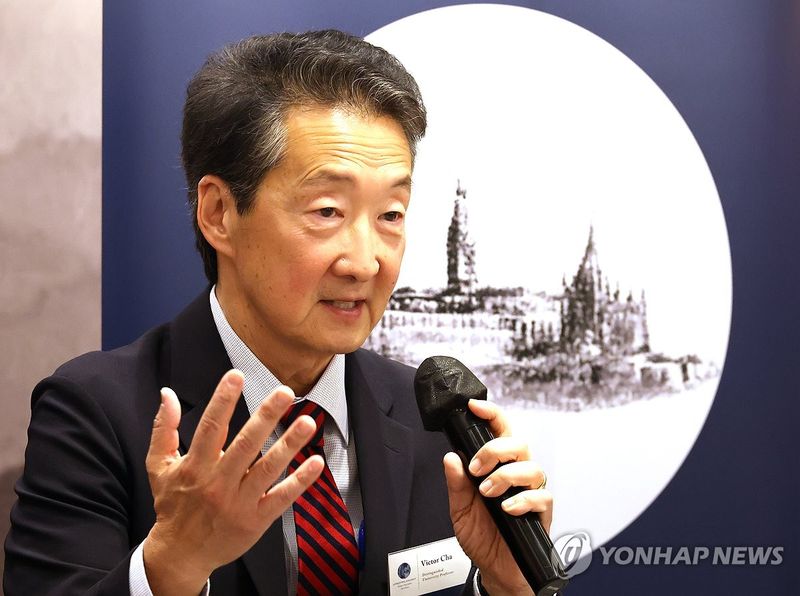
If a North Korea-U.S. summit were to take place, Cha said, "Kim Jong Un would appeal to Trump's desire to build a Nobel Peace Prize record and steer the talks toward a peace treaty, a halt to U.S. military exercises, and an end to hostile relations." He added that this would be highly significant for North Korea's long-standing goal of securing de facto U.S. recognition as a nuclear-armed state.
Cha also said this revisionism could lead to a North Korea-Japan summit between Kim and Japanese Prime Minister Sanae Takaichi. Through that, he suggested, Kim may try to split the trilateral cooperation framework among South Korea, the United States, and Japan.
However, Cha said a North Korea-U.S. summit would not lead to dialogue or exchanges with South Korea. He predicted that "a revisionist diplomatic strategy that reaches out to Washington and Tokyo while bypassing Seoul would be the most attractive option for North Korea, rather than the 'peaceful coexistence' proposed by the Lee Jae-myung administration."
He added that China may also push for a revival of Trump-Kim diplomacy given the current geopolitical balance. "This is mainly because China wants to curry favor with Trump, but also because it seeks to subtly weaken Russia's growing influence over North Korea," he explained.
[email protected] Lee Seok-woo, international affairs Reporter