"Not Far Behind Samsung and SK hynix": Jeju Semiconductor Benefits from Memory Boom
- Input
- 2026-08-14 08:01:13
- Updated
- 2026-08-14 08:01:13
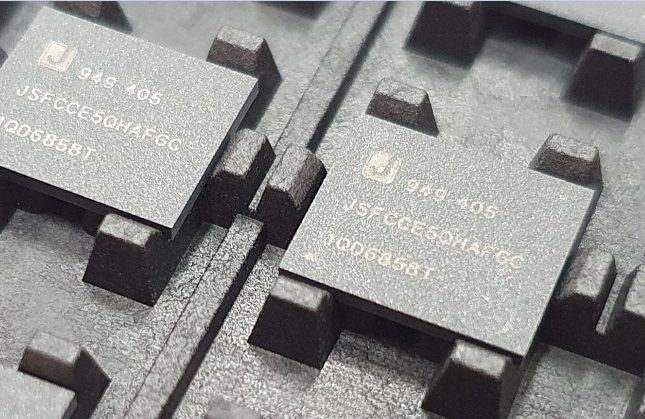
[Financial News] Jeju Semiconductor extended its sharp earnings growth in the second quarter, following a strong first quarter this year. As the global semiconductor market enters a boom phase and business conditions remain favorable, the company is also expected to post solid results for the full year.
According to DART on the 14th, Jeju Semiconductor's second-quarter sales rose 467% from a year earlier to 289.9 billion won. Operating profit jumped 2,745% over the same period to 121.9 billion won. Both sales and operating profit marked quarterly records, and the profit margin reached 42%.
The company also delivered strong results in the first quarter. Sales rose 273% year on year to 180.5 billion won, while operating profit increased 1,713% to 67.1 billion won. The profit margin stood at 37%.
A Jeju Semiconductor official said that sales of memory semiconductors such as Multi-Chip Package (MCP) and DRAM have been brisk this year, as the 5G Internet of Things (IoT) market has grown rapidly. "Demand for memory semiconductors used in mobile devices and automotive electronics is also steadily increasing," the official said.
The official added that record results are continuing as DRAM prices have risen by double digits every quarter this year. "External conditions, including the won-dollar exchange rate, are also favorable," the official noted.
Jeju Semiconductor is a fabless semiconductor company that specializes exclusively in semiconductor research and development. Unlike most domestic fabless firms, which focus on system semiconductors, the company centers its business on memory semiconductors. It currently has a broad lineup that includes MCP, DRAM, NAND flash memory application products and legacy memory.
The company is also notable for not relying heavily on any single client. Jeju Semiconductor has more than 200 customers at home and abroad. Its memory semiconductor applications span IoT, consumer electronics, mobile and automotive sectors. Since last year, sales in its mobile memory semiconductor segment have also begun to gain momentum. This year, it has continued supplying DRAM to smartphone makers in Greater China.
The official said demand for mid- and low-priced smartphones continues to rise steadily, especially in emerging markets such as Latin America and Southeast Asia. "As a result, shipments of memory semiconductors used in budget smartphones are also increasing, and our DRAM shipments for mobile devices are on the rise as well," the official said.
The official added that, along with favorable business conditions such as rising memory chip prices, the company expects a sharp increase in earnings this year as it expands the use of its memory semiconductors into robotics, drones and other fields.
Meanwhile, Jeju Semiconductor recently obtained Qualcomm certification for its low-power DRAM, LPDDR5, used in 5G IoT chipsets. It also received certification from MediaTek for its LPDDR4X NAND flash memory MCP for 5G RedCap chipsets.
[email protected] Kang Kyung-rae Reporter