Colombia earthquake passes 72-hour mark as death toll rises to 273 and search efforts drag on
- Input
- 2026-08-14 06:44:56
- Updated
- 2026-08-14 06:44:56
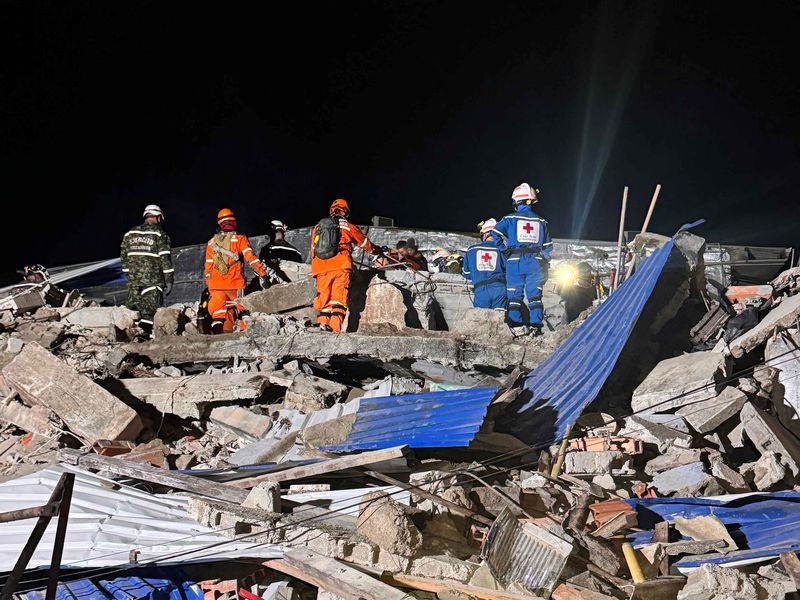
[Financial News] As rescue operations continue for a third day at the site of the devastating earthquake in Colombia, the search is being prolonged after the 72-hour window, which is widely considered the point after which the chances of survival drop sharply, has passed.
According to AP and AFP on the 13th local time, Colombian authorities said at least 273 people had been killed and more than 3,800 injured in the quake. The number of officially missing stood at 377. A privately run missing-person database has registered more than 4,200 people, suggesting the scale of the damage could grow further.
The damage was concentrated in coffee-growing areas in the west, including Cali and Pereira. A total of 12,600 homes, including apartment complexes, collapsed, and 74,800 were damaged. More than 150 aftershocks followed the main quake, including one measuring 4.2.
Rescue authorities are continuing to search for survivors, focusing on Cali, the hardest-hit area. At the scene, heavy equipment is stopped whenever sounds are detected in the rubble, and rescuers check whether anyone is still alive. However, as 72 hours have passed since the quake, debris removal has also begun in some areas.
In outlying areas, search efforts have been hampered by delays in the arrival of rescue personnel and equipment. In some places, including the port city of Buenaventura northwest of Cali, rescue teams did not arrive until the night of the 12th. Before they arrived, residents cleared debris themselves while searching for the missing.
Access for rescue teams remains restricted in some areas where armed groups are active. An official from the International Rescue Committee (IRC) said some armed groups had demanded control over the distribution of relief supplies or had seized donated goods such as food.
Controversy has also emerged over the acceptance of foreign rescue teams. The Colombian government said it would first accept relief teams from four countries — the United States, Israel, El Salvador, and the Republic of Ecuador — while setting requirements such as certification for international rescue operations and self-sufficient equipment.
By contrast, entry for Mexico's rescue team was not allowed, and China's offer of assistance has reportedly not yet been approved. Mexican President Claudia Sheinbaum said her government submitted the required certification documents at Colombia's request, but was asked again for additional certification.
As Colombia also refused to allow the activities of Los Topos, the Mexican civilian rescue team formed after the 1985 Mexico City earthquake, some have criticized the government for selectively accepting foreign aid.
The Colombian government denied claims that it was rejecting support from certain countries for political reasons. Omar Bula Escobar, Colombia's Minister of Foreign Affairs, said, "We are not excluding assistance from any country," adding, "We are cooperating with all countries without ideological or political considerations."
[email protected] Kim Kyung-min Reporter