U.S. Says Chinese Products Are Increasingly Being Re-exported After Changing Country of Origin, Raising Transshipment Risks for South Korea
- Input
- 2026-08-13 20:57:41
- Updated
- 2026-08-13 20:57:41
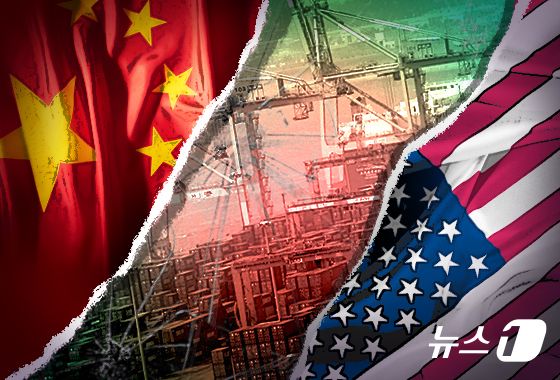
The White House Office of Trade and Manufacturing Policy said in a report released on the 13th (local time) titled "Massive Transshipment Fraud" that Chinese products subject to high tariffs are being re-exported to the United States after simple assembly, repackaging, or relabeling changes their country of origin.
The office said countries linked to the risk of illegal transshipment from China can be divided into three categories based on factors such as economic size and the degree of integration with Chinese supply chains.
"Type 1" refers to countries with a large volume of China-related trade, diversified industrial bases, and well-developed export platforms to the U.S., where illegal transshipment risks may be mixed in with broad legitimate trade flows. South Korea, Canada, European Union (EU), India, Israel, Japan, Mexico, and Taiwan were included in Type 1.
Brazil, Indonesia, Malaysia, Thailand, and Turkey, which are closely integrated into China-linked production and supply chains, were classified as Type 2 countries.
Cambodia, Laos, and Myanmar were placed in Type 3 as "small-scale, niche transshipment countries" that have relatively limited transshipment volumes but could be used as alternative export routes for China-linked goods.
The office explained, "Actual tariffs vary depending on the transshipment route. If Chinese goods pass through Mexico or Canada and appear to qualify under the United States–Mexico–Canada Agreement (USMCA), tariffs can fall to near zero," adding, "If they pass through the EU, Japan, Vietnam, or South Korea, significant tariffs may still apply, but they would be far lower than the rates imposed on China."
The office estimated the potential scale of illegal Chinese transshipment at about $40 billion to $303 billion a year, based on government and private-sector estimates. Tariff losses were also expected to reach tens of billions of dollars.
The office said it plans to strengthen enforcement by building an "AI-based border surveillance" system that analyzes shipping routes and country-of-origin information.
[email protected] Lim Sang-hyeok Reporter